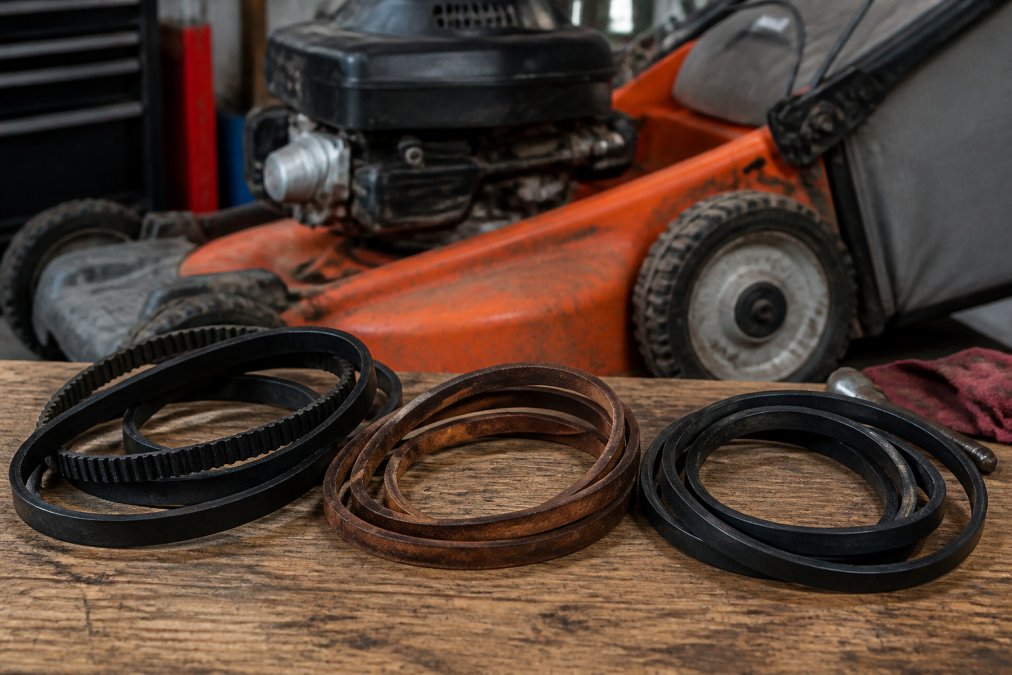
 comparison
Alternatives to OEM Mower Deck Belts: A 2026 Guide
Table of Contents
- Why Skip the OEM Mower Deck Belt?
- Quick Comparison: OEM vs. Aftermarket Deck Belts
- Top Alternatives to OEM Mower Deck Belts
- Kevlar vs Rubber Mower Belts: What's the Difference?
- How to Measure Lawn Mower Belt for a Perfect Fit
- Mower Belt Failure Causes and How to Prevent Them
- Final Verdict: Which Alternative Should You Pick?
- Frequently Asked Questions
Last Updated: September 7, 2026
OEM mower deck belts often carry a significant price premium, leading many owners to ask whether viable alternatives to OEM mower deck belts can deliver the same performance without the factory markup. The aftermarket has responded with belts built from advanced materials like aramid cord and Kevlar reinforcement that frequently exceed original equipment specifications. This guide breaks down the top alternatives, what to look for, and how to avoid common mistakes.
The core choice comes down to material science and manufacturing tolerance. This guide compares four leading options, explains the difference between Kevlar and rubber construction, and provides a practical measuring method.
Why Skip the OEM Mower Deck Belt?
The primary reason to consider alternatives to OEM mower deck belts is cost-effectiveness. Factory belts are often priced at a premium simply because they carry the manufacturer's branding, not because they are built to a higher standard.
Many aftermarket manufacturers engineer their belts to meet or exceed OEM specifications, using the same profiles, sizes, and compounds. For a homeowner with a standard residential deck, a quality aftermarket belt typically performs identically at a fraction of the cost.
There is a caveat. On high-horsepower commercial machines with heavy deck engagement, construction quality matters more than the brand name, you need high tensile strength and low stretch factor.
Quick Comparison: OEM vs. Aftermarket Deck Belts
Choosing the right belt requires understanding how the options stack up against each other. The table below summarizes the key differences based on market analysis.
| Feature | OEM Belts | Aftermarket Rubber | Aftermarket Kevlar/Aramid |
|---|---|---|---|
| Cost | Highest premium | Moderate | Moderate |
| Tensile Strength | Standard | Standard | High |
| Stretch Factor | Low | Moderate | Lowest |
| Heat Resistance | Good | Good | Excellent |
| Best For | Warranty repairs | Residential mowing | Heavy loads, commercial use |
The "best" option depends entirely on your application. For light residential duty, a standard aftermarket belt is a smart financial move; for a zero-turn with a heavy deck, aramid cord options offer superior durability.
Top Alternatives to OEM Mower Deck Belts
Several aftermarket brands have earned strong reputations for reliability. The four options below represent a spectrum of what is available, from budget-friendly replacements to heavy-duty upgrades.
PIX Kevlar Mower Belts: Built for Heavy Loads
PIX is a strong contender for heavy-duty needs. Their Kevlar mower belts feature aramid cord reinforcement, providing superior resistance to stretching and excellent durability in high-heat environments.
These belts handle high-torque engagement without slipping, and the oil and heat-resistant cover extends service life. The main drawback is stiffness, making installation harder on decks with limited access.
Stens Replacement Belts: The Reliable Match
Stens has built its reputation on precise manufacturing, matching OEM length and width specifications with consistent quality control. Their catalog covers most major manufacturers.
Widely available through local dealers, they deliver reliable performance for standard residential tasks. The trade-off is a potentially shorter lifespan than premium Kevlar-wrapped belts on heavy or commercial schedules.
Rotary Corporation Belts: Broad Compatibility
Rotary Corporation is a major aftermarket supplier known for broad compatibility with legacy and modern decks. Their belts are engineered for high-speed operation and vibration resistance.
This makes them an excellent choice for older equipment where OEM parts are hard to source. Performance can vary on high-horsepower machines, so they are best suited for standard residential decks.
MightyRugged Aramid Cord Belts: Direct Replacements
MightyRugged specializes in aramid cord construction, marketing their belts as heavy-duty replacements for specific deck configurations. The aramid fiber reduces slip and provides high-impact resistance.
These are direct replacements for specific OEM part numbers, including popular Cub Cadet models, removing guesswork. They are stronger than rubber-only belts with convenient online availability, but the range is restricted to specific popular models.
Kevlar vs Rubber Mower Belts: What's the Difference?
The difference between a standard rubber belt and a Kevlar-reinforced belt is not a simple matter of one being 'better.' It comes down to the internal tensile member, the cord that carries the load, and how its properties interact with your deck geometry and operating conditions.
The Tensile Member: Where the Real Difference Lives
A mower deck belt is a composite: the rubber body provides friction and protects the internal cord, but the cord prevents stretching and snapping. Standard belts use a polyester or fiberglass tensile cord, cheap, predictable, and adequate for a residential mower seeing 20-30 hours per season.
Kevlar (a brand name for aramid fiber) has a tensile strength roughly five times that of steel on a weight-for-weight basis, translating to a dramatically lower stretch factor (peer-reviewed research). A polyester belt may require re-tensioning after the first few hours; an aramid cord belt holds its tension far longer.
The Trade-Off: Stiffness and Shock Absorption
The common misconception is that Kevlar is always superior. Aramid cords are stiff and do not absorb shock loads as gracefully as twisted polyester. On a deck with a worn bearing or bent pulley, a Kevlar belt transmits vibration directly to the PTO clutch; a polyester belt absorbs some of that shock.
This is why Kevlar belts fail on older machines with worn pulleys: the constant micro-impact causes the belt body to separate from the cord. The belt did not fail because it was weak; it failed because the machine was not aligned.
Heat Resistance: The Real Kevlar Advantage
Heat is the primary killer of mower deck belts. Under a hot deck with packed clippings, temperatures can exceed 200°F, hardening and cracking standard rubber. Aramid fibers retain tensile strength up to 400°F, making Kevlar the standard for commercial mowers in heavy, wet grass (pubs.acs.org).
A Practical Decision Framework
| Condition | Best Choice | Why |
|---|---|---|
| Residential, dry grass, light deck | Standard rubber (polyester cord) | Lower cost, adequate strength, better shock absorption |
| Residential, damp grass, occasional heavy loads | Standard rubber with wrapped cover | Good grip, moderate stretch is manageable |
| Commercial, daily use, high-torque deck | Kevlar/Aramid cord | Low stretch, high heat tolerance, long service life |
| Any machine with worn pulleys or misalignment | Standard rubber (temporary fix) | Kevlar will fail faster if the root cause is not fixed |
The Bottom Line on Material
Do not buy Kevlar because it sounds tougher. Buy it for a specific problem, stretch, heat cracking, or snapping under heavy load, that aramid cord addresses. For a standard residential mower in good condition, a quality polyester-cord belt from Stens or Rotary delivers the same practical service life at a lower price.
How to Measure Lawn Mower Belt for a Perfect Fit
Getting the measurement right is the most critical step. An incorrect measurement leads to a belt that is too loose, causing slipping and squealing, or too tight, which damages spindle bearings and the PTO clutch.
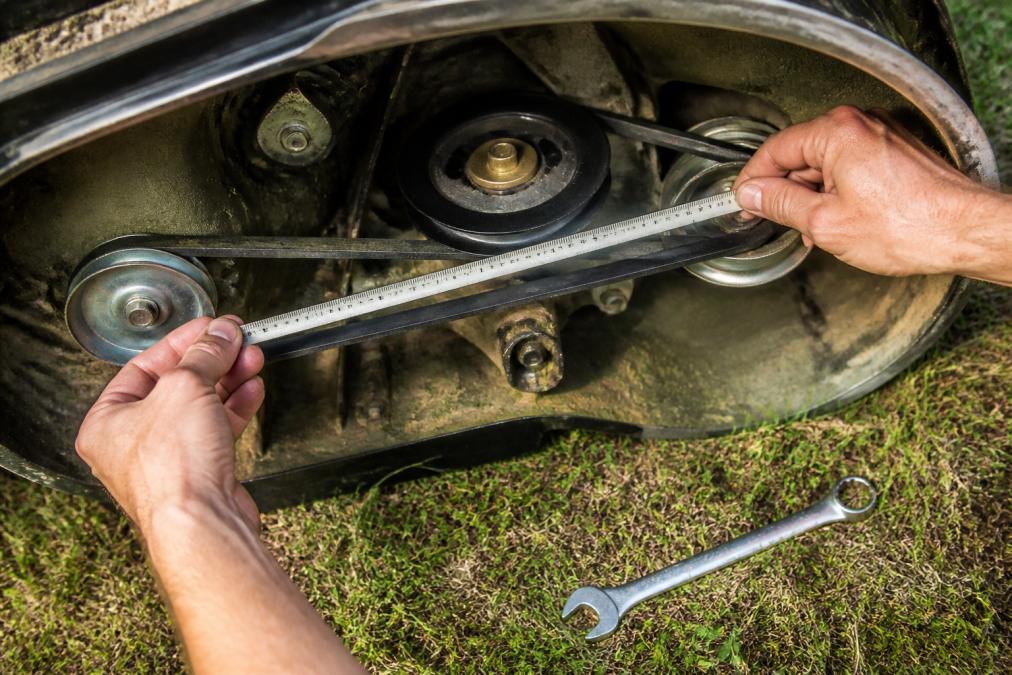
The most accurate method is to measure the belt while still routed on the pulleys. Use a flexible tape measure, follow the exact path around spindles and idler, mark the overlap, and record the length in inches.
If the belt is broken, measure the outside circumference by looping the tape around it, less accurate but workable. The best approach is to find the part number on the sidewall and cross-reference it. Also measure the belt profile (width and depth) to match your pulleys.
Mower Belt Failure Causes and How to Prevent Them
Most aftermarket belts do not fail because they are inferior, but because of installation errors, overlooked mechanical issues, or incorrect tensioning. Understanding the failure mechanism is the first step to prevention.
Failure Analysis: Reading the Belt
The belt itself tells you what went wrong. Before you throw it away, examine the failure point.
- Clean, square break across the width: This is a tension failure. The belt was overloaded, likely from a sudden jam (a stick caught between the deck and belt) or from being run too loose, which causes the belt to slip and then grab violently.
- Melted or glazed sidewalls: The belt was slipping. This is almost always a tension issue, the belt was too loose. The friction generated heat that hardened the rubber and reduced grip, creating a feedback loop of more slipping and more heat.
- Frayed edges or cord separation on one side: This indicates pulley misalignment. The belt was running at an angle, causing one edge to rub against the pulley flange. Check the idler pulley and spindle pulleys for parallel alignment.
- Cracks on the underside (the cog side): This is heat damage. The belt ran hot for an extended period, often due to a seized bearing or a deck clogged with debris that restricted airflow.
- Broken cord with the rubber body intact: The belt was over-tensioned. The tensile cord snapped under excessive strain, often because the belt was too short for the deck or the tensioner spring was too strong.
The Step-by-Step Tensioning Guide
Improper tensioning is the single most common cause of premature aftermarket belt failure. Here is a procedure many small-engine repair technicians follow.
- Install the belt correctly. Route the belt around all pulleys, ensuring it sits properly in each groove. Do not use a pry bar or screwdriver to force the belt over a pulley, this damages the cord.
- Engage the tensioner. Most residential decks use a spring-loaded idler pulley. Pull the idler back and slip the belt over it. Let the spring tension hold the belt in place.
- Check for slack. The belt should have no more than 1/2 inch of deflection at the midpoint of its longest span when you press firmly with your thumb. If it deflects more than that, the belt is too loose.
- Run the deck for 2-3 minutes. This seats the belt into the pulley grooves. Then re-check the deflection. A new belt will stretch slightly during this break-in period.
- Re-tension after the first hour of use. This is the step most homeowners skip. A belt that was correct at installation will stretch after the first real mowing session. Re-check and adjust the tensioner if your deck has an adjustable idler arm.
The Hidden Culprit: The Idler Pulley Bearing
A seized idler pulley is the most overlooked cause of belt failure. When its bearing fails, the pulley stops rotating and the belt slides across it, generating intense heat. When replacing a belt, always spin each pulley by hand, it should rotate smoothly. If not, replace the pulley first.
Debris Management
Grass clippings, twigs, and stones accumulate under the deck and get pulled between belt and pulley, acting like sandpaper. After each mowing session, use a leaf blower or stiff brush to clear the deck underside and spindle area. This habit extends belt life more than any premium material.
A Seasonal Maintenance Checklist
| Check | Frequency | What to Look For |
|---|---|---|
| Belt deflection | Every 10 hours of use | No more than 1/2 inch at longest span |
| Pulley spin test | At the start of each season | Smooth rotation, no roughness |
| Deck underside debris | After every mow | Clear of clippings and foreign objects |
| Belt sidewall condition | Monthly | No glazing, fraying, or cracks |
| Spindle bearing play | Annually | No lateral movement when wiggled |
Following this diagnostic and maintenance routine will prevent the vast majority of belt failures, regardless of whether you install an OEM belt or an aftermarket alternative.
Final Verdict: Which Alternative Should You Pick?
The right choice depends on your equipment and use. For a residential mower with a standard deck, Stens or Rotary belts offer reliable performance and excellent value. For a zero-turn or heavy continuous use, the aramid cord construction of PIX or MightyRugged provides the durability you need.
Before you buy, check the cross-reference database for your part number. Most aftermarket manufacturers list the OEM numbers they replace. Compare the belt profile and length against your old belt to confirm compatibility.
When you are ready to purchase, V-Belt Nation carries a range of lawn and garden belts to suit these applications. Our dedicated support team is ready to help you find exactly what you need, and our Price Match Guarantee ensures you get a competitive rate. Free ground shipping applies to all U.S. orders over $175.
Frequently Asked Questions
Are Kevlar mower belts better than standard rubber belts?
For most residential mowers, Kevlar-reinforced belts offer a meaningful upgrade. The aramid cord resists stretching under heavy load, which means fewer adjustments and a longer service life in high-heat conditions. Standard rubber belts are cheaper and more flexible, making them easier to install. If you have a large deck, bag heavy grass, or mow commercial properties, Kevlar's tensile strength reduces the risk of breakage. For light residential use, a quality rubber belt from a brand like Stens or Rotary will still deliver reliable performance.
How do I know if an aftermarket belt will fit my mower deck?
Check the part number printed on your old belt and cross-reference it with the aftermarket brand's catalog. Each manufacturer provides a cross-reference database on their website. Then, measure the belt's length by running a tape measure around the outside circumference, and verify the width with calipers. For example, a 42-inch deck commonly uses a 1/2-inch by 96-inch belt. Match both dimensions to the replacement spec. If the numbers align, the belt will fit your spindles and pulleys correctly.
Why does my mower keep breaking deck belts?
Repeated belt failure usually points to a mechanical issue, not a bad belt. Check pulley alignment first: a bent spindle or idler arm will cause the belt to track off and wear unevenly. Inspect pulleys for nicks or rust that can slice the belt. A seized spindle bearing creates heat and friction that melts the rubber. Confirm the belt tension is correct, since an overtightened belt strains the cord. Finally, verify you are using the correct length; a belt that is too short will snap under load.
What is the best material for a lawn mower deck belt?
The best material depends on your mowing conditions. For standard residential use, a wrapped rubber belt with a polyester cord provides good flexibility and a smooth ride. For heavy or commercial use, choose a Kevlar-reinforced belt with an aramid cord. Kevlar offers higher tensile strength and better heat resistance, which prevents stretching and premature failure when engaging the PTO clutch under load. If you mow wet grass or operate in dusty conditions, look for a belt with an oil and abrasion-resistant cover to extend its service life.
Replacing an OEM belt with a quality aftermarket alternative is a smart way to cut maintenance costs without sacrificing performance. The key is matching the belt material to your workload and confirming the dimensions before you order. V-Belt Nation stocks durable mower deck belts with the tensile strength and heat resistance you need, backed by personalized support to confirm your fit. Get started with V-Belt Nation and keep your deck running all season.