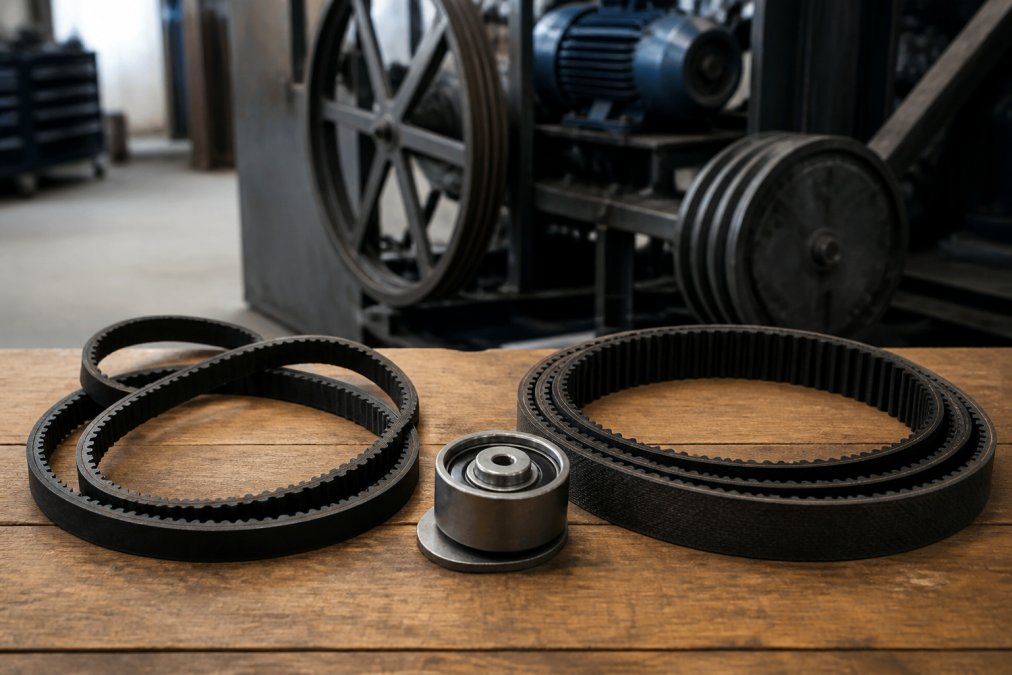
 comparison
Best Motion Alternative for Belts: 2026 Supplier Guide
Table of Contents
- Why Specialized Suppliers Beat General Distributors
- What Is the Best Motion Alternative for Belts?
- Key Features to Compare in a Belt Supplier
- Best Cogged Belts for HVAC: What to Look For
- How to Choose the Right Industrial Belt
- Common Belt Failure Causes in Machinery
- Final Verdict: Is Switching Suppliers Worth It?
- Frequently Asked Questions
Last Updated: September 9, 2026
The search for the best motion alternative for belts usually starts with a maintenance manager comparing part numbers against a distributor catalog. That approach prioritizes convenience over engineering fit, and it often ends with premature wear, unexpected downtime, and a production line that stops at the worst possible moment. This guide explains what separates a specialized supplier from a general distributor, what the best motion alternative for belts actually requires, and how to evaluate a vendor before you place your next order.
Why Specialized Suppliers Beat General Distributors
A general distributor carries thousands of SKUs across dozens of categories. Belts are an afterthought, not a specialty. That reality shapes everything: inventory depth, technical knowledge, and response time when you need a replacement shipped fast. A specialized supplier stocks deep inventory across classic, wedge, cogged, and banded constructions.
Specialization also drives accountability. When a supplier’s entire business depends on power transmission reliability, their engineering support and quality checks reflect that focus.
What Is the Best Motion Alternative for Belts?
The best motion alternative for belts is a supplier that combines deep product inventory with application-specific engineering support and rapid fulfillment. A belt is a precision component; its performance depends on matching the right construction to the drive design, environmental conditions, and load profile. A supplier that only moves boxes cannot help you make that match.
Machinery Lubrication's guide on power transmission components notes that proper belt selection directly affects energy efficiency and component lifespan. The practical implication is that your supplier should be a partner in selection, not just a warehouse. Look for a vendor that stocks multiple belt types, offers cross-reference support, and can ship quickly when a failure occurs.
Key Features to Compare in a Belt Supplier
Evaluating a belt supplier requires comparing more than price per unit. Focus on these factors:
- Inventory depth: Does the supplier stock the full range of sections, including cogged and banded options, or only fast-moving sizes?
- Fulfillment speed: What is the actual lead time for ground shipping, and is expedited service available?
- Technical support: Can a representative help identify the correct belt from a worn part number or drive measurements?
- Quality assurance: Does the supplier offer ISO-certified products with documentation available on request?
- Pricing transparency: Are there volume discounts, and does the supplier stand behind their price with a match guarantee?
V-Belt Nation checks these boxes through an extensive inventory of V-belt types and sections, free ground shipping on all U.S. orders over $175, and a Price Match Guarantee. The personalized support team helps identify specific belts.
Best Cogged Belts for HVAC: What to Look For
Cogged belts are the standard choice for HVAC applications because their notched design reduces bending resistance around small pulleys, which lowers operating temperatures and improves efficiency. When selecting the best cogged belts for HVAC, verify the belt is raw-edge cogged rather than wrapped, as raw-edge construction provides better grip and heat dissipation. Confirm the belt matches the original equipment manufacturer’s specification for section and length, and check that the supplier can handle bulk orders across multiple buildings.
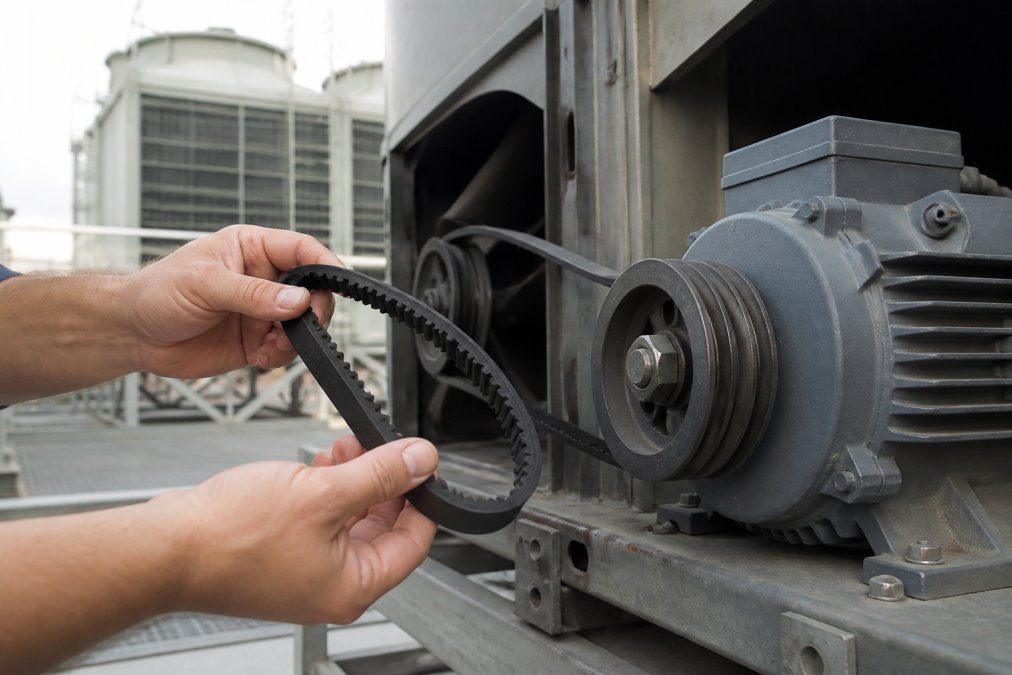
For facility managers overseeing multiple sites, consistency matters as much as the belt itself. A supplier that can fulfill repeat orders with the same quality and lead time prevents the headache of maintaining different belt brands across properties. Ask potential suppliers about their stock levels for common HVAC cogged sizes and whether they can support scheduled replacement programs.
How to Choose the Right Industrial Belt
Choosing the right industrial belt starts with identifying the drive’s design power, which is the transmitted power adjusted for service factors. Then measure the pulley diameters and center distance to determine the correct belt length. Match the belt section to the pulley groove profile; using the wrong section causes slippage and accelerated wear.
The operating environment is the next consideration. High heat, oil exposure, or abrasive dust changes which belt construction is appropriate. A wrapped belt offers some protection against contamination, while a cogged belt reduces heat buildup in confined drives. For applications with shock loads or misalignment risk, a banded belt may be necessary to prevent individual belts from flipping or coming off the drive.
A common mistake is replacing a belt with the same part number without checking whether the pulleys are worn or misaligned. The Timken Company's belt drive maintenance guidance emphasizes that pulley condition and alignment are critical to belt life. Replacing the belt while ignoring pulley wear simply transfers the problem to the new component.
Common Belt Failure Causes in Machinery
While the previous sections focused on selecting a supplier, understanding why belts fail in the first place is critical to evaluating whether an alternative is even necessary. In industrial settings, the failure modes are well-documented, but the same principles apply to everyday wear in clothing and gear.
Mechanical Failure Modes in Industrial Drives
For machinery, the leading causes of premature belt failure trace back to installation and drive condition rather than belt quality:
- Misalignment: Sheaves that are not properly aligned cause uneven wear and excessive heat.
- Incorrect tension: Both over-tensioning and under-tensioning shorten belt life. Over-tensioning damages bearings and increases load on the shaft; under-tensioning causes slippage, which generates heat and glazes the belt surface.
- Pulley wear: Worn grooves change the contact geometry and reduce grip. A pulley with a worn profile will destroy a new belt quickly, so always inspect sheaves before replacement.
- Improper storage: Belts stored in direct sunlight, near ozone sources (like electric motors), or in high-heat environments degrade prematurely. Rubber compounds are sensitive to UV and ozone.
- Mismatched belts: Installing new belts alongside stretched older ones on a multi-belt drive distributes load unevenly. The tighter belt carries more load and fails first, then the next one follows.
The Gates Corporation's technical bulletin on V-belt failure analysis identifies improper tension and misalignment as the leading causes of premature belt failure. A good supplier helps you diagnose these issues, but the responsibility for regular drive inspection sits with your maintenance team.
The Human Equivalent: Why Everyday Belts Fail You
The same logic applies to the belts you wear.
- Material fatigue: Leather and woven belts stretch or lose their shape over time, especially with daily wear. This leads to the belt slipping or requiring constant re-tightening.
- Hardware failure: Buckles and prongs on traditional belts are often the first point of failure. A bent prong or a cracked buckle makes the belt unusable, even if the strap itself is fine.
- Moisture damage: Leather belts absorb sweat and moisture, leading to cracking, odor, and loss of structural integrity. This is especially problematic in active environments or hot climates.
- Pressure points: A traditional belt concentrates pressure on a narrow band across the abdomen. For people who sit for long hours or have sensitive skin, this creates discomfort, chafing, or even nerve compression.
A Unique Angle: The Sustainability of Failure
Most guides treat belt failure as a maintenance problem. But there is a sustainability angle that rarely gets discussed: every failed belt, whether industrial or personal, ends up in a landfill. Traditional leather belts are treated with chromium and other chemicals that make them difficult to recycle. Synthetic belts, while more durable, are petroleum-based and persist in the environment for decades.
When you switch to an alternative that lasts longer or is made from recyclable materials, you are not just solving a comfort problem; you are reducing waste. For industrial operations, extending belt life through proper maintenance and supplier selection directly reduces the environmental footprint of your facility. For personal use, choosing a belt alternative made from recycled or biodegradable materials (like hemp or recycled polyester) is a small but meaningful step.
Final Verdict: Is Switching Suppliers Worth It?
Switching from a general distributor to a specialized supplier is worth it when downtime costs exceed the effort of qualifying a new vendor. For most manufacturing, agricultural, and HVAC operations, that threshold is crossed quickly. The benefits include faster lead times, better technical support, and products that match the original drive specification.
The hesitation often comes from loyalty to an existing distributor. But the question is not whether the current supplier occasionally delivers a working belt; it is whether they deliver the right belt consistently, with documentation, and without weeks of waiting. V-Belt Nation addresses these concerns with reliable on-time delivery, competitive pricing backed by a Price Match Guarantee, and access to many industrial power drive solutions.
But What About Personal Use?
If you are reading this guide because you are tired of traditional belts digging into your waist or constantly needing adjustment, the supplier question is not the one you need answered. The real question is: should you switch to a motion alternative at all?
Here is a practical framework for making that decision:
When to switch:
- You sit for more than 6 hours a day and find that a traditional belt creates a pressure point or requires loosening after meals.
- You are active (walking, bending, lifting) and your belt rides up or slips out of position.
- You have gained or lost weight recently and want a belt that adjusts without punching new holes.
- You wear a fitness tracker or medical device at your waist and need a belt that does not interfere with it.
When to stay with a traditional belt:
- You wear formal attire and need a specific aesthetic that alternatives do not match.
- You prefer the weight and feel of a leather belt and have not experienced discomfort.
- Your workplace has a strict dress code that requires a traditional belt.
The Cost-Benefit Math
For industrial buyers, the math is different.
The Verdict
For industrial operations, switching to a specialized supplier is justified. The supplier's inventory depth, engineering support, and fulfillment speed are important factors.
For personal use, the verdict depends on your priorities. If you value the classic look and have not experienced discomfort, there is no urgent reason to change.
Frequently Asked Questions
What is a good Motion alternative for belts?
A specialized industrial belt supplier like V-Belt Nation is a strong Motion alternative for belts. Unlike general distributors, specialists stock a wide range of sections and types, including cogged and banded options. They offer personalized support to identify the exact belt for your machinery, ensuring you get a precise fit. This focus often means faster lead times on non-standard sizes and more knowledgeable assistance, which helps minimize costly downtime.
How do cogged belts compare to standard V-belts in HVAC systems?
Cogged belts are engineered with notches on the underside, allowing them to flex around smaller pulleys with less heat buildup. In HVAC systems, this translates to higher efficiency and a longer service life compared to standard wrapped V-belts. The raw-edge cogged design provides better grip and slip-resistance, which is critical for cooling tower fans and air handlers that experience variable loads and start-stop cycles.
What factors should you consider when choosing a belt supplier?
When choosing an industrial belt supplier, examine their inventory depth for both standard and metric sizes, their delivery reliability, and the level of technical support they offer. Look for a price match guarantee and clear documentation of quality standards like ISO certification. A supplier that can handle bulk orders for OEMs and provide rapid replacements for unexpected failures is crucial for maintaining continuous operations.
How do you determine the right belt replacement for specific machinery?
First, read the part number printed on the old belt's outer cover; this is the most direct identifier. If it's worn off, measure the top width and the outside length. You also need to identify the belt section (like A, B, or 3V) and whether it's cogged or banded. If you're unsure, consult a specialist supplier who can help you match the correct belt to your application.
Switching suppliers is a decision that affects every production line and maintenance schedule you manage. The challenge is finding a partner who treats your uptime as their priority. V-Belt Nation offers an extensive inventory of V-belt types and sections, free ground shipping on U.S. orders over $175, and personalized support to help you find the exact belt you need. Get started with V-Belt Nation and secure a supply chain that keeps your machinery running.