 listicle
Buy Replacement Wedge V-Belts Online: 2026 Buyer's Guide
Table of Contents
- Quick Comparison: Where to Buy Replacement Wedge V-Belts Online
- How to Measure Wedge V-Belts Before You Order
- 3V, 5V, and 8V Belt Cross Reference Explained
- Cogged vs Wrapped vs Banded Wedge Belts: Which Construction Fits Your Drive
- Industrial Belt Maintenance Best Practices That Extend Belt Life
- Troubleshooting Belt Failure: Slipping, Squealing, and Premature Wear
- Energy Efficiency Ratings and Load Capacity: What Buyers Overlook
- Shipping, Bulk Orders, and Quality Guarantees
- Frequently Asked Questions
Last Updated: September 12, 2026
Quick Comparison: Where to Buy Replacement Wedge V-Belts Online
V-Belt Nation offers a price match guarantee, free ground shipping on U.S. orders over $175, and an extensive inventory of 3V, 5V, and 8V profiles for buyers who need to buy replacement wedge v-belts online.
| Supplier | Best For | Standout Feature | Shipping |
|---|---|---|---|
| V-Belt Nation | Most industrial buyers | Price Match Guarantee, free ground shipping over $175 | Free over $175 |
| V-Belt Guys | Predictable flat-rate shipping | Flat-rate shipping on any order size | Flat rate |
| V-Belt Global Supply | Standard industrial belts | Broad catalog for business accounts | Varies by order |
| Gates Corporation | OE-spec performance | Heat, wear, and corrosion resistance | Distributor-based |
| Offroad Belts | Heavy-duty banded belts | Detailed dimensional listings | Per item |
| O'Reilly Auto Parts | Same-day local pickup | In-store returns | Free pickup |
| Amazon Automotive | Price comparison | Customer reviews | Prime options |
| Bearings 'R Us | Narrow-profile wedge belts | Technical profile guidance | Per item |
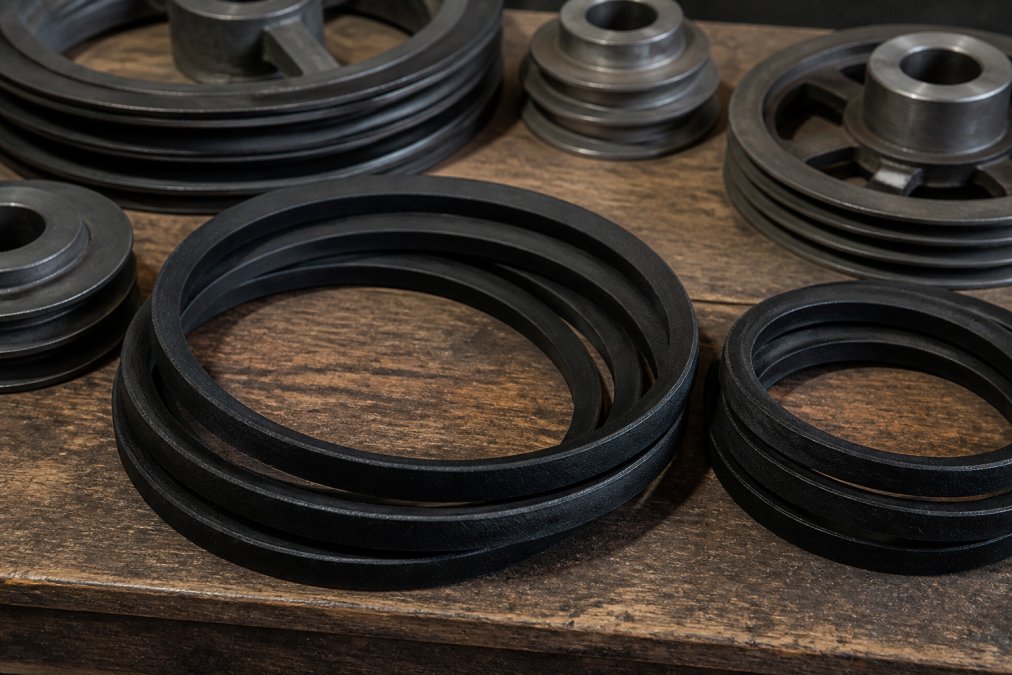
Wedge belts are V-belts with a deeper, narrower cross-section than classic profiles, letting them carry more load in less space. Below: how to measure, cross-reference, and order the right belt the first time.
How to Measure Wedge V-Belts Before You Order
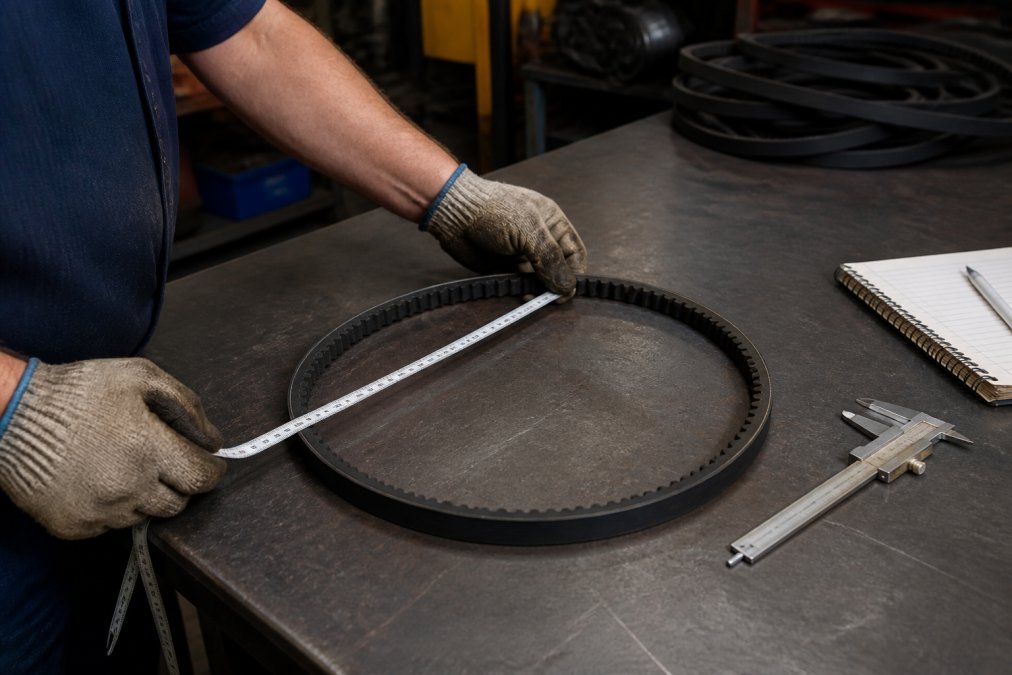
Measure a wedge V-belt by laying it flat, running a tape around the outside, and recording the top width of the cross-section. Those two numbers identify the profile family.
A common mistake is ordering by the old belt's printed number alone. Numbers fade, and previous owners sometimes substitute a close-enough size that runs poorly for years.
To measure correctly:
- Lay the belt flat on a bench with no twists
- Wrap a flexible tape around the outside edge for outside diameter
- Measure the widest point of the top edge with calipers for the cross-section
- Note any visible wear pattern, which hints at a sheave alignment problem
Measuring Outside Diameter and Pitch Length
Outside diameter is the physical loop length. Pitch length is the effective length at the cord line inside the belt, the number drive designers actually use.
For most replacement orders, outside diameter is enough to match a part. When a drive is sensitive to speed ratios, ask for pitch length and confirm it against sheave diameters.
3V, 5V, and 8V Belt Cross Reference Explained
The 3V, 5V, and 8V profiles are narrow-section wedge belts defined by top width: 3V is 3/8 inch, 5V is 5/8 inch, and 8V is 1 inch (gates.com). Each scales load capacity up, so 8V belts suit the heaviest industrial drives.
Cross-referencing matters because manufacturers use different part numbering for the same physical belt.
- 3V: light industrial drives, small HVAC fans, compact equipment
- 5V: the workhorse profile for pumps, compressors, and cooling towers
- 8V: high-torque drives on crushers, mills, and large blowers
When you cross-reference, match three things: profile, outside diameter or pitch length, and construction type. Miss any one and the belt may fit but fail early.
Cogged vs Wrapped vs Banded Wedge Belts: Which Construction Fits Your Drive
Cogged belts run cooler and grip better on small-diameter sheaves, wrapped belts resist oil and grit, and banded belts hold multiple V-sections together to stop whip and flip on pulsating drives. The right choice depends on sheave size, contamination, and vibration.
For drives with sheaves smaller than the belt's recommended minimum, cogged construction is usually the answer, the notches let the belt bend without cracking. For outdoor or washdown environments, a wrapped cover keeps contaminants out of the tensile cords.
Banded belts solve a specific problem: when single belts run side by side and one flips or stretches, the whole drive loses tension. A banded belt ties the sections together so they track as one unit.
Material Science: What Separates a $10 Belt From a $40 Belt
The price gap between a budget belt and a premium one comes down to three things: tensile cord material, rubber compound, and cover fabric. Premium belts use treated polyester or aramid cords that resist stretch, plus compounds engineered for heat, oil, and static conductivity.
Cheap belts often use lower-grade cord that creeps under load, meaning constant retensioning and shorter service life.
Static conductivity is the one buyers overlook most. In dusty or explosive atmospheres, a belt that cannot dissipate static charge is a genuine safety issue (osha.gov). If your facility has combustible dust, confirm the belt meets the relevant conductivity standard before ordering.
Industrial Belt Maintenance Best Practices That Extend Belt Life
Belt life comes down to tension, alignment, and cleanliness, in that order. A correctly tensioned, properly aligned drive with clean sheaves outlasts a neglected one by a wide margin, regardless of brand. What separates a working maintenance program from box-checking is reading wear patterns and catching problems before they become failures.
Reading Wear Patterns Before They Become Failures
A belt is a diagnostic tool. The way it wears tells you what is wrong with the drive, often weeks before it fails.
- Cracking across the ribs or back. Heat and age are the usual causes. If a belt cracks prematurely, check the drive's ambient temperature and whether the belt compound is rated for it. A standard neoprene belt in a hot enclosure cracks long before an EPDM belt will.
- Glazing (shiny, hard surface). Glazing comes from slip: the belt surface overheats, the rubber hardens, friction drops, and slip accelerates until failure. It almost always points to low tension, a worn sheave, or oil contamination. Replacing the belt without fixing the cause guarantees a repeat.
- Fraying or edge wear on one side. The signature of misalignment: the belt runs against the sheave flange instead of centered in the groove. Even a small offset wears the edge, generates heat, and shortens life. Correct alignment before installing the replacement.
- Uneven wear across a banded belt's sections. One section carries more load, usually because sheave grooves are worn to different depths or the belt was not matched as a set. Replace banded belts as a complete unit, never section by section.
- Belt flipping or turning over in the groove. This happens on pulsating drives where single belts run side by side: one loses tension, flips, and takes the drive down. The fix is usually a banded construction, not a tighter single belt.
- Soft, gummy, or swollen rubber. Oil or chemical contamination has attacked the compound. Check for leaks near the drive and switch to an oil-resistant construction if exposure is unavoidable.
Tension: Gauge Over Thumb
Check tension with a gauge rather than by thumb, the deflection method works in a pinch, but a gauge gives you a number to log. Recheck after the first 24 to 48 hours of running, because new belts stretch as they seat into the groove (gates.com). After that, a monthly check catches the slow loss of tension that precedes most slip-related failures.
Over-tensioning is as damaging as under-tensioning. A belt that is too tight loads the sheave bearings and its own cord, causing premature cord failure and bearing replacement. Tension to the drive manufacturer's specification, not the tightest setting that stops squealing.
Alignment: The Silent Killer
Sheave alignment is the silent killer. A drive misaligned by even a small amount wears the belt edge, generates heat, and shortens life. Use a straightedge or laser alignment tool across both sheaves and correct any offset before installing a new belt. Check alignment whenever a belt is replaced, a sheave is removed, or maintenance could have disturbed the drive mounting.
A Maintenance Schedule That Actually Gets Followed
A simple schedule keeps drives healthy, but only if it is short enough to be done consistently:
- Check tension monthly and after any unusual noise
- Inspect sheave grooves for wear and debris quarterly
- Verify alignment whenever a belt is replaced
- Log every replacement with date and running hours
- Inspect belts for the wear patterns above at every tension check
Keep a spare set of matched belts on the shelf for every critical drive. When a belt fails at 2 a.m., having the exact replacement on hand beats any expedited shipping fee. Log the running hours of each replacement so you can predict the next failure instead of reacting to it.
If you replace a belt on the same drive twice in a short window, stop replacing belts and inspect the sheaves. Worn grooves let the belt sit too deep, changing the effective diameter and causing slip no matter how tight you set tension. A sheave replacement is cheaper than a third belt and the downtime that comes with it.
Troubleshooting Belt Failure: Slipping, Squealing, and Premature Wear
Most belt failures trace back to the drive, not the belt. Slipping means low tension or a worn sheave, squealing at startup points to glazing or contamination, and edge wear signals misalignment.
| Symptom | Likely Cause | Fix |
|---|---|---|
| Slipping under load | Low tension, worn sheave grooves | Retension, replace worn sheaves |
| Squealing at startup | Glazed belt surface, oil contamination | Clean sheaves, replace belt |
| Edge wear on one side | Sheave misalignment | Realign drive |
| Cracking and hardening | Heat, age, wrong compound | Switch to heat-resistant construction |
| Belt flipping or whip | Single belts on pulsating drive | Move to banded construction |
Energy Efficiency Ratings and Load Capacity: What Buyers Overlook
Most listings for wedge V-belts show a price and a size. Load capacity rating and efficiency characteristics are important numbers that determine whether the belt saves or costs money over its service life. A belt that slips under peak load can cost more in downtime and energy than it saved at checkout.
What Load Capacity Actually Measures
Load capacity is the torque a belt can transmit before it slips in the groove. It depends on three variables:
- Profile and cross-section. A 5V belt carries more load than a 3V belt of the same length because the deeper, wider cross-section engages more of the sheave groove. An 8V belt carries more still.
- Tensile cord material and count. Polyester cord stretches more under load than aramid. More cord members per inch of width distributes load across more strands, raising capacity without changing outside dimensions.
- Wrap angle and sheave diameter. A belt on a small sheave has less groove contact, so effective capacity drops. This is why cogged construction matters on small-diameter drives, the notches let the belt conform to the groove without forcing the cord line past its bend limit.
When a drive was designed for three 5V belts, replacing them with two wider belts changes load distribution across the sheave. Grooves were cut for a specific belt width and count; overloading one with a wider belt wears the sheave faster and changes the effective pitch diameter, altering driven speed. Match the original drive design unless a qualified engineer signs off.
How Efficiency Shows Up on a Power Bill
A belt does not consume electricity directly, it wastes it. Every time a belt slips, flexes, or runs hot, energy that should reach the driven equipment is lost as heat and friction. The efficiency difference between a basic wrapped belt and a premium cogged belt is small per hour, often low single-digit percentages, but on a drive running 6,000 hours a year, it compounds.
A cogged belt has lower bending resistance because the notches remove material from the compression section. Less bending resistance means less internal friction as the belt wraps the sheave, so less heat and less power absorbed by the belt. A wrapped belt with a stiff compound and low-grade cord absorbs more power as it flexes, and that power never reaches the fan, pump, or compressor.
For procurement managers comparing quotes, ask the supplier for the belt's rated horsepower per belt at a specified speed and sheave diameter. Most reputable manufacturers publish these ratings. If a listing does not show a horsepower rating, treat it as a generic belt and price it accordingly.
Static Conductivity: The Rating Buyers Miss Entirely
In dusty or potentially explosive atmospheres, a belt that cannot dissipate static charge is a genuine safety hazard, static buildup can discharge as a spark. Facilities handling combustible dust or operating in classified areas should confirm the belt meets the relevant conductivity specification before ordering. It is a requirement in those environments, and one of the few cases where the cheapest belt is the wrong belt regardless of load.
Load capacity and efficiency ratings are not marketing extras. Ask for the horsepower rating per belt at your drive's speed and sheave diameter, confirm the cord material, and check conductivity if your environment requires it. Those three data points separate a belt that runs for years from one that fails in months.
Shipping, Bulk Orders, and Quality Guarantees
Shipping speed and quality guarantees matter as much as the belt itself when you buy replacement wedge v-belts online, because downtime is the real cost. V-Belt Nation offers a Price Match Guarantee, free ground shipping on U.S. orders over $175, and a support team that helps identify non-standard sizes.
For maintenance managers running multiple facilities, bulk ordering is standard. Confirm lead times before you commit, especially for non-standard metric sizes. A supplier that stocks many sections and profiles can usually ship the same day; one that special-orders everything will leave you waiting.
Quality documentation is the other thing to ask for. If a supplier claims ISO-certified belts, request the certificate or a third-party reference. Legitimate suppliers provide it without hesitation. If they deflect, treat that as an answer.
V-Belt Nation carries classic and wedge belts alongside cogged, banded, and lawn and garden options, so one order can cover a mixed maintenance list. For OEM buyers who need batch consistency, confirm replacement terms in writing before the first order. A clear quality guarantee and fast replacement path protect your production schedule.
Frequently Asked Questions
How do I measure a wedge V-belt for replacement?
Lay the belt flat and measure the outside circumference with a flexible tape, then measure the top width across the widest point. For wedge belts, also note the cross-section profile (3V, 5V, or 8V). If the belt is still on the machine, wrap the tape around the sheave grooves and subtract for belt thickness. Record pitch length when available, since that is what most suppliers use for cross-referencing.
What do the 3V, 5V, and 8V designations mean on wedge belts?
The numbers refer to the top width of the belt in eighths of an inch: 3V is 3/8 inch, 5V is 5/8 inch, and 8V is 1 inch. The 'V' indicates a wedge profile, which sits deeper in the sheave groove than a classic V-belt and transmits more power in the same space. A 3V belt handles lighter loads, while 8V belts are built for high-torque industrial drives.
Are all wedge V-belts interchangeable between brands?
Not automatically. A 5V belt from one manufacturer may have a slightly different outside diameter or pitch length than another brand's 5V belt, even with the same nominal size. Always cross-reference by pitch length and cross-section profile, not just the number on the old belt. When in doubt, give the supplier your machine model and the old belt's measurements for a verified match.
How can I tell if I am buying a high-quality industrial V-belt?
Look for belts with documented heat, oil, and static conductivity ratings, since these affect performance in industrial machinery and HVAC systems. Ask whether the belt meets ISO or RMA standards and request certification if you need it for OEM production. A quality belt also has consistent tensile strength across the cord, which you can verify by checking the manufacturer's load capacity specs. Cheaper belts often skip these ratings.
What are the benefits of using banded wedge belts in heavy-duty applications?
Banded wedge belts join two or more V-belts with a tie band across the top, which keeps them from flipping or whipping on high-vibration drives. This matters for agricultural equipment, crushers, and large HVAC cooling tower fans where a single belt would wear unevenly. Banded belts also reduce vibration and maintain consistent tension across all grooves, extending the life of both the belt and the sheaves.
Replacement belts fail when the wrong size, construction, or supplier choice meets a drive that needed something specific. V-Belt Nation solves that with a price match guarantee, free ground shipping on U.S. orders over $175, an extensive inventory of V-belt types and sections, and personalized support to help you find exact or non-standard sizes. Get started with V-Belt Nation and keep your drives running without the guesswork.