 ultimate-guide
Causes of Premature Belt Failure: 2026 Troubleshooting Guide
Table of Contents
- Why Belts Fail Early: The 7 Most Common Causes
- How to Fix V-Belt Slippage and Squealing
- Proper Belt Tensioning Procedures for Long Belt Life
- Signs of Belt Misalignment You Should Never Ignore
- Environmental and Operational Factors in Premature Belt Failure
- Preventive Maintenance and Predictive Technology
- Conclusion
- Frequently Asked Questions
Last Updated: September 11, 2026
Why Belts Fail Early: The 7 Most Common Causes
Premature belt failure rarely happens because a belt was "bad." It happens because something in the drive system is quietly working against it. We talk to maintenance managers every week who are replacing the same belt on the same machine for the third time in a year, and in almost every case, the belt is a symptom, not the disease. This guide breaks down the causes of premature belt failure so you can stop the cycle instead of feeding it.
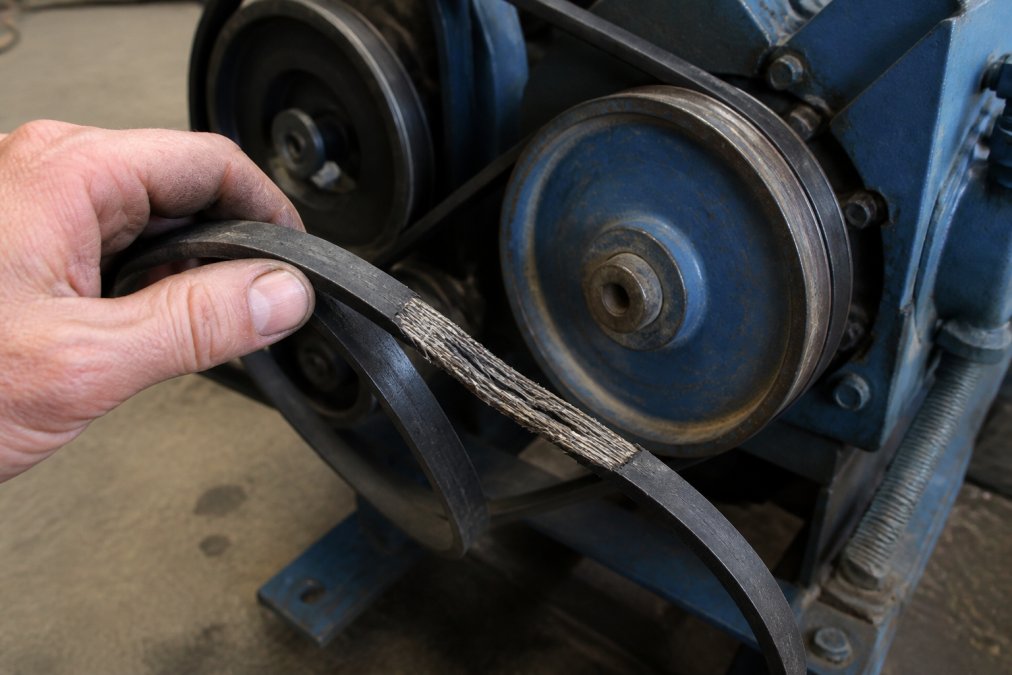
The most common causes of premature belt failure are improper belt tension, pulley misalignment, worn or damaged pulleys, excessive heat, contamination, incorrect belt size or type, overloading, and simple age-related rubber fatigue. Most of these leave a signature on the belt itself: sidewall wear, glazing, cracking, or cord breakage. Learning to read those signatures is the fastest diagnostic skill you can build.
Here's the part most guides skip: a belt is a wear part, but it should wear out on a predictable schedule, not a random one.
| Symptom on Belt | Likely Cause | First Check |
|---|---|---|
| Glazed, shiny sidewalls | Slippage from low tension | Tension and deflection |
| Uneven sidewall wear | Pulley misalignment | Straightedge across sheaves |
| Cracks and hardening | Heat or age degradation | Ambient temp, belt age |
| Cord breakage | Shock loads or debris | Load profile, guards |
| Cogs sheared off | Wrong belt type or back-idler | Belt spec vs. drive |
1. Improper Belt Tension
Tension is the single biggest lever on belt life, and it's the one most often set by feel. Too loose, and the belt slips, generating friction that glazes the sidewalls and burns the cords. Too tight, and you overload the bearings, stretch the belt, and accelerate cord fatigue. A common mistake is treating tension as a one-time setup task. New belts stretch in the first hours of operation, so a belt that was perfect on install day can be slipping by day three (gates.com).
2. Pulley Misalignment
Misalignment is the quiet killer. When sheaves aren't parallel and in the same plane, the belt enters and exits at an angle, which concentrates load on one sidewall. You'll see it as uneven wear, a belt that walks toward one edge of the groove, or a sheave that runs hot. A straightedge or laser alignment tool across the pulley faces catches most misalignment in under a minute. Installation tolerance matters here: small angular errors compound over thousands of revolutions.
3. Damaged or Worn Pulleys
A worn sheave wears out every belt you put on it. Grooves that have widened or become polished no longer grip the belt's sidewalls correctly, so the belt bottoms out and slips. Look for a shiny, polished groove floor, a visible ridge where the belt no longer reaches, or grooves worn unevenly across a multi-groove sheave. Replacing a belt without addressing a worn pulley is the most expensive habit in belt maintenance.
How to Fix V-Belt Slippage and Squealing
Slippage and squealing almost always trace back to tension, alignment, or contamination, in that order. Fix the cause, not the noise. A squealing belt is telling you it can't transmit the load it's being asked to carry.
Work through it in this sequence:
- Shut down and lock out the drive before touching anything.
- Check tension with a gauge, not your thumb. Compare against the drive manufacturer's spec.
- Inspect the sheaves for glazing, wear, and debris in the grooves.
- Verify alignment with a straightedge across both pulley faces.
- Clean the belt and grooves if you find oil, grease, or dust buildup.
- Re-tension, run for a short break-in, then re-check tension after the belt seats.
If the belt still slips after all six steps, the belt is likely the wrong section or type for the load, not a tension problem.
Proper Belt Tensioning Procedures for Long Belt Life
Proper belt tensioning procedures start with the manufacturer's deflection spec, not a rule of thumb. Tension is measured by applying a known force at the midpoint of the belt span and reading how far it deflects. If you don't have the spec, contact the drive or belt supplier before guessing.
The process that works:
- Measure the span between pulley centers.
- Apply the recommended force at the span midpoint, perpendicular to the belt.
- Compare the deflection to the spec. Adjust the tensioner until it matches.
- Run the drive under load for a short period.
- Re-check tension after the break-in run and adjust again.
Signs of Belt Misalignment You Should Never Ignore
The clearest signs of belt misalignment are uneven sidewall wear, a belt that rides against one flange, and sheaves that run noticeably hotter than their neighbors. Any of these means the belt is being forced to track at an angle it wasn't designed for.
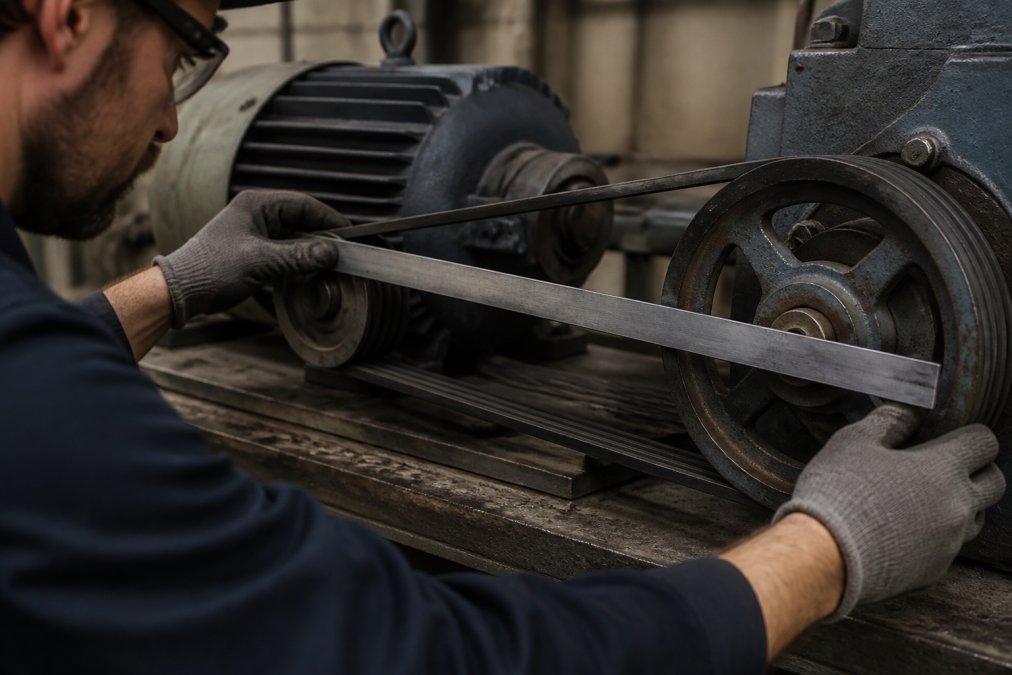
Watch for these warning signs before they become a failure:
- Sidewall wear concentrated on one side of the belt
- Belt edge fraying or cord exposure on one flank
- A sheave that's hot to the touch after a short run
- Vibration or a rhythmic thump that wasn't there before
- Belt dust accumulating on one side of the drive
Ignoring misalignment doesn't just shorten belt life. It wears the sheaves, and worn sheaves will ruin the next belt too.
Environmental and Operational Factors in Premature Belt Failure
Environmental and operational factors are where the belt's material science meets your actual plant floor. Heat, contamination, and load profile all attack the belt's compound and reinforcing cords at the same time, and they compound each other. But here's the angle most guides skip: not all belts are the same rubber, and the compound determines which failure mode you'll see first.
Heat, Contamination, and Chemical Exposure
Heat is the most predictable enemy. Ambient temperatures and radiant heat from nearby equipment accelerate compound degradation, hardening the belt until it cracks (nasa.gov). Contamination works differently: oil, grease, and dust reduce friction between the belt and sheave, causing slippage and glazing. Over-lubrication of bearings is a frequent culprit, since excess grease migrates onto the belt and sheaves. Chemical exposure from solvents and cleaning agents can soften or swell the compound, and thermal expansion of metal sheaves changes the effective groove geometry as temperatures swing.
Why the Compound Matters: EPDM vs. Neoprene vs. Polyurethane
Most troubleshooting guides treat "rubber" as one material. It isn't, and the difference shows up in the field.
- Neoprene (polychloroprene) is the traditional V-belt compound. It has good oil and flame resistance and handles moderate heat, but it hardens and cracks faster than modern alternatives as temperatures climb. Neoprene belts are also more sensitive to ozone and sunlight, which is why a belt sitting on a shelf or on an outdoor drive can crack before it ever runs.
- EPDM (ethylene propylene diene monomer) is the compound used in most modern automotive and many industrial belts. It resists heat, ozone, and weathering far better than Neoprene, which is why it dominates under-hood applications. Its weakness is oil and hydrocarbon resistance, EPDM swells and softens when exposed to petroleum-based lubricants, so a leaking seal or a greasy sheave will kill an EPDM belt faster than it would a Neoprene one.
- Polyurethane is common in synchronous (timing) belts and some specialty drives. It has excellent abrasion resistance and doesn't harden the way rubber compounds do, but it's more sensitive to moisture and hydrolysis, and it can fail by cracking at the tooth root under high load rather than by sidewall wear.
The practical takeaway: when you diagnose a failure, match the failure mode to the compound. A cracked, hardened belt on a hot drive points toward a heat-sensitive compound. A swollen, soft belt near an oil leak points toward an oil-sensitive one. Choosing the right compound for the environment is as important as choosing the right size.
Overloading, Shock Loads, and Age-Related Degradation
Shock loads and load fluctuations stress the belt's cords far beyond steady-state running. A jam, a sudden start, or a reversing load can snap cords that would otherwise last for years. Fatigue failure builds up over thousands of small stress cycles, and eventually a cord breaks. Separately, age-related degradation happens even on a belt that isn't running: compounds harden, plasticizers migrate out, and the belt cracks from sitting. A belt on a shelf has a shelf life, not an infinite one, and that shelf life is shorter for heat- and ozone-sensitive compounds.
Preventive Maintenance and Predictive Technology
Preventive maintenance is the cheapest belt insurance you can buy, and predictive technology is making it sharper. A simple schedule catches most failures before they happen: check tension and alignment at every service interval, inspect sheaves for wear, and replace belts on a planned basis rather than a reactive one.
Where this is heading is predictive maintenance. Vibration sensors and thermal imaging can flag a misaligned or failing drive before the belt squeals, and some facilities now trend sheave temperature and vibration to schedule belt changes during planned downtime (energy.gov). The payoff is real: fewer unplanned stoppages, and belts replaced on your schedule instead of the machine's.
Conclusion
Every premature belt failure leaves a clue, and reading those clues is what separates a reactive maintenance operation from a proactive one. V-Belt Nation supplies a full range of classic, wedge, cogged, banded, and lawn and garden belts built to handle real operating conditions, backed by a price match guarantee and free ground shipping on orders over $175. Our team can help you match the exact section, type, and size your drive needs. Shop now with V-Belt Nation and get the right belt the first time.
Frequently Asked Questions
What are the most common causes of industrial belt failure?
Improper tension, pulley misalignment, worn pulleys, and contamination are the leading causes. Over-tensioning stretches the cords and overloads bearings, while under-tensioning lets the belt slip and glaze. Misalignment wears the sidewalls unevenly. Oil, grease, and debris accelerate rubber degradation. Heat and shock loads also contribute. Regular inspection catches most of these before they cause unexpected downtime.
How can improper tension lead to premature belt wear?
Too much tension stretches the tensile cords and overloads shaft bearings, causing cord breakage and fatigue failure. Too little tension lets the belt slip, which generates friction and heat that glazes the sidewalls and burns the belt. Both extremes shorten belt life. Following proper belt tensioning procedures with a gauge, and rechecking after the first 24 to 48 hours of run-in, prevents most tension-related failures.
How do you identify signs of belt misalignment in a belt drive system?
Look for uneven sidewall wear, one side of the belt worn more than the other, or frayed edges. The belt may also flip or run off the pulley. A straightedge across both pulleys shows whether they are parallel and coplanar. Misalignment also causes vibration and unusual noise. Catching these signs of belt misalignment early lets you realign the drive before the belt fails completely.
Can heat buildup cause a V-belt to fail prematurely?
Yes. Excessive heat from slipping, overload, or a hot environment hardens and cracks the rubber compound. A belt running above its rated temperature range loses flexibility and develops cracks at the base of the cogs. Poor ventilation around the drive, a seized bearing, or a worn tensioner all raise operating temperature. If the belt feels too hot to touch after running, investigate the drive for slippage or alignment problems.