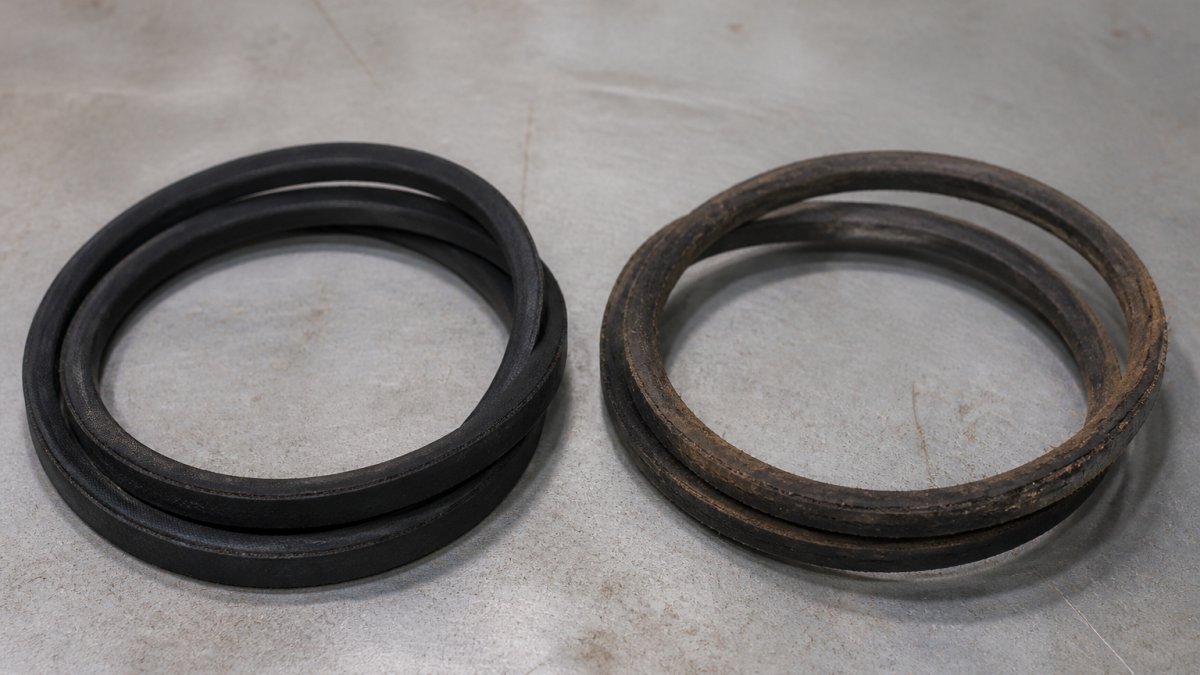
 comparison
Heavy-Duty vs Standard Mower Belts: Durability Compared
Table of Contents
- Heavy-Duty vs Standard Mower Belts: Core Differences
- How to Measure Lawn Mower Belt Size Correctly
- Signs of a Worn Mower Belt and When to Replace
- Mower Belt Replacement Frequency and Service Life
- When to Choose Heavy-Duty Belts Over Standard Options
- Heat Resistance, Friction, and Durability Factors
- Cost-Benefit Analysis: Heavy-Duty vs Standard Belts
- Frequently Asked Questions
Last Updated: September 28, 2026
Heavy-Duty vs Standard Mower Belts: Core Differences
When your lawn mower belt fails, you must choose between standard rubber and heavy-duty options. Heavy-duty mower belts use aramid fiber to withstand shock loads and extreme conditions, while standard belts rely on basic rubber construction for lighter, intermittent use.
The core distinction comes down to construction, durability under stress, and total cost of ownership.
Aramid Fiber vs Standard Rubber Construction
Heavy-duty mower belts incorporate aramid fiber as tensile cords wrapped in reinforced rubber, providing superior tensile strength. Standard belts use cotton or polyester cords in basic rubber, adequate for light residential mowing but degrading faster under shock loads.
Aramid construction resists stretching, maintains friction across temperature ranges, and resists thermal degradation. When shock loads transfer through the belt to the pulley system, aramid fiber handles impact without permanent deformation, while standard rubber experiences flex fatigue and micro-tears.
Heavy-duty belts' wrapped construction protects against abrasion and debris, while standard belts' exposed surfaces wear faster in dusty or wet conditions.
Tensile Strength and Stretch Resistance
Heavy-duty belts with aramid cords deliver substantially higher tensile strength than standard belts, translating to better stretch resistance and consistent pulley alignment.
Stretched belts lose pulley contact, causing engagement problems and squealing. Heavy-duty belts maintain tighter tolerances because aramid fibers resist elongation, while standard belts stretch within the first heavy-use season.
How to Measure Lawn Mower Belt Size Correctly
Getting the wrong belt size wastes money. Most mower belt failures occur from incorrect sizing, not material failure.
Finding Your Belt Length and Width
Belt length is measured along the inside circumference. Check your mower's manual or the belt label (typically showing "42" or "48" inches). If no label exists, remove the old belt and measure with a flexible tape around the inside edge.
Width is the second dimension, typically 0.5 to 1 inch. Confusing length and width is the most common sizing error. Always verify both before purchasing.
Write down both measurements before shopping. V-Belt Nation's team can help you find specific belts.
Identifying OEM Specifications and Cross-Section
OEM specifications include the belt's cross-section profile (the shape of the belt's side view). Common profiles include classical V-belts, wedge belts, and cogged designs.
The cross-section affects how the belt seats in the pulley and transmits torque. A wrong cross-section won't grip properly, even with correct length and width. Check your mower's parts diagram to confirm the type.
Heavy-duty versions provide upgraded durability without pulley modifications.
Signs of a Worn Mower Belt and When to Replace
A worn mower belt announces itself through performance changes before it fails completely. Recognizing these signals lets you replace the belt proactively instead of being stranded mid-season.
Visual Wear Indicators and Performance Clues
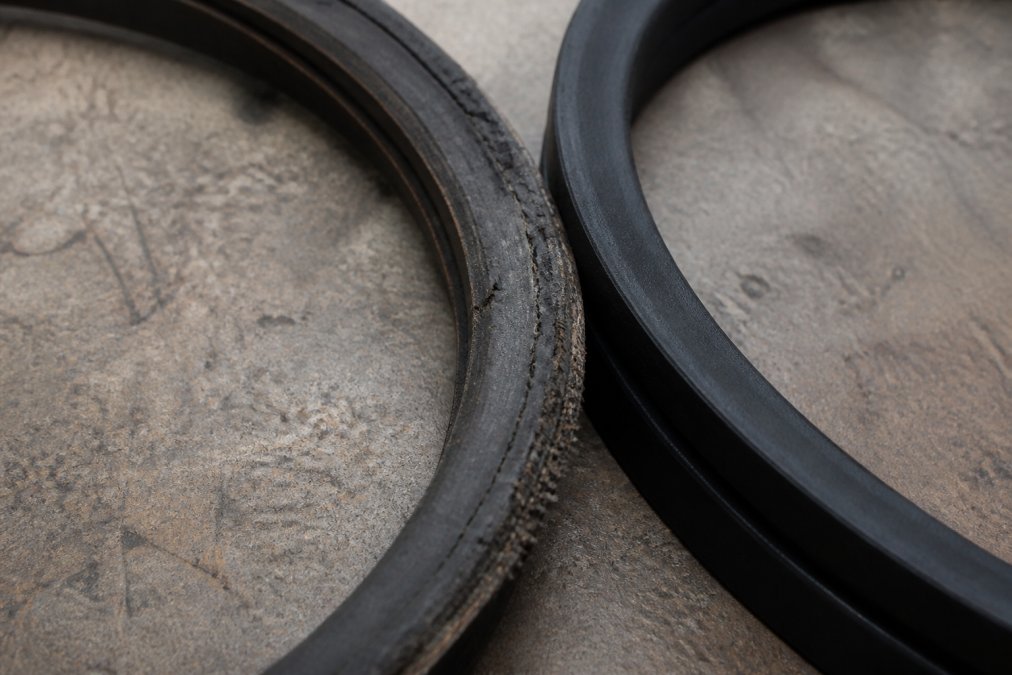
Examine your belt visually during maintenance. Cracks perpendicular to the belt's length, fraying edges, or separation between rubber and cord indicate advanced wear. Glazing shows thermal degradation.
Performance clues appear before visible damage: struggling deck engagement, slow blade spin despite full throttle, squealing during engagement, or excessive side-to-side movement all indicate slippage, misalignment, or tension loss.
Surface cracking that doesn't penetrate the cord structure can last another season. But deep cracks or exposed cord mean replacement is overdue.
Mower Belt Replacement Frequency and Service Life
How often you replace your belt depends on usage intensity, environmental conditions, and belt quality. Understanding service life expectations helps you budget for maintenance and choose the right belt type.
Heavy-Duty Belt Lifespan Under Shock Loads
Heavy-duty belts typically deliver 3-5 years of residential service or 2-3 commercial seasons, significantly outlasting standard belts in high-stress applications.
Extended lifespan comes from superior shock load resistance. Standard belts accumulate damage from repeated impacts, experiencing flex fatigue. Heavy-duty belts absorb impacts with minimal permanent deformation.
Commercial users report 40-60% reduction in replacement frequency when switching to heavy-duty belts. The upfront cost difference disappears when factoring in labor and downtime across multiple seasons.
Standard Belt Durability and Maintenance Intervals
Standard belts last 1-2 years residentially or one commercial season. Service life depends heavily on maintenance: proper alignment and tension extend life; neglect shortens it dramatically.
Standard belts require more frequent inspection and adjustment. Slippage generates heat, accelerating degradation in a cycle: slippage causes heat, heat causes stretching, stretching causes more slippage.
For occasional residential use, standard belts may suffice. For commercial operations or frequent mowing, maintenance burden often exceeds the cost difference to heavy-duty options.
When to Choose Heavy-Duty Belts Over Standard Options
The decision between heavy-duty and standard belts hinges on your specific usage pattern and equipment demands. This section covers the scenarios where heavy-duty belts justify their higher initial cost.
Impact of Shock Loads on Mower Deck Performance
Shock loads occur when mowers hit rocks, roots, or thick grass, creating torque spikes. Heavy-duty belts handle these without permanent damage; standard belts experience micro-damage with each event.
If your mowing environment includes rough terrain, dense vegetation, or frequent obstacles, shock loads are constant. Commercial landscaping operations, properties with wooded areas, or zero-turn mower use on uneven ground all generate frequent shock loads. In these scenarios, heavy-duty belts reduce downtime and extend equipment life.
The relationship between shock loads and belt failure is direct: more shocks mean faster degradation.
Residential vs Commercial Use Cases
Residential users with small properties and light mowing schedules can often get acceptable service from standard belts. A homeowner mowing a quarter-acre weekly during growing season encounters fewer shock loads and operates at lower stress levels than commercial equipment.
Heat Resistance, Friction, and Durability Factors
Beyond material composition, several mechanical factors influence belt durability and performance. Understanding these factors helps explain why heavy-duty belts outperform standard options in demanding conditions.
Thermal Degradation and Abrasion Resistance
Thermal degradation occurs when belt material breaks down under sustained heat. Friction between belt and pulley generates heat, especially during slippage. Standard rubber loses its flexibility and elasticity as temperature rises, becoming brittle and prone to cracking. Aramid fiber used in heavy-duty belts maintains its properties across a wider temperature range, resisting thermal degradation more effectively.
Pulley Alignment and Belt Deflection Issues
Pulley alignment directly affects belt life. Misaligned pulleys cause the belt to track sideways, creating edge wear and premature failure. Heavy-duty belts tolerate minor misalignment better than standard belts because their stiffer construction resists deflection. However, severe misalignment damages any belt type.
Cost-Benefit Analysis: Heavy-Duty vs Standard Belts
The financial decision between heavy-duty and standard belts requires looking beyond the purchase price to total cost of ownership over multiple seasons.
Upfront Investment vs Long-Term Maintenance Savings
Heavy-duty belts typically cost 50-100% more than standard replacements, depending on size and brand. A standard belt might cost $20-40, while a comparable heavy-duty option runs $40-80. This upfront difference feels significant on a single purchase.
Compatibility Risks and Aftermarket Replacements
Aftermarket replacements like Stens and D&D Power Drive belts offer cost savings compared to OEM-branded parts while maintaining compatibility with original specifications. These options come in both standard and heavy-duty versions, giving you flexibility in choosing durability level without brand lock-in.
| Belt Type | Typical Lifespan | Best For | Maintenance Frequency |
|---|---|---|---|
| Standard Rubber | 1-2 years (residential); 1 season (commercial) | Light residential use | Monthly inspection; frequent tension adjustment |
| Heavy-Duty Aramid | 3-5 years (residential); 2-3 seasons (commercial) | Commercial use; rough terrain; frequent shock loads | Quarterly inspection; minimal adjustment needed |
Frequently Asked Questions
How long do heavy-duty mower belts usually last compared to standard belts?
Heavy-duty belts with aramid fiber construction typically last 2-3 times longer than standard rubber belts under comparable conditions. Standard rubber belts generally last 1-2 seasons for residential mowers, while heavy-duty versions can last 3-5 seasons. The difference widens significantly in commercial or rough-terrain applications where shock loads are frequent. Actual service life depends on mowing frequency, terrain type, and proper maintenance.
Are Kevlar mower belts better than standard rubber for all mowers?
Kevlar (aramid) belts offer superior durability under shock loads, high heat, and abrasion, making them better for commercial use, zero-turn mowers, and rough terrain. For light residential use with standard mower decks, standard rubber belts may be adequate and cost less upfront. The choice depends on your mowing intensity, equipment horsepower, and budget. Heavy-duty belts shine when you experience frequent belt slippage, premature cracking, or operate in demanding conditions.
Can I use a heavy-duty belt on a standard mower deck?
Yes, you can use a heavy-duty belt on a standard mower deck if the dimensions match your OEM specifications exactly. Heavy-duty belts are a direct physical replacement; they fit the same pulleys and drive system. The stiffer construction of aramid-wrapped belts may feel slightly different during engagement, but they will not damage your mower. Always verify the pitch length, width, and cross-section before purchasing to ensure compatibility.
What causes mower belts to keep breaking prematurely?
Common causes include misaligned pulleys, incorrect belt tension, debris damage, worn bearings, or operating under extreme shock loads. Pulley misalignment creates uneven friction and accelerates wear. Over-tensioning causes flex fatigue, while under-tensioning leads to slippage and heat buildup. If you replace belts frequently, inspect pulley alignment, check for bent or damaged pulleys, and ensure your deck is level. Upgrading to a heavy-duty belt may help if shock loads are the root cause.
How do I know if I need a heavy-duty belt or a standard replacement?
Choose heavy-duty if your mower experiences frequent shock loads (rough terrain, thick grass, zero-turn operation), your current belt fails within one season, or you operate commercially. Choose standard if you mow light residential lawns on level terrain and your current belt lasts 2+ seasons. Check your equipment's horsepower and deck design: high-horsepower commercial mowers benefit from heavy-duty construction. When in doubt, consult your OEM specifications or contact V-Belt Nation's support team for a personalized recommendation.