 ultimate-guide
High Performance Cogged Belt Benefits: 2026 Guide
Table of Contents
- What High Performance Cogged Belt Benefits Mean for Your Drive System
- Cogged vs Wrapped V-Belt: Key Differences That Affect Performance
- How Cogged Belts Improve Energy Efficiency and Reduce Slip
- Heat Dissipation, Bending Stress, and Small Pulley Compatibility
- How to Identify Belt Size Before You Order a Replacement
- Failure Modes, Material Composition, and ROI of Cogged Belts
- Conclusion
- Frequently Asked Questions
Last Updated: September 17, 2026
What High Performance Cogged Belt Benefits Mean for Your Drive System
High performance cogged belt benefits start with one design change: a raw-edge, notched profile that flexes around small pulleys and sheds heat instead of trapping it. For maintenance teams, that translates into less slip, longer service life, and measurably lower operational cost. This guide from V-Belt Nation breaks down where cogged belts win, where they don't, and how to size one correctly before you order.
Cogged vs Wrapped V-Belt: Key Differences That Affect Performance
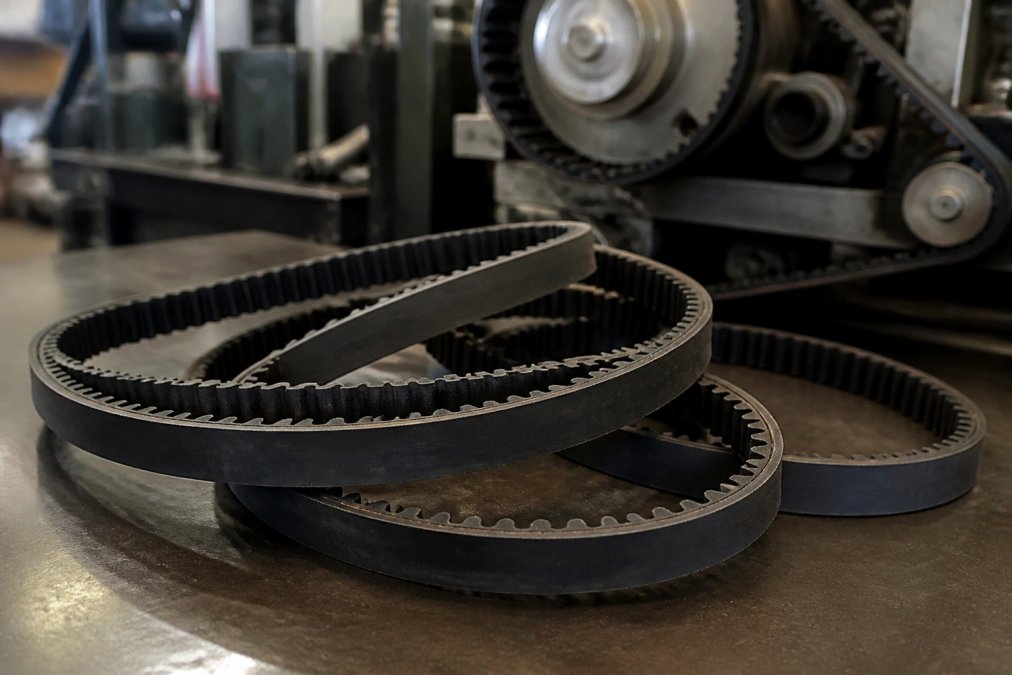
A cogged V-belt is a raw-edge belt with molded notches on the underside that increase flexibility and heat dissipation. A wrapped V-belt is covered in fabric and relies on a solid cross-section for grip. The distinction matters most at small pulley diameters.
Here's how they compare in practice:
| Feature | Cogged (Raw Edge) | Wrapped (Classical) |
|---|---|---|
| Flexibility | High, bends around small sheaves | Limited by solid core |
| Heat dissipation | Notches vent heat buildup | Heat trapped in core |
| Grip | Raw edge grips sheave sidewalls | Fabric cover, moderate grip |
| Best for | Small pulleys, high RPM | Large pulleys, shock loads |
| Service life | Longer under heat and flex | Shorter in tight bends |
How Cogged Belts Improve Energy Efficiency and Reduce Slip
Energy efficiency gains from cogged belts come from two measurable sources: lower bending resistance and better grip on the sheave sidewalls. A belt that flexes easily wastes less energy as it wraps the pulley. A belt that grips well transmits torque without slipping.
Where the energy actually goes
In any V-belt drive, a portion of input horsepower is lost to three things:
- Bending hysteresis, energy converted to heat each time the belt flexes into and out of the sheave groove. A wrapped belt with a solid cross-section resists bending, so more of that energy becomes heat instead of motion. The notched profile of a cogged belt reduces the cross-section that has to deform, which lowers hysteresis losses on every revolution.
- Slip, relative motion between the belt and the sheave sidewalls. Slip is the quiet killer of drive efficiency. When a belt slips, rotational speed drops, heat rises, and the belt wears faster.
- Cord and compound internal friction, the tensile cords and rubber compound flex internally as the belt runs. A stiffer compound dissipates more energy as heat.
Slip, squeal, and retensioning frequency
Many maintenance teams find that switching to cogged belts on high-speed drives reduces the frequency of retensioning. That is not marketing. It is a direct consequence of the belt holding grip as it heats up. A wrapped belt's fabric cover can glaze and polish the sheave groove over time, which lowers the friction coefficient and accelerates slip. A raw-edge cogged belt does not glaze the same way because there is no cover to polish.
A simple framework for estimating energy savings
You do not need a lab to estimate whether a cogged belt will pay back on a given drive. A conceptual framework works:
- Measure baseline input power at the motor with a clamp meter or power logger over a representative operating period.
- Note the drive's duty cycle, hours per day, days per week, and how often the drive runs at full load versus part load.
- Estimate the efficiency delta. Industry guidance commonly cites a modest efficiency improvement for notched versus wrapped belts on small-pulley drives, with the gain shrinking as pulley diameter grows. Use a conservative figure for your own payback math rather than a vendor's best case.
- Multiply the delta by your local electricity rate and annual run hours to get annual energy savings.
- Compare that annual savings to the price difference between a cogged and wrapped belt, plus any labor saved from fewer retensioning and replacement events.
When the efficiency gain is not worth it
If your drive already runs a large sheave, runs intermittently, or is heavily shock-loaded, the efficiency delta from a cogged belt may be small enough that a wrapped belt's shock absorption is the better trade. Match the belt to the drive, not the other way around.
Heat Dissipation, Bending Stress, and Small Pulley Compatibility
Heat buildup is the leading cause of premature belt failure. A wrapped belt traps heat in its core because the fabric cover insulates it. A cogged belt vents heat through its notches with every rotation.
How to Identify Belt Size Before You Order a Replacement
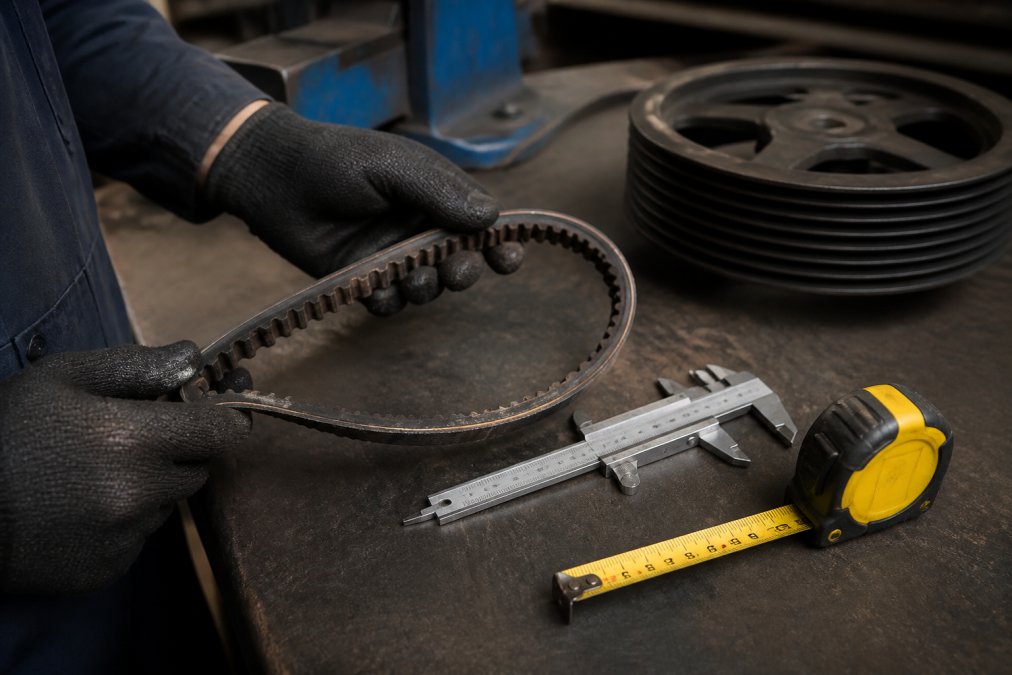
To identify belt size, measure the outside circumference with a flexible tape, then read the cross-section code stamped on the belt. The code tells you the profile (A, B, C, or a wedge designation). The number tells you the length. Both must match.
A practical checklist before you order:
- Read the stamped code on the old belt (profile + length)
- Measure outside circumference if the stamp is worn off
- Measure the top width and thickness with a caliper
- Confirm the pulley groove profile matches the belt section
- Note whether the drive needs a cogged or wrapped construction
- Check for matched-set requirements on multi-belt drives
Failure Modes, Material Composition, and ROI of Cogged Belts
Cogged belt failure modes fall into four categories: cord fatigue, edge wear, notch cracking, and glazing. Each points to a different root cause, and misreading them leads to repeat failures. This section covers how to tell them apart, how material composition changes the picture, and how to think about ROI.
Diagnosing the four failure modes
- Cord fatigue, the belt fails from the inside out. The outer surfaces may look fine while the belt stretches, slips, or snaps. Root cause is almost always a pulley below the belt's minimum diameter rating, which forces the cords to flex beyond their design limit on every revolution. If you see cord fatigue on a drive that was recently re-sheaved, check the new pulley diameter against the belt's rating before you blame the belt.
- Edge wear, the sidewalls are worn, frayed, or shiny. This points to sheave misalignment, worn or undersized grooves, or a belt profile that does not match the groove. A straightedge across the sheave faces will reveal misalignment quickly. Worn grooves require a groove gauge, not a visual check.
- Notch cracking, cracks appear at the base of the notches, often radiating outward. This signals excessive heat, age, or a compound that has hardened past its useful life. Notch cracking on a belt that is only months old usually means the drive is running hotter than the belt compound can tolerate.
- Glazing, the sidewalls take on a hard, shiny appearance. Glazing means slip, most often from under-tensioning or from a sheave groove that has been polished smooth by a previous glazed belt. Replace or resurface the sheave, not just the belt, or the new belt will glaze too.
Material composition: EPDM versus Neoprene
Most guides discuss cogged belt geometry and ignore the compound. That is a mistake, because the compound determines heat tolerance, ozone resistance, and service life.
- Neoprene (polychloroprene) has been the traditional compound for V-belts for decades. It offers good oil resistance and decent heat tolerance, but it hardens and cracks over time, especially in high-heat or ozone-rich environments.
- EPDM (ethylene propylene diene monomer) is increasingly common in premium cogged belts. It resists heat aging, ozone, and weathering better than Neoprene, which typically translates to longer service life on hot drives and outdoor installations. EPDM is generally less oil-resistant than Neoprene, so it is a poor choice for drives exposed to oil mist or grease.
A framework for ROI
- Energy savings, driven by lower hysteresis and reduced slip. Largest on continuous-duty, small-pulley drives.
- Replacement cost avoided, a longer-lasting belt means fewer purchases and fewer labor hours per year.
- Downtime avoided, on drives where an unplanned stop halts production, this line item usually dwarfs the other two.
For a full selection of cogged, banded, and wedge profiles, V-Belt Nation stocks the sections most drives require.
Conclusion
Matching belt construction to your actual drive conditions is the difference between a belt that lasts and one that fails early. V-Belt Nation carries cogged, wrapped, banded, and wedge belts across the profiles most industrial, HVAC, and agricultural drives use, backed by a Price Match Guarantee and free ground shipping on all U.S. orders over $175. Our dedicated support team can help you confirm the right section and length before you order.
Frequently Asked Questions
Is a cogged belt better than a standard wrapped V-belt?
For most industrial drives, yes. A cogged belt runs cooler, grips the sheave sidewalls more effectively, and handles smaller pulley diameters without excessive bending stress. It also reduces slip and vibration, which extends service life. Wrapped belts still work well in dirty or oily environments where the raw edge could clog, so match the belt to the conditions.
What does 'cogged' mean in V-belt design?
Cogged refers to the notches molded into the underside of the belt. These cogs let the belt flex around small pulleys without cracking and give heat a path to escape. The result is less heat buildup, better flexibility, and more consistent power transmission across a wider range of rotational speeds than a smooth-backed belt.
How do I identify belt size for a cogged replacement?
Measure the outside circumference with a flexible tape, then measure the top width across the widest point. Note the section letter stamped on the old belt. Cross-reference those three numbers against a belt size chart. If the belt is too worn to read, measure the pulley groove width and center distance instead, then confirm with the supplier before ordering.
Are cogged belts worth the higher upfront price?
The extra cost is usually recovered through lower energy use and fewer replacements. Because cogged belts transmit torque with less slip, the drive system draws less power to do the same work. They also last longer under heat and vibration, so maintenance intervals stretch out. Factor in downtime avoided and the payback period shortens further.