 ultimate-guide
How to Maintain Industrial Drives: A 2026 Guide
Table of Contents
- Why Industrial Drive Maintenance Matters
- Routine Inspection and Testing for Drive Systems
- How to Fix V-Belt Slippage and Prevent It
- Bearing Lubrication and Maintenance Best Practices
- Thermal Imaging and Vibration Analysis for Condition Monitoring
- Industrial Drive Preventive Maintenance Checklist
- VFD Troubleshooting Guide and Digital Maintenance
- Root Cause Analysis and Cable Management
- Frequently Asked Questions
Last Updated: September 26, 2026
Why Industrial Drive Maintenance Matters
Unplanned downtime costs manufacturing facilities thousands of dollars per hour. Industrial drives power everything from conveyor systems to HVAC cooling towers, and when they fail, production stops. The difference between a drive that lasts two years and one that lasts ten often comes down to maintenance discipline. To maintain industrial drives properly prevents catastrophic failures, extends equipment lifespan, and keeps operational efficiency stable. Facilities that implement structured maintenance protocols can significantly cut their unscheduled downtime. This guide walks you through the essential practices that separate reliable operations from crisis management.
Routine Inspection and Testing for Drive Systems
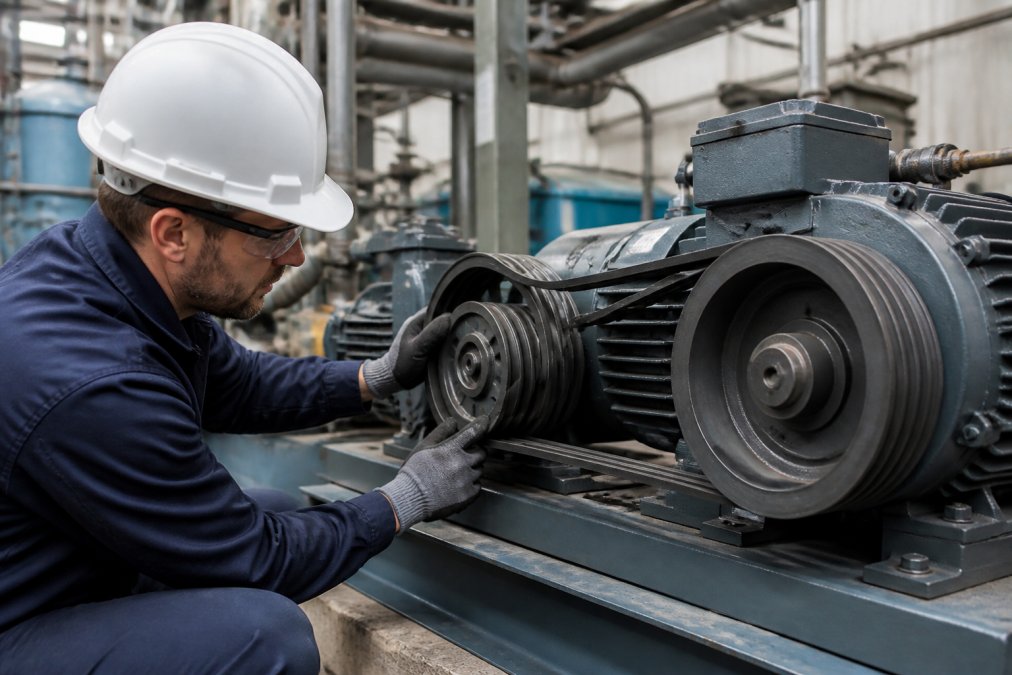
The foundation to maintain industrial drives is systematic inspection. Check your drive systems weekly during normal operations. Look for visible wear on V-belts, listen for squealing or grinding noises, and feel for abnormal vibration when you place your hand on the motor housing. Document everything. This creates a baseline for what normal operation sounds and feels like for your specific equipment.
Testing should go beyond visual checks. Use a belt tension gauge to measure V-belt tension, most industrial belts require 50-100 pounds of force when deflected midspan, though your equipment nameplate range will specify the exact requirement. Tension that's too loose causes slippage and premature wear. Tension that's too tight overloads bearings and shortens their life. Test tension monthly on critical systems, quarterly on secondary systems.
Inspect coupling alignment using a straightedge or laser alignment tool. Misalignment creates vibration that cascades through the entire drive system. Even a quarter-inch offset can double bearing wear rates. Check for corrosion on metal components, cracks in mounting brackets, and loose fasteners. Tighten any bolts you find loose, vibration naturally works fasteners free over time.
How to Fix V-Belt Slippage and Prevent It
V-belt slippage happens when friction between the belt and pulley isn't sufficient to transmit power. The belt spins but the load doesn't move, or moves slower than expected. This generates heat, accelerates belt deterioration, and wastes energy. The root cause is almost always one of three things: incorrect belt tension, worn pulleys, or a belt that's reached the end of its usable life.
Start with tension. If your belt is slipping, check tension first before replacing anything. A loose belt is the most common cause, and it's the cheapest fix. Use a tension gauge or the deflection method: press on the belt midway between pulleys with moderate thumb pressure. The belt should deflect about half an inch. If it moves more, tighten the motor mount or adjustable pulley until tension is correct.
If tension is correct but slipping continues, inspect the pulley grooves. Worn pulleys develop glazed or flattened groove surfaces that reduce friction. Run your finger along the groove, it should feel slightly rough, not smooth or shiny. If the pulley is glazed, it must be replaced. Continuing to use a worn pulley with a new belt will destroy the new belt in weeks.
The belt itself may be the problem. Industrial V-belts degrade over time from heat, UV exposure, and flexing. If your belt is more than five years old and shows signs of cracking, hardening, or fraying at the edges, replacement is overdue. V-Belt Nation provides a comprehensive selection of high-quality industrial V-belts and power drive solutions, from classic and wedge belts to specialized cogged, banded, and lawn and garden options, to meet diverse operational needs.
Bearing Lubrication and Maintenance Best Practices
Bearings are the silent workhorses of industrial drives. They support the shaft, reduce friction, and allow smooth rotation. Proper lubrication is non-negotiable. Under-lubricated bearings fail suddenly. Over-lubricated bearings overheat and fail just as quickly. The key is using the right lubricant, in the right quantity, on the right schedule.
Most industrial motor bearings use grease lubrication. Check your equipment manual for the specific grease type and viscosity grade. Common grades are NLGI 2 or NLGI 3. Never mix grease types, different base oils and additives can react unpredictably and cause bearing failure. Establish a relubrication schedule based on bearing type and operating speed. High-speed bearings typically need relubrication every 500-1000 operating hours. Low-speed bearings may go 2000+ hours between relubrication.
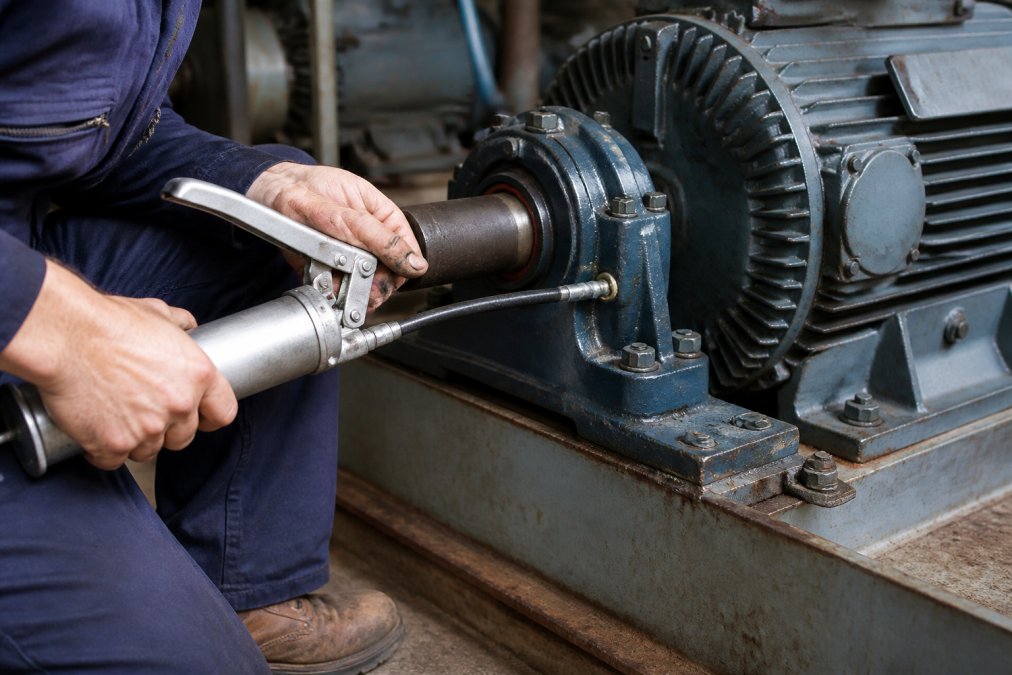
When relubrication time arrives, clean the bearing housing first. Remove old, contaminated grease using a grease gun or hand pump. Apply fresh grease until a small amount appears at the bearing seals, this confirms the cavity is full. Excess grease creates back-pressure that forces seals open and allows contamination inside. More is not better.
Monitor bearing temperature during operation.
Thermal Imaging and Vibration Analysis for Condition Monitoring
Modern predictive maintenance relies on two key technologies: thermal imaging and vibration monitoring. These tools detect problems before they become failures, giving you time to schedule maintenance during planned downtime instead of emergency shutdowns.
Industrial Drive Preventive Maintenance Checklist
Effective maintenance requires structure. Use this checklist weekly, monthly, and quarterly to ensure nothing gets overlooked. Assign each task to a specific technician and document completion dates.
| Task | Frequency | Time Required | Priority |
|---|---|---|---|
| Visual belt inspection for cracks, fraying, glazing | Weekly | 5 minutes | High |
| V-belt tension measurement with gauge | Monthly | 10 minutes | High |
| Bearing temperature check with infrared thermometer | Weekly | 5 minutes | High |
| Bearing relubrication (if schedule requires) | Per manual | 15 minutes | High |
| Coupling alignment check with straightedge | Quarterly | 20 minutes | Medium |
| Fastener tightness inspection | Monthly | 10 minutes | Medium |
| Thermal imaging scan of motor and bearings | Quarterly | 15 minutes | Medium |
| Vibration analysis on critical drives | Quarterly | 30 minutes | Medium |
| Cable management and wiring inspection | Quarterly | 15 minutes | Low |
| Mechanical seal inspection (if applicable) | Quarterly | 10 minutes | Medium |
VFD Troubleshooting Guide and Digital Maintenance
Variable Frequency Drives (VFDs) control motor speed and are increasingly common in modern industrial systems. They improve energy efficiency and system responsiveness, but they introduce new maintenance considerations. VFD failures often stem from software configuration issues, cable management problems, or thermal stress rather than mechanical wear.
Root Cause Analysis and Cable Management
When a drive fails, resist the urge to simply replace the failed component and move on. Five minutes of root cause analysis prevents the same failure from happening again.
Frequently Asked Questions
How often should industrial drives be inspected?
Inspect industrial drives monthly under normal operating conditions, or every two weeks in high-temperature or high-vibration environments. Check bearing housings, lubrication levels, belt tension, and mechanical seals. More frequent inspections catch early signs of wear before failures occur. Track inspection dates and findings to establish patterns that indicate when maintenance is needed.
What causes V-belt slippage and how do I fix it?
V-belt slippage occurs from worn belts, improper tension, misaligned pulleys, or contamination (oil, coolant). To fix it: check belt tension with a tension gauge, realign pulleys if they're out of parallel, clean pulleys and belts to remove oil or debris, and replace worn belts immediately. Preventive maintenance, regular belt inspection and proper tension adjustment, stops slippage before it damages your drive system.
What is VFD maintenance and why does it matter?
VFD (variable frequency drive) maintenance involves monitoring software health, checking cooling fans and heatsinks, inspecting cable connections and field voltage readings, and cleaning internal components to prevent thermal buildup. VFDs control motor speed and system responsiveness, so poor maintenance leads to drive faults, production downtime, and equipment damage. Regular digital maintenance extends VFD lifespan and ensures stable operation.
How does thermal imaging help maintain industrial drives?
Thermal imaging detects abnormal heat in bearing housings, motor windings, and drive components before they fail. Hot spots indicate friction, misalignment, or inadequate lubrication. Regular thermal monitoring as part of condition monitoring lets you schedule maintenance during planned downtime rather than face emergency repairs. Combined with vibration analysis, thermal imaging provides early warning of mechanical seal wear and other hidden problems.
What should be included in a drive maintenance checklist?
A preventive maintenance checklist should cover: bearing lubrication levels and condition, V-belt tension and wear, pulley alignment, motor winding temperature, cable connections and field voltage, mechanical seal inspection, gearbox fluid levels, vibration and noise patterns, and environmental factors like dust and coolant contamination. Document each inspection date and finding to track equipment health and plan replacements before failures occur.
How do I perform root cause analysis on a failed drive?
When a drive fails, examine the failed component (belt, bearing, seal) for damage patterns, fraying indicates misalignment, glazing suggests contamination, and spalling shows bearing fatigue. Check nameplate range and field voltage to confirm the drive operated within specifications. Review lubrication records, alignment data, and thermal history. Identify whether failure was mechanical (wear, misalignment) or electrical (voltage surge, VFD fault). Correct the root cause, not just the symptom.
What is the difference between preventive and predictive maintenance?
Preventive maintenance follows a fixed schedule, inspect and service drives monthly regardless of condition. Predictive maintenance uses condition monitoring (thermal imaging, vibration analysis, oil analysis) to service equipment only when data shows wear is developing. Predictive maintenance reduces unnecessary downtime and costs but requires investment in monitoring equipment. Many facilities use both: preventive inspections catch obvious problems, while predictive tools optimize timing for major maintenance.