 how-to
How to Measure Lawn Mower Belt: Step-by-Step Guide
Table of Contents
- Tools You'll Need to Measure Your Lawn Mower Belt
- How to Measure Lawn Mower Belt Using the String Method
- Understanding Inside vs. Outside Circumference Measurements
- Lawn Mower Belt Size Chart and Identification
- Identifying Belt Wear and When to Replace
- Lawn Mower Belt Replacement Tips for Accurate Sizing
- Conclusion
- Frequently Asked Questions
Last Updated: September 3, 2026
Tools You'll Need to Measure Your Lawn Mower Belt
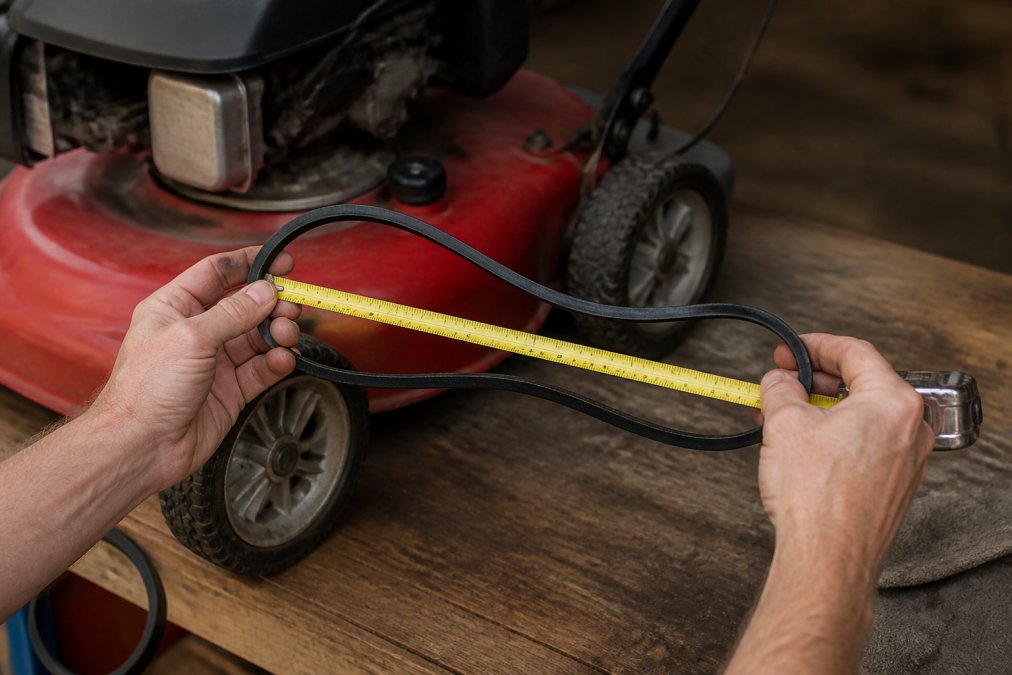
A cloth measuring tape is your primary tool, it conforms to curved surfaces better than rigid rulers. String or twine serves as a backup method for measuring the belt's path. A ruler helps measure the string afterward, and a notepad ensures you capture all three critical dimensions: outside circumference, inside flat length, and belt width. Optional tools include calipers for belt thickness and a flashlight for examining wear. Safety gear, work gloves and safety glasses, protects you while working, and a jack or blocks safely elevates the mower.
How to Measure Lawn Mower Belt Using the String Method
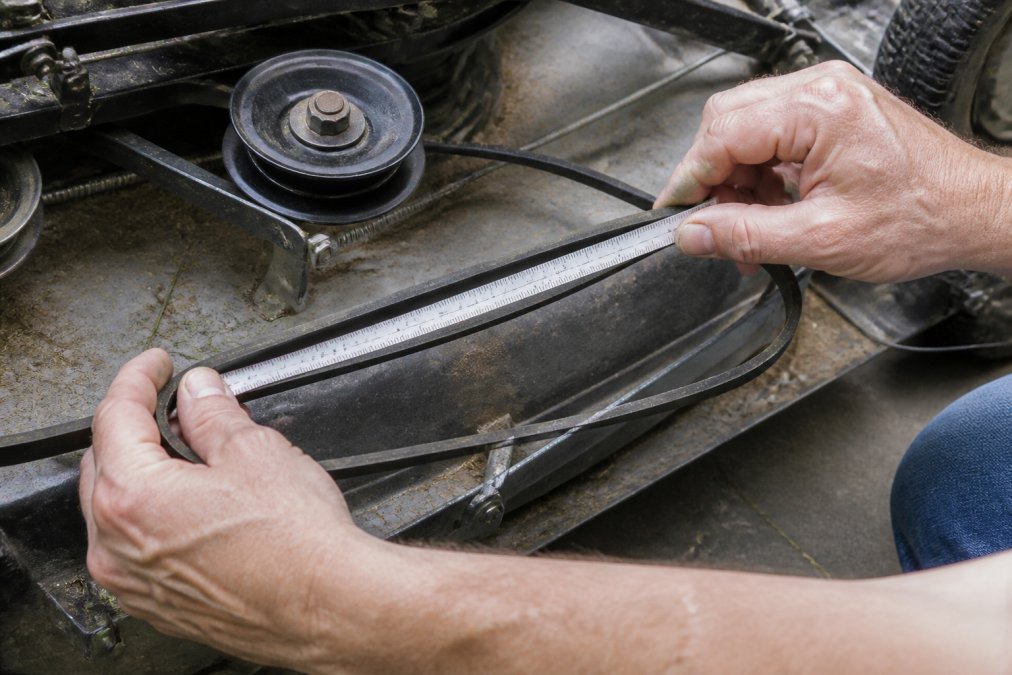
The string method is the most reliable way to measure a lawn mower belt, especially for determining inside flat length. It captures the true distance the belt travels through your mower's drive system, accounting for pulley sizes, angles, and idler pulleys without complex calculations.
Why the String Method Works Best
The string method eliminates guesswork by measuring the actual path the belt takes. This is particularly valuable for deck belts, which route through multiple pulleys with varying diameters. The inside flat length, the measurement on the inner surface of the belt, determines correct fit and tension. A miscalculation leads to belts that slip, squeal, or wear prematurely.
Step-by-Step String Measurement Process
Step 1: Prepare Your Mower
Disconnect the spark plug wires from both spark plugs (the CDC). This prevents accidental starting while you work.
Step 2: Access the Belt
Check your owner's manual for the correct procedure. Some mowers have removable deck covers; others require removing bolts. Document bolt locations with a phone photo to aid reassembly.
Step 3: Wrap the String
Take non-stretchy string and wrap it around the belt, following its exact path through all pulleys. Keep the string snug but not tight, following the inside flat length rather than riding on the belt's edges.
Step 4: Mark the Length
Mark where the string meets your starting point using a pen or tape. Remove the string carefully without disturbing the mark.
Step 5: Measure the String
Lay the string flat and measure from the end to your mark using a ruler or cloth tape. This is your inside flat length, the critical dimension for ordering a replacement belt.
Step 6: Record Outside Circumference
Wrap the string once around the belt itself (not the pulleys) to get the outside circumference. This helps confirm belt size and cross-reference part numbers.
Understanding Inside vs. Outside Circumference Measurements
The inside flat length is the measurement of the inner surface of the belt as it travels through your mower's drive system. This is the critical measurement for replacement, accounting for the belt's path around all pulleys. A belt ordered by inside flat length will fit correctly and maintain proper tension.
The outside circumference is the measurement around the outer edge of the belt itself, typically 1-2 inches larger than the inside flat length depending on belt thickness and pulley diameters. It's useful for identifying belt type and cross-referencing specifications, but not for ordering replacements.
An incorrectly sized belt won't track properly. Too long, and the belt sags, causing slipping and noise. Too short, and it strains under tension, wearing prematurely. The inside flat length ensures the belt sits correctly on pulley surfaces and maintains consistent tension. When ordering, compare your measurement to the inside flat length listed on the part number or specification sheet.
Lawn Mower Belt Size Chart and Identification
Deck Belt vs. Drive Belt Differences
Deck belts connect the engine to the mower deck's blade spindles, spinning the cutting blades. They're usually narrower (around 0.5 inches wide) and operate under moderate tension. Deck belts route through multiple pulleys and often include an idler pulley to maintain tension as the belt wears.
Drive belts transmit power from the engine to the transmission or axle, moving the mower forward or backward. They're typically wider (0.75 to 1 inch) and handle significantly higher loads under greater tension. You can't interchange these belts, a deck belt used as a drive belt will slip and wear quickly, while a drive belt used as a deck belt may be oversized and won't fit properly.
Reading Your Belt Part Number
Lawn mower belt part numbers follow standardized formats. A typical part number like 5L860 indicates the belt profile (5L = 5/8 inch wide) and inside flat length. The first characters indicate profile type:
- A, B, C, D, E: Classical V-belt sizes
- 3L, 4L, 5L: Fractional horsepower belts
- Cogged variants: Add "X" to the profile
Lawn mower belts typically range 40-60 inches for deck belts and 50-80 inches for drive belts (deere.com). Some manufacturers use proprietary numbering systems, always cross-reference the part number with the manufacturer's specification sheet. When ordering, provide both the part number and your measured inside flat length for redundancy.
Identifying Belt Wear and When to Replace
Visual inspection reveals most belt wear patterns. Replace your belt if you notice:
Cracking or fraying on the surface indicates the rubber has lost flexibility. Glazing appears as a shiny, slick surface where friction has worn away the belt's grip, causing slipping. Chunks missing from edges or surface indicate severe wear requiring immediate replacement. Separation between layers means the belt's internal structure is failing. Discoloration from black to brown or gray suggests heat damage and loss of tensile strength. Excessive wear on one side indicates pulley misalignment, correct this before installing a new belt.
Listen for squealing when the mower starts, which usually means the belt is slipping. Most lawn mower belts last 2-5 years depending on use frequency and storage conditions. Replacing a belt preventively before failure saves downtime during mowing season.
Lawn Mower Belt Replacement Tips for Accurate Sizing
OEM vs. Aftermarket Belt Compatibility
Original Equipment Manufacturer (OEM) belts guarantee compatibility because they're designed specifically for your mower model. Aftermarket belts from reputable manufacturers often meet or exceed OEM specifications at lower costs. When selecting an aftermarket belt, verify that the inside flat length matches your measurement exactly and cross-reference the profile with your mower's specifications.
Avoid extremely cheap belts from unknown suppliers, they may be made from inferior materials or manufactured to looser tolerances, causing premature failure.
V-Belt Nation stocks a comprehensive selection of lawn mower belts. Our team can help you confirm that your measured belt will work correctly with your specific mower model, ensuring compatibility without surprises.
Avoiding Common Measurement Mistakes
The most frequent error is confusing outside circumference with inside flat length. Measure twice and verify before ordering. If your current belt is visibly worn, cross-reference your measurement with the manufacturer's specifications, a stretched belt is longer than a new belt should be.
Forgetting to include the idler pulley in your string measurement is easy. Trace the belt's complete path before wrapping your string. Measure the belt after removal or with the mower at rest and unpowered to avoid errors from operational tension. Always measure or verify belt width to ensure proper fit in pulley grooves.
| Measurement Type | What It Is | When to Use | Typical Range |
|---|---|---|---|
| Inside Flat Length | Distance belt travels through drive system | Ordering replacement belts | 40-80 inches (deck), 50-100 inches (drive) |
| Outside Circumference | Measurement around outer edge of belt | Confirming belt type and cross-referencing specs | 42-85 inches (deck), 55-105 inches (drive) |
| Belt Width | Width of belt surface | Ensuring proper fit in pulley grooves | 0.5-1 inch (deck), 0.75-1.25 inches (drive) |
| Belt Thickness | Height of belt profile | Matching pulley groove depth | 0.25-0.5 inch depending on profile |
Conclusion
Measuring your lawn mower belt correctly is the foundation of finding the right replacement. Using the string method captures the inside flat length your mower actually needs, eliminating guesswork and compatibility problems. By understanding the difference between deck and drive belts, recognizing wear patterns, and avoiding common measurement mistakes, you'll order the correct belt the first time.
When you're ready to purchase a replacement belt, V-Belt Nation's team can help you verify your measurements and confirm compatibility with your specific mower model. We stock a comprehensive selection of lawn and garden belts, offer free ground shipping on orders over $175, and provide personalized support to ensure you get exactly what you need. Shop with confidence knowing your replacement belt will fit properly and perform reliably.
Frequently Asked Questions
Q: Are lawn mower belts measured inside or outside?
A: Lawn mower belts are measured on the inside flat length, which is the measurement across the inner surface of the belt as it sits on the pulleys. This is different from the outside circumference. The inside flat length is what manufacturers use for part numbers and replacement sizing, making it the critical measurement for ordering the correct belt.
Q: Can I use a string to measure my mower belt?
A: Yes, the string method is one of the most accurate ways to measure your lawn mower belt. Wrap a cloth measuring tape or string around the belt while it's on the mower, mark where it overlaps, then measure the string length. This approach captures the exact inside flat length your belt needs, accounting for the specific pulley configuration of your machine.
Q: How do I figure out what size belt I need?
A: First, measure your existing belt using the string method or check your mower's manual for the OEM specifications. Write down the belt length and width. If you're unsure between similar sizes, consult a lawn mower belt size chart for your specific mower model, or contact the manufacturer with your mower's model number. Accurate measurement prevents ordering the wrong replacement.
Q: What's the difference between deck belt and drive belt replacement?
A: Deck belts power the cutting blades, while drive belts transfer power from the engine to the wheels. They have different lengths, widths, and profiles. When measuring, identify which belt you need to replace first. Many mowers have both, and they're not interchangeable. Check your manual or mower diagram to confirm which belt needs replacement before measuring.