 how-to
How to Verify Belt Quality: A Complete Inspection Guide
Table of Contents
- Why Belt Quality Matters for Your Equipment
- Visual Inspection: What to Look for When You Receive a Belt
- Tactile and Olfactory Tests for Material Authenticity
- Industrial V-Belt Inspection Standards and Certification
- How to Measure Belt Tension Correctly
- Signs of Premature Belt Failure to Catch Early
- Stitching, Hardware, and Construction Quality
- Distinguishing Industrial vs. Fashion Belt Standards
- Frequently Asked Questions
Last Updated: September 19, 2026
Why Belt Quality Matters for Your Equipment
A failing belt costs you more than the belt itself. When a V-belt breaks on your production line, your machinery stops. Downtime ripples through your schedule, delays shipments, and eats into profit margins. The real cost isn't the replacement part, it's the lost productivity while you scramble to get back online.
That's why learning how to verify belt quality before installation matters. A quality belt runs longer, slips less, and handles stress without cracking or peeling. Poor-quality belts fail early and often, turning a routine maintenance task into an emergency shutdown.
At V-Belt Nation, we understand that maintenance managers and procurement specialists need to verify belt quality in every belt they install. This guide walks you through the inspection process step by step, so you can catch quality issues before they become failures.
Visual Inspection: What to Look for When You Receive a Belt
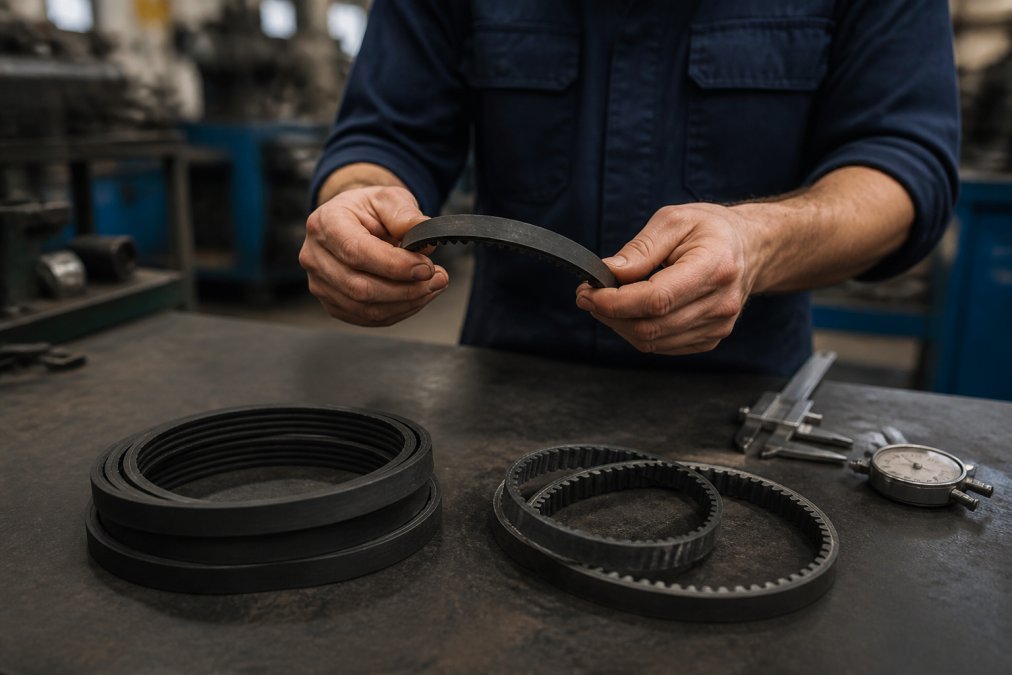
Start with your eyes. A quality belt shows consistent surface grain and texture across its entire length. Run your fingers along the belt surface, it should feel uniform and smooth, not rough or patchy.
Look for these red flags:
- Uneven color or discoloration patches
- Visible cracks or splits in the rubber
- Rough, grainy texture that feels inconsistent
- Peeling or separation of layers
- Dull, faded appearance suggesting age or poor storage
Examining Surface Grain and Texture
Surface grain reveals material composition. Full grain leather or genuine rubber shows natural variation. Synthetic material often appears too uniform or plastic-like. The grain should have subtle texture, not mirror-smooth, not rough.
A common mistake is assuming smooth means better. It doesn't. Smooth synthetic material often lacks the tensile strength of proper rubber compounds. Run your fingernail gently across the surface. Quality belts resist scratching. Poor ones mark easily.
Check the edges too. They should be clean and uniform. Rough, fraying edges suggest the belt was cut poorly or the material is degrading.
Checking Edges and Cross-Sections
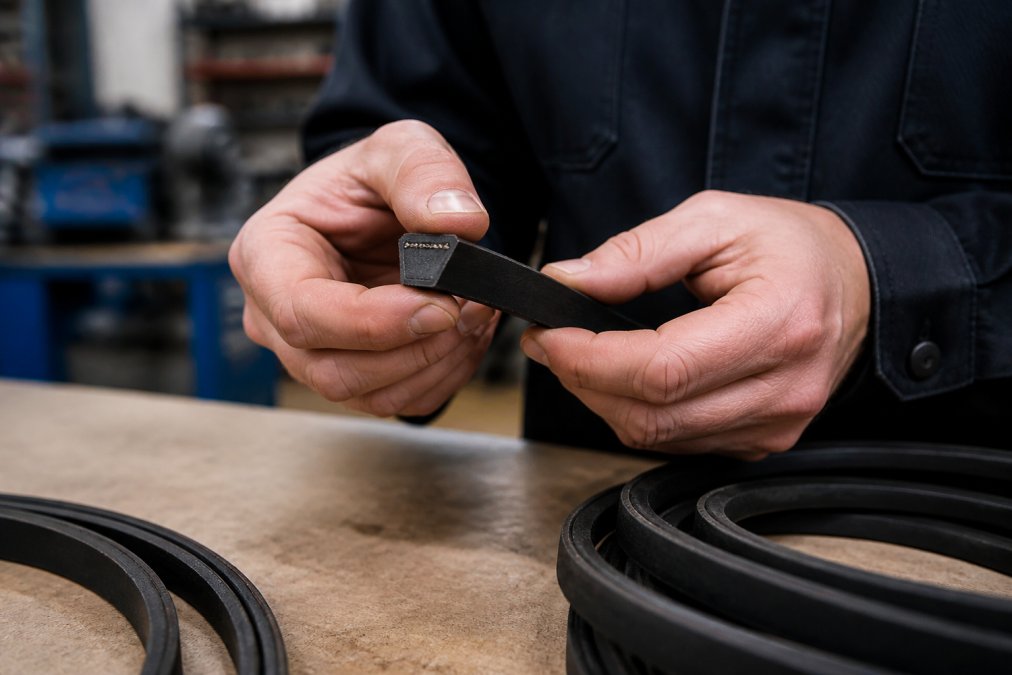
Look at the belt edges. Cut them open if you're evaluating a sample or damaged belt. The cross-section tells you everything about material quality.
A quality belt shows:
- Distinct, uniform layers
- No gaps between materials
- Consistent color throughout the cross-section
- No visible air pockets or voids
- Fibrous interior structure in genuine rubber
Cheap belts show delamination, layers separating from each other. This is a death sentence for belt life. Once layers separate, the belt fails within days.
Check the fibrous edges. Genuine rubber has visible fiber reinforcement. Synthetic material may show a different structure. Both can be quality, the difference is in consistency and durability for your specific application.
Tactile and Olfactory Tests for Material Authenticity
Touch and smell reveal what your eyes miss. These tests take seconds but catch problems that visual inspection alone would miss, and they're particularly useful for identifying counterfeit or degraded material before installation.
The Pliability and Flexibility Test
Bend the belt and feel the resistance. A quality belt flexes smoothly without cracking or stiffness. It should return to its original shape when released.
Old or poor-quality belts feel brittle. They crack when bent. New belts feel supple but not rubbery or overly soft. There's a sweet spot, flexible enough to wrap around pulleys, stiff enough to maintain tension.
Test this on a sample section if possible. Bend it 90 degrees several times. Listen for cracking sounds. Feel for surface damage or peeling. A belt that cracks under gentle bending will fail under the stress of actual use.
Temperature matters here. Cold belts feel stiffer. Room temperature testing gives the most accurate feel for actual pliability. If a belt feels stiff even at room temperature, it may have been stored improperly or is nearing end-of-life.
The Smell Test: Identifying Genuine vs. Degraded Rubber
Genuine rubber belts have a distinct, mild chemical odor, not unpleasant, but noticeably different from plastic or synthetic materials. This smell comes from the vulcanization process and natural rubber compounds. New belts may have a stronger odor that fades within days of installation.
Counterfeit or heavily degraded belts produce different smells:
- Overly pungent or acrid odor suggests low-grade synthetic material or improper curing. Quality industrial belts should never smell harsh or chemical-like in a way that causes discomfort.
- No smell at all can indicate synthetic PVC or bonded material rather than genuine rubber. While synthetic belts can be acceptable for some applications, they typically perform differently and should be labeled as such.
- Musty or moldy smell indicates storage damage, moisture exposure, or age degradation. This is a red flag, the belt's structural integrity is compromised.
When you receive a belt, open the package and smell it immediately. Compare it to a known-good belt if possible. The difference becomes obvious once you know what to expect. Document the smell as part of your receiving inspection, if a replacement belt smells wrong, contact your supplier before installation.
Water Absorption and Chemical Resistance Check
Quality industrial belts resist water absorption, a key marker of material authenticity and durability. Genuine rubber compounds are hydrophobic by design; poor-quality or counterfeit belts absorb moisture, which degrades tensile strength and causes premature failure.
Perform a simple water-drop test on a sample or damaged belt:
- Place a small drop of water on the belt surface
- Observe for 30 seconds
- Quality belts: water beads and rolls off, leaving no wet spot
- Poor-quality belts: water absorbs into the material, leaving a dark wet patch that takes minutes to dry
This test works because genuine rubber vulcanization creates a hydrophobic surface.
Industrial V-Belt Inspection Standards and Certification
Industrial V-belts must meet specific standards. The most common are ISO 4184 and RMA (Rubber Manufacturers Association) specifications. These standards define belt dimensions, tensile strength, and performance requirements.
Check the belt packaging for:
- ISO or RMA certification marks
- Manufacturing date
- Lot number for traceability
- Proper storage conditions noted
- Tensile strength specifications
How to Measure Belt Tension Correctly
Proper tension prevents slippage and premature failure. Too loose and the belt slips. Too tight and you overload the bearings and shorten belt life. But tension measurement is only useful after installation. Before you install a belt, you need objective ways to verify it will hold tension and perform under load.
Pre-Installation Quality Verification: Tensile Strength Assessment
Before measuring tension, verify the belt can actually handle the load. Quality belts maintain consistent tensile strength; degraded or counterfeit belts fail under tension.
- Secure one end of the belt in a vise
- Pull the other end with steady, increasing force
- Note the force required to produce visible stretching (elongation)
- Quality belts resist stretching until significant force is applied
- Poor-quality belts stretch easily or tear suddenly without warning
In-Service Tension Measurement: The Deflection Method
Use a belt tension gauge for accuracy. Press the gauge perpendicular to the belt midway between pulleys. The reading should match your equipment manufacturer's specifications, usually between 10-15 pounds of force for most industrial applications.
Tension Stability Over Time: A Marker of Belt Quality
Quality belts maintain tension longer. Poor-quality belts lose tension rapidly, requiring frequent readjustment. This is one of the most reliable real-world indicators of belt durability.
- Quality belt pattern: Initial drop of 5-10% in the first week, then stabilizes
- Poor-quality belt pattern: Continuous drop of 15-20% per week, requiring adjustment every few days
Signs of Premature Belt Failure to Catch Early
Knowing what failure looks like helps you replace belts before catastrophic breakdown. Regular inspection catches problems early.
Peeling, Cracking, and Abrasion Resistance Issues
Peeling happens when layers separate. You'll see rubber lifting away from the belt body. This starts small, a corner or edge, then spreads. Once peeling starts, the belt is done. Replace it immediately.
Slippage and Performance Degradation
Belt slippage feels like the machinery losing power. The engine revs but the driven equipment doesn't respond proportionally. This happens when the belt can't grip the pulleys, either from glazing, contamination, or poor tension.
Stitching, Hardware, and Construction Quality
For belts with reinforced stitching or fasteners, examine the construction closely.
Stitching should be:
- Evenly spaced with consistent intervals
- Tight and secure with no loose threads
- Made from material matching or exceeding the belt's strength
- Positioned to distribute stress evenly
Distinguishing Industrial vs. Fashion Belt Standards
Industrial V-belts and fashion leather belts are completely different products. They're tested differently, made differently, and fail for different reasons.
Industrial V-belts prioritize:
- Tensile strength and load capacity
- Consistent performance over thousands of hours
- Specific dimensional tolerances for machinery
- Resistance to heat, oil, and chemical exposure
- Documented compliance with ISO standards
Fashion leather belts prioritize:
- Appearance and style
- Comfort for wearing
- Aesthetic aging (patina development)
- Flexibility for body movement
- Color and finish consistency
Frequently Asked Questions
How can you tell if a belt is good quality?
Quality belts show consistent surface grain, firm pliability without excessive stiffness, and uniform stitching or reinforcement. Run your hand along the belt to feel for smooth texture; genuine materials have a natural, cohesive feel. Check the edges for fraying or separation, and inspect the cross-section for layered construction. High-quality belts resist immediate cracking under flex and maintain structural integrity under tension.
What are the signs of premature belt failure?
Watch for peeling, cracking, or visible abrasion on the belt surface. Slippage during operation, squealing noises, or loss of tensile strength indicate failure is imminent. Bonded leather or low-grade synthetic materials often separate at the edges or show wear patterns within weeks. Regular tension checks help catch degradation early; belts that lose tension rapidly or require frequent adjustment are likely failing.
How do I know if a belt is real leather versus synthetic?
Real leather has a porous, fibrous structure visible at the edges and cross-section. Synthetic polyurethane materials feel smoother and more uniform. Bend the belt gently; genuine leather shows natural creasing and patina development, while synthetics often crack or peel under repeated flexing.
Why does industrial V-belt inspection matter before installation?
Pre-installation inspection catches manufacturing defects, shipping damage, and counterfeit products before they cause machinery downtime. Verifying ISO certification, checking hardware durability, and confirming correct sizing prevent slippage, peeling, and premature failure. Proper tension measurement during setup extends belt life and ensures consistent power transmission efficiency across your equipment.