 ultimate-guide
Industrial Belt Wholesale Pricing: 7 Factors That Drive Cost
Table of Contents
- What Drives Industrial Belt Wholesale Pricing Factors
- Material Quality and Rubber Compound Standards
- How to Evaluate Industrial Belt Quality Before Buying
- Bulk V-Belt Pricing Factors and Order Volume Impact
- Manufacturing Standards and ISO Certification Requirements
- Industrial Belt Procurement Best Practices for Cost Optimization
- Hidden Costs and Total Cost of Ownership in Belt Sourcing
- Frequently Asked Questions
Last Updated: September 27, 2026
What Drives Industrial Belt Wholesale Pricing Factors
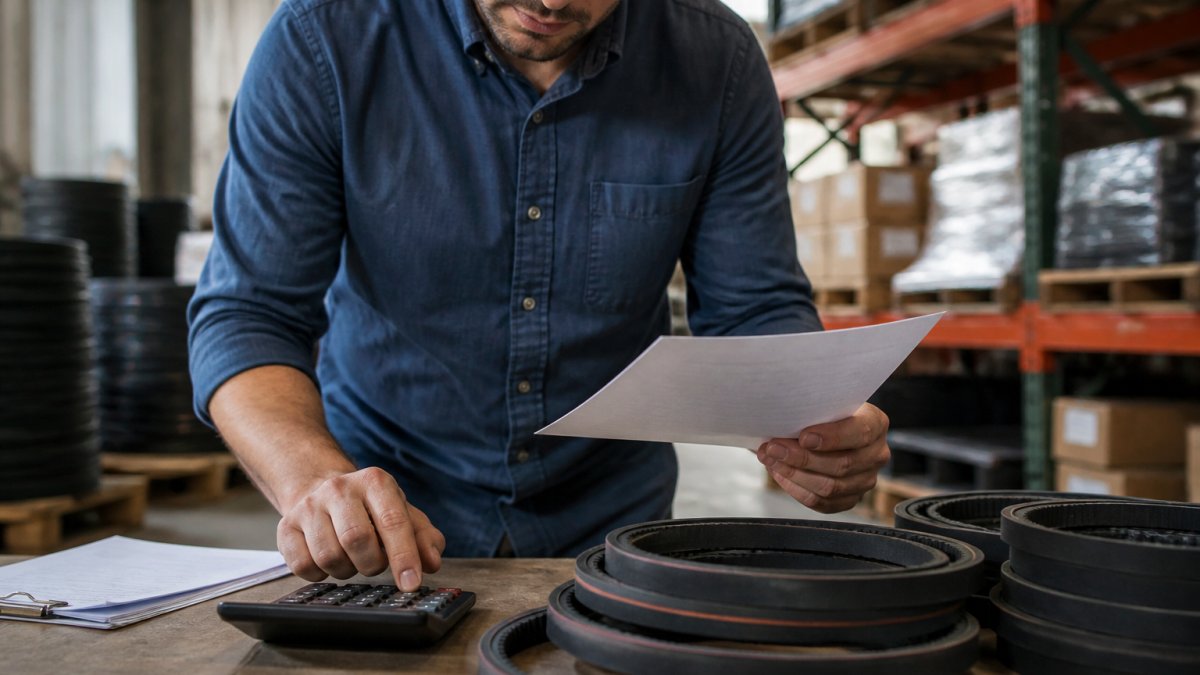
The cost of industrial transmission belts rarely comes down to a single variable. When you're sourcing power drive solutions at scale, industrial belt wholesale pricing factors interact in ways that catch unprepared buyers off guard. A belt that seems cheap on the unit price might cost you thousands more over its operational life. Understanding what actually moves the needle on cost, and which price signals matter, separates procurement specialists who stay on budget from those who get blindsided by hidden expenses.
This guide walks through the seven factors that genuinely determine what you'll pay for industrial belts at wholesale volume, and how to use that knowledge to lock in better pricing.
Material Quality and Rubber Compound Standards
The rubber compound in an industrial belt determines its operational lifespan, heat tolerance, and resistance to abrasion and oil exposure. A belt made from premium rubber compounds costs more upfront but lasts significantly longer in demanding environments. Budget compounds deteriorate faster, which means more frequent replacement cycles and hidden labor costs that compound over time.
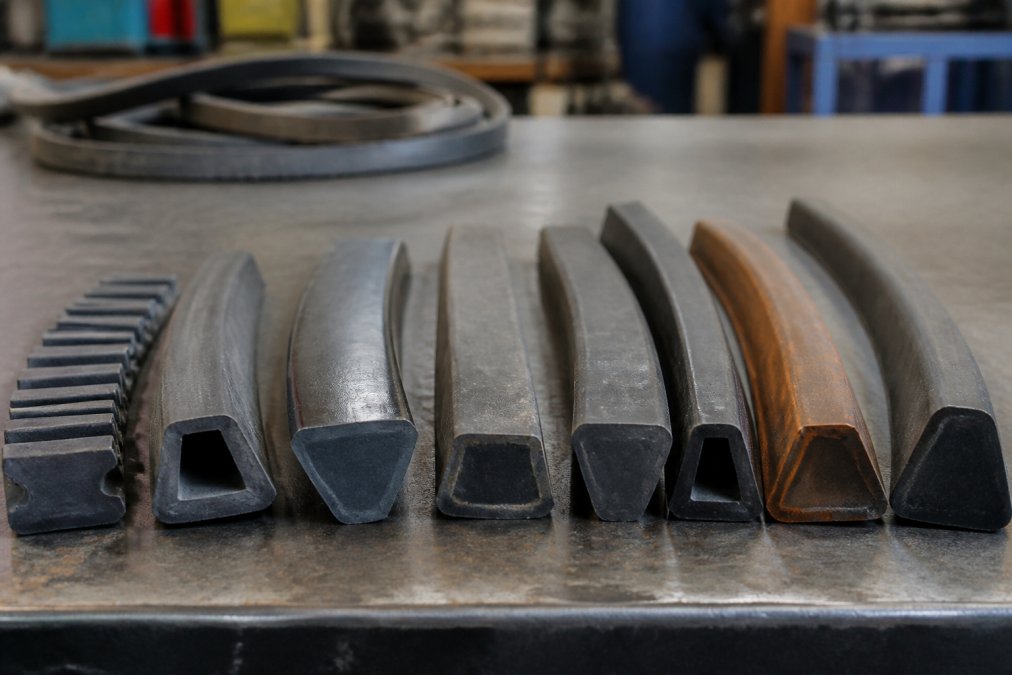
Quality compounds typically contain reinforcing materials like kevlar fibers or polyester cords that improve tensile strength and load capacity. These reinforcements don't just improve durability, they affect how the belt performs under stress. A belt with inadequate reinforcement will slip under load, creating vibration and heat that accelerates failure. The material specification you choose determines whether your machinery runs smoothly or requires constant adjustment and maintenance.
When evaluating industrial belt quality, examine the compound's resistance ratings. Heat-resistant formulations cost more but essential in HVAC systems, cooling towers, and high-temperature industrial applications. Oil-resistant compounds are critical for machinery operating near hydraulic systems. A belt selected for the wrong environment fails prematurely, negating any savings from choosing a cheaper option initially.
How to Evaluate Industrial Belt Quality Before Buying
Direct inspection of belt samples reveals quality markers that specifications alone cannot convey. Run your fingers along the belt surface, premium belts have smooth, consistent texture without visible cracks, brittleness, or uneven wear patterns. Flex the belt gently; quality belts return to their original shape without permanent deformation or cracking at the flex points.
Check the dimensional tolerance of the belt cross-section. Industrial-grade belts maintain precise V-belt profile consistency, which affects how they seat in pulleys and transfer power. Inconsistent dimensions cause uneven wear and premature slipping. Request dimensional specifications from your supplier and verify them against ISO or industry standards before committing to bulk orders.
Examine the reinforcement structure. Look for even distribution of cords or fibers throughout the belt body. Bunched or uneven reinforcement indicates manufacturing shortcuts that compromise load capacity and durability. The reinforcement should be visible but not protruding through the rubber surface.
Bulk V-Belt Pricing Factors and Order Volume Impact
Volume discounts on industrial belts follow predictable tiers, but the thresholds vary by supplier and belt type. A bulk order of 100 units typically qualifies for better pricing than orders under 50. Orders exceeding 500 units unlock deeper discounts, often 15-25% below single-unit pricing. Beyond 1,000 units, custom manufacturing or extended lead times may lower per-unit cost further, though you trade speed for savings.
Minimum order quantities set the floor for what you can purchase. Many suppliers establish MOQs of 25-50 units per belt size or specification. If your operation needs only 10 units of a specific belt configuration, you either pay premium pricing or purchase excess inventory. Understanding MOQ thresholds before negotiating prevents wasted time and locked-in costs.
Lead time directly impacts effective pricing. A supplier offering standard V-belt inventory with 3-5 day delivery costs less in total operational expense than a supplier with 6-8 week lead times, even if the per-unit price is lower. Machinery downtime while waiting for replacement belts creates hidden costs, lost production, labor standing idle, customer delays. We maintain extensive inventory of classic, wedge, cogged, and banded belts to help minimize lead-time penalties.
Order timing affects pricing seasonality. Peak procurement seasons (spring and fall maintenance cycles) drive up prices and reduce availability. Ordering during off-season periods often yields better wholesale pricing factors and guaranteed delivery windows. Facilities that plan ahead and purchase during slow seasons capture 5-10% savings compared to emergency procurement.
Manufacturing Standards and ISO Certification Requirements
ISO 1813 and ISO 4183 establish dimensional and performance standards for V-belts globally. Belts certified to these standards deliver consistent power transmission, predictable lifespan, and compatibility with standard pulleys. Non-certified belts may appear identical but often fail to meet dimensional tolerance, load capacity, or durability benchmarks.
Certification requires third-party testing and documented manufacturing controls. Certified manufacturers invest in quality assurance infrastructure, which increases production costs. However, the certification premium protects you from premature failures and incompatibility issues that plague uncertified sourcing. OEMs and facilities operating under strict maintenance protocols require ISO certification as a baseline requirement.
Manufacturing standards also specify reinforcement material quality, rubber compound specifications, and allowable defect rates. A manufacturer adhering to these standards maintains tighter process controls, reducing variability between units. Variability in belt dimensions or compound quality leads to uneven wear, slipping, and shortened replacement cycles, costs that exceed any savings from purchasing uncertified belts.
Supply Chain Transparency and ESG Compliance
Modern industrial procurement increasingly requires verification of supply chain ethics and environmental practices. Many facilities are audited by customers or regulatory bodies on ESG (Environmental, Social, and Governance) compliance, which extends to supplier accountability. When sourcing industrial belts at wholesale volume, request documentation of:
- Factory Certifications: ISO 9001 (quality management), ISO 14001 (environmental management), and SA 8000 (labor practices). These certifications indicate third-party verification of manufacturing controls and workplace standards.
- Material Sourcing: Confirmation that rubber compounds and reinforcement materials (polyester, aramid fibers) come from suppliers with documented environmental compliance. Some facilities require conflict-free sourcing documentation.
- Manufacturing Location: Transparency on where belts are manufactured. Reshoring trends and tariff structures make manufacturing location a cost and compliance factor.
- Waste and Emissions Data: Leading manufacturers provide environmental impact statements showing waste reduction, energy efficiency, and emissions controls.
Suppliers unwilling to provide this documentation signal either poor controls or indifference to compliance, both red flags for long-term reliability.
Currency Fluctuation and Tariff Impact on Wholesale Pricing
Industrial belt pricing is sensitive to currency exchange rates and import tariffs, factors that unit-price negotiations alone never address. Most industrial belts sold in the market are either manufactured domestically or imported, and pricing reflects these dynamics:
- Exchange Rate Exposure: If a supplier manufactures belts overseas and prices in foreign currency, a strengthening dollar reduces their effective cost, but a weakening dollar increases prices. Suppliers hedging currency risk may lock in pricing for 6-12 months; those without hedges pass volatility to buyers. Request whether your supplier's pricing is fixed or subject to currency adjustment clauses.
- Tariff Structure: Import tariffs on rubber products and industrial machinery components fluctuate based on trade policy. Tariffs on certain belt types or materials can add 5-15% to landed cost. Domestic manufacturers are insulated from tariff changes; importers are not. Understanding your supplier's sourcing geography helps predict pricing stability.
- Lead Time and Tariff Timing: Longer lead times from overseas suppliers expose you to tariff changes during the manufacturing-to-delivery window. A supplier with 8-week lead times may quote a price that changes if tariffs shift mid-production. Domestic suppliers with 3-5 day lead times eliminate this risk.
When evaluating wholesale pricing, ask suppliers explicitly: "Is your pricing subject to currency adjustment or tariff pass-through clauses?" Suppliers offering fixed pricing for 90-180 days provide cost certainty; those offering only spot pricing create budget risk.
Request ISO certification documentation and supply chain transparency statements from suppliers before committing to bulk orders. Legitimate manufacturers provide certificates, test reports, manufacturing specifications, ESG documentation, and tariff impact assessments without hesitation. Suppliers reluctant to share this documentation are signaling quality, compliance, or cost-stability corners you cannot afford to cut.
Industrial Belt Procurement Best Practices for Cost Optimization
Develop a standardized belt specification list for your facility. Document the exact belt type, size, profile, and performance requirements for each machine. This standardization reduces procurement complexity, improves supplier negotiation use, and prevents mismatched replacements that fail prematurely.
Consolidate purchases across departments or locations. A facility with multiple production lines often has overlapping belt requirements.
Hidden Costs and Total Cost of Ownership in Belt Sourcing
Total Cost of Ownership (TCO) extends far beyond unit price and requires a structured calculation to compare suppliers fairly. The formula accounts for acquisition cost, maintenance labor, downtime impact, inventory carrying cost, and replacement frequency over a defined operational period (typically 3-5 years for industrial belts).
Frequently Asked Questions
What materials most significantly impact industrial belt wholesale pricing?
Rubber compound quality, tensile strength, and reinforcement materials like Kevlar directly affect cost. Higher-grade synthetic polymers and heat-resistant compounds increase price but extend belt lifespan and reduce replacement frequency. Cogged and poly-V belt designs also cost more than standard V-belts due to manufacturing complexity. Material selection depends on your machinery's load capacity and operational temperature requirements.
How do order volumes affect wholesale belt pricing?
Larger order quantities typically unlock tiered pricing discounts. Minimum order quantities vary by belt type and supplier, but bulk purchases reduce per-unit costs significantly. Volume commitments also improve lead times and supply chain reliability. For maintenance operations ordering regularly, establishing a preferred supplier relationship can lock in consistent pricing across multiple orders throughout the year.
What hidden costs should I account for in industrial belt procurement?
Beyond unit price, factor in shipping costs, lead times affecting downtime, installation labor, and potential compatibility issues. Currency fluctuations impact import pricing. Belts with poor quality control increase replacement frequency and maintenance labor costs. ISO certification and supply chain transparency add value but may increase upfront cost. Calculate total cost of ownership rather than comparing unit prices alone to make accurate sourcing decisions.
How do I verify that industrial belts meet ISO certification standards?
Request third-party certification documentation directly from your supplier before placing orders. ISO-certified industrial transmission belts must meet dimensional tolerance, tensile strength, and abrasion resistance standards. Reputable suppliers provide certification details upon request and maintain consistent quality across batches. Verify certifications for your specific belt type, as standards vary between V-belt profiles, cogged designs, and specialty applications like HVAC cooling tower systems.