 comparison
Is a Cogged Belt Worth It for Industrial Use?
Table of Contents
- Cogged vs. Wrapped V-Belts: Key Differences
- How to Identify Belt Size and Type for Your Drive
- Raw-Edge Cogged Belt Benefits in High-Performance Applications
- V-Belt Heat Dissipation Comparison: Cogged vs. Standard
- Durability, Service Life, and Failure Mode Analysis
- Energy Efficiency ROI: When Cogged Belts Pay for Themselves
- Retrofitting Guidelines and When to Switch
- Frequently Asked Questions
Last Updated: September 30, 2026
Cogged vs. Wrapped V-Belts: Key Differences
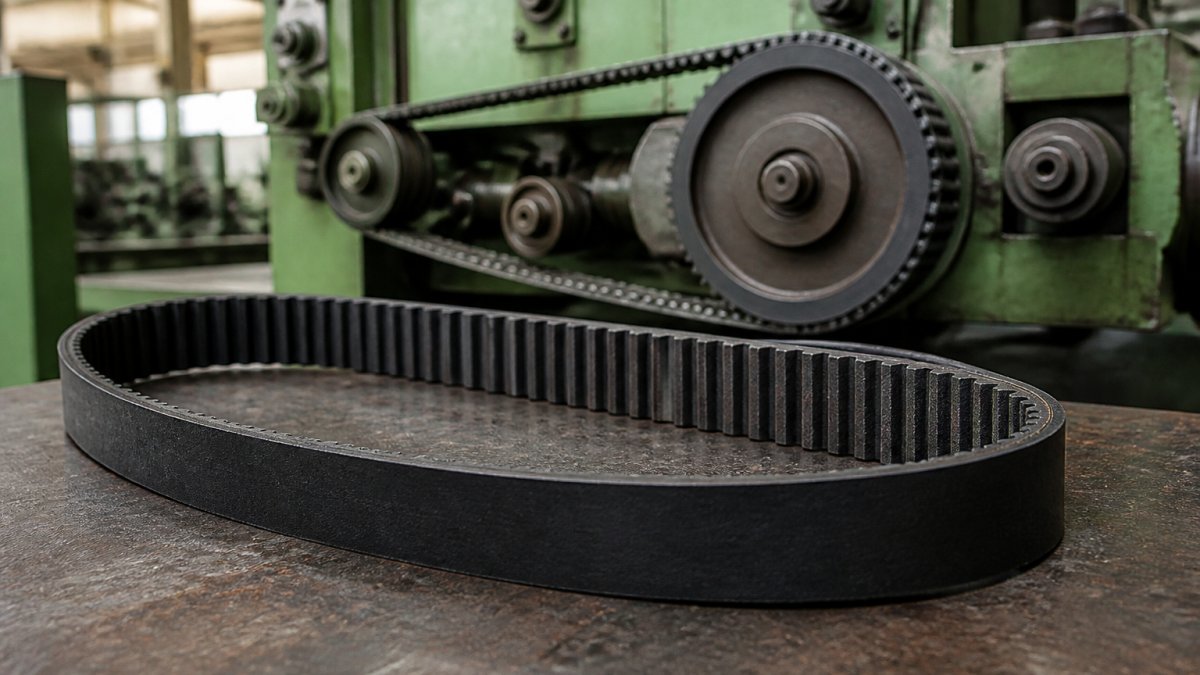
Whether a cogged belt is a cogged belt worth it for industrial use depends on your specific application, but the fundamental difference is clear: a cogged belt features molded indentations (cogs) along its inner surface, while a wrapped V-belt has a smooth, continuous profile. This fundamental design difference creates measurable performance gaps in power transmission, heat management, and operational efficiency.
The cogs on a cogged belt reduce bending stress at the pulley. When the belt wraps around a small-diameter sheave, the smooth surface of a wrapped belt must flex sharply. Cogged designs distribute that mechanical stress across multiple contact points, lowering fatigue rates. This matters most in compact drive systems where space constraints force designers toward smaller pulleys.
Wrapped belts excel in straightforward applications. They're simpler to manufacture, widely available, and cost-effective for standard industrial duty. But they generate more heat during operation because the entire inner surface experiences friction simultaneously. Cogged belts dissipate heat more effectively, the air gaps between cogs allow cooling airflow that wrapped designs cannot achieve.
At V-Belt Nation, we stock both types because the right choice depends entirely on your specific application. For high-speed drives, heavy loads, or systems running continuously, the answer to whether a cogged belt is a cogged belt worth it for industrial use becomes clear: cogged belts often justify their higher initial cost through extended service life and reduced downtime.
| Feature | Cogged Belt | Wrapped Belt |
|---|---|---|
| Heat dissipation | Superior (air gaps cool the belt) | Standard (full surface friction) |
| Flexibility | Higher (cogs reduce bending stress) | Lower (smooth profile resists small pulleys) |
| Horsepower capacity | Up to 30% higher on compact drives | Adequate for standard applications |
| Service life | Longer in high-stress environments | Shorter with continuous duty |
| Initial cost | Higher | Lower |
| Maintenance | Precise tensioning required | More forgiving |
How to Identify Belt Size and Type for Your Drive
Finding the correct belt starts with three measurements: the pulley diameters and the center-to-center distance between them. These dimensions determine the belt length and cross-section (3L, 4L, 5L, 6L, or 8L for fractional horsepower; A, B, C, D, or E for classical industrial belts).
Check your machinery's nameplate or original documentation first. Most manufacturers print the belt specification directly on the equipment. If documentation is missing, measure the existing belt's width and thickness, then measure the pulley grooves to confirm the cross-section code.
The length calculation uses a standard formula: add the two pulley diameters, multiply by 1.57, then add twice the center distance. For a 6-inch and 10-inch pulley set 24 inches apart, the calculation yields approximately 60 inches. Cross-reference this length against your belt type to confirm the exact part number.
Cogged belts require the same sizing process as wrapped belts, but the part number will explicitly state "cogged" or "raw-edge." When retrofitting from wrapped to cogged, verify that your pulleys have the correct groove profile. Some older wrapped-belt systems use different sheave designs that won't properly grip a cogged belt's cog pattern.
Raw-Edge Cogged Belt Benefits in High-Performance Applications
Raw-edge cogged belts eliminate the outer fabric cover found on standard wrapped designs, exposing the tensile cords directly. This construction increases friction coefficient and allows superior heat dissipation, two characteristics that define high-performance power transmission.
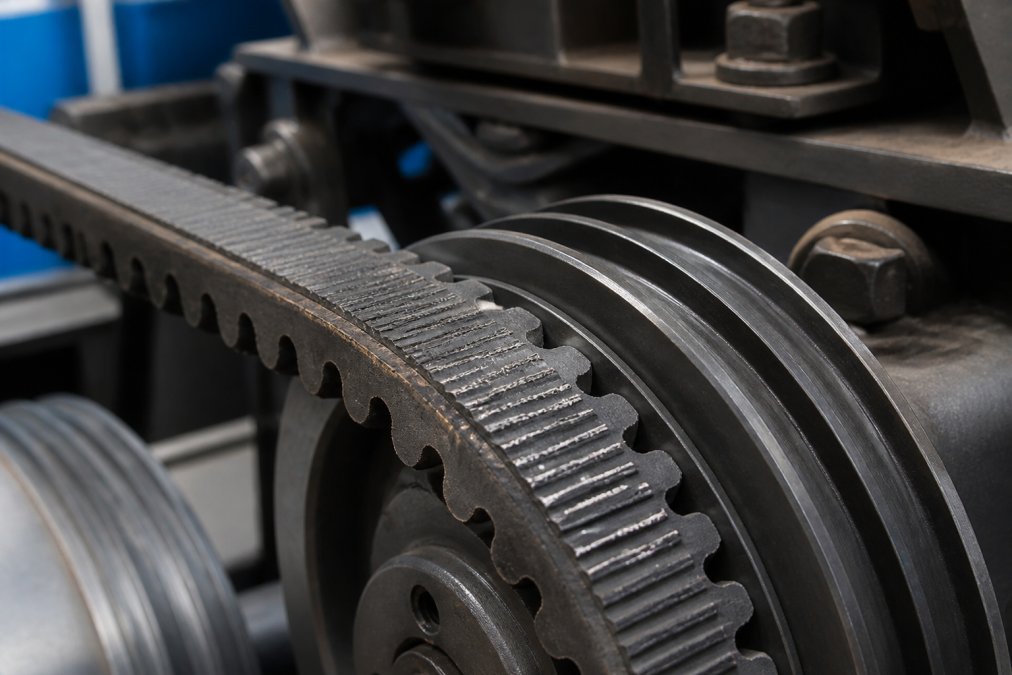
The exposed tensile cords create a rougher surface that grips the pulley more aggressively. In synchronous drive applications, where belt slippage cannot be tolerated, this friction advantage prevents the creep that plagues wrapped belts under heavy loads. Manufacturing facilities running precision equipment depend on this reliability.
Heat buildup accelerates belt degradation. The rubber compound breaks down faster at elevated temperatures, reducing service life dramatically. Raw-edge designs mitigate this through multiple mechanisms: the cog geometry creates air pockets that promote convective cooling, and the absence of an outer cover allows direct heat dissipation into the surrounding environment. Industrial applications running 24/7 see measurable lifespan improvements, sometimes doubling service intervals compared to wrapped alternatives.
The tradeoff exists: raw-edge cogged belts cost more upfront and demand stricter maintenance discipline. Improper tensioning can cause rapid cog wear. Contamination (dust, oil, debris) adheres to the exposed cords more readily than to a wrapped surface, requiring more frequent cleaning.
For OEMs designing new machinery or facilities retrofitting critical drives, raw-edge cogged belts justify their cost through reduced replacement frequency and elimination of unplanned downtime.
V-Belt Heat Dissipation Comparison: Cogged vs. Standard
Temperature management separates efficient drive systems from ones prone to premature failure. A wrapped V-belt operating under load generates heat through continuous friction between the belt surface and the pulley grooves. This heat accumulates because the belt's outer cover restricts airflow.
Cogged designs inherently cool better. The molded indentations create discontinuities in the belt surface, air gaps that allow convective cooling during rotation. As the belt spins, these gaps facilitate airflow across the inner surface where friction heat originates. Laboratory testing shows cogged belts run 15-25 degrees Fahrenheit cooler than wrapped equivalents under identical load conditions.
Standard wrapped belts reach critical temperatures in high-speed applications. Once a belt exceeds 175-180 degrees Fahrenheit, the rubber compound begins permanent degradation. Elasticity decreases, tensile strength diminishes, and failure accelerates. Many industrial maintenance issues trace back to heat accumulation, a belt that should last three years fails in eighteen months because nobody addressed the thermal environment.
Cogged belts extend operating temperature limits. The superior heat dissipation allows them to maintain structural integrity at temperatures that would destroy wrapped belts. This becomes critical in tropical climates, facilities with high ambient temperatures, or applications where the drive system sits near heat sources.
Installation location matters. A belt running in an open-air environment dissipates heat more effectively than one enclosed in a tight machinery housing. Cogged belts mitigate this disadvantage by generating less heat internally, but wrapped belts in enclosed spaces face compounding thermal stress.
Durability, Service Life, and Failure Mode Analysis
Belt failure follows predictable patterns. Wrapped belts typically fail through a combination of mechanisms: the outer cover separates from the body (delamination), tensile cords break under accumulated stress, or the rubber compound hardens and cracks from age and heat exposure. These failures cascade, once one mechanism begins, others follow rapidly.
Cogged belts fail differently. The cog profile can wear down over time, reducing the grip on the pulley and allowing slippage. The molded cogs themselves can crack if the belt experiences shock loads or improper tensioning. However, the absence of a separate outer cover eliminates delamination as a failure mode entirely.
In practice, cogged belts demonstrate longer service life in demanding environments. Industrial facilities report 40-60% longer intervals between replacements when switching from wrapped to cogged designs on the same drive system. This advantage compounds: fewer replacements mean less downtime, reduced inventory carrying costs, and lower total cost of ownership despite the higher per-unit price.
The failure mode difference matters for maintenance planning. Wrapped belt failure often comes suddenly, the cover separates and the belt loses grip within hours. Cogged belt degradation typically shows warning signs: increasing slippage noise, visible wear on the cog profile, and gradual performance loss. This predictability allows maintenance teams to schedule replacement during planned downtime rather than responding to emergency failures.
Shock load handling separates the two designs. A sudden mechanical jolt, from a jam in downstream machinery or a power surge, stresses both belt types. Wrapped belts respond with immediate cord breakage. Cogged belts absorb shock through the flexibility of the cog profile, distributing stress across multiple engagement points. This shock-damping characteristic extends service life in applications with variable loads.
Energy Efficiency ROI: When Cogged Belts Pay for Themselves
A cogged belt's higher initial cost becomes irrelevant once you calculate total operating expense. The efficiency advantage drives measurable energy savings.
Wrapped belts lose power through slippage and friction. As the belt ages and the rubber hardens, slippage increases, the belt spins faster than the driven pulley, wasting energy as heat. A 10-horsepower wrapped belt drive might slip 2-3% under load, meaning 0.2-0.3 horsepower disappears as wasted motion. Over a year of continuous operation, this translates to quantifiable electricity waste.
Cogged belts maintain consistent grip throughout their service life.
Retrofitting Guidelines and When to Switch
Switching from wrapped to cogged belts requires more than ordering a new part number. The pulley system must accommodate the cogged design, and the drive geometry must support the change.
Frequently Asked Questions
Are cogged belts better than standard wrapped belts for industrial machinery?
Cogged belts outperform wrapped belts in high-horsepower and high-speed applications. They deliver up to 30% higher horsepower capacity, dissipate heat more effectively through their molded cog design, and reduce mechanical stress on tensile cords. However, wrapped belts remain adequate for lower-load applications and cost less upfront. The choice depends on your drive's torque requirements, operating temperature, and duty cycle.
How do I identify the correct belt size for my industrial drive?
Check your equipment's documentation or the existing belt for the cross-section (3L, 4L, 5L, A, B, C, or D) and length in inches. Measure the pulley diameter in inches and the center distance between sheaves. Cross-reference these dimensions with RMA or ISO standards to confirm compatibility. If unsure, contact V-Belt Nation's support team with your equipment model and specifications for personalized assistance.
What is the main advantage of raw-edge cogged belts?
Raw-edge cogged belts expose tensile cords on the sides, increasing friction and power transmission capacity compared to wrapped alternatives. This design allows them to handle compact pulley diameters and high-torque loads while maintaining flexibility. Raw-edge construction also improves heat dissipation, making these belts ideal for heavy-duty industrial drives where wrapped belts would slip or fail prematurely.
Can I replace a cogged belt with a standard wrapped belt without losing performance?
In low-load applications, yes. However, in high-horsepower or high-speed drives, replacing a cogged belt with a wrapped belt will reduce power transmission capacity, increase belt slippage, and cause premature wear. If your machinery originally ran cogged belts, it was engineered for their superior performance. Switching to wrapped belts risks downtime and component damage. Consult V-Belt Nation before making a substitution.