 listicle
Top 5 Affordable V-Belt Brands for Farm Equipment 2026
Table of Contents
- Quick Comparison: Top 5 Affordable V-Belt Brands for Farm Equipment
- How to Measure V-Belts for Farm Equipment
- 1. Gates Corporation: Industry Standard Durability at Mid-Range Pricing
- 2. Dayco: High-Load Agricultural Performance
- 3. Bando USA: Precision Manufacturing for Consistent Performance
- 4. ContiTech: Premium Quality with Extended Service Life
- 5. Mitsuboshi Belting: High-Efficiency Power Transmission
- When to Replace Farm Equipment Drive Belts
- Frequently Asked Questions
Last Updated: October 1, 2026
Quick Comparison: Top 5 Affordable V-Belt Brands for Farm Equipment
Choosing the right v-belt brand for farm equipment means balancing durability, performance, and cost. The five brands here represent the most reliable affordable v-belt options available through V-Belt Nation and other major distributors.
| Brand | Best For | Key Strength | Common Application |
|---|---|---|---|
| Gates Corporation | Heavy-duty durability | Industry-standard quality | Combine harvesters, large tractors |
| Dayco | High-load performance | Continuous-duty reliability | Balers, field choppers |
| Bando USA | Precision consistency | Wear resistance | Mid-range farm equipment |
| ContiTech | Extended service life | Environmental resistance | Large-scale operations |
| Mitsuboshi Belting | High-efficiency drives | Oil and heat resistance | Specialized machinery |
The real decision comes down to your specific equipment, operating conditions, and maintenance budget. Below are the details that matter when you need to keep the harvest moving.
How to Measure V-Belts for Farm Equipment
Before selecting the right affordable v-belt brand, you need to know exactly what size your equipment requires. Incorrect measurements waste time and money.
V-belt sizing requires three measurements: cross-sectional profile (width and height), length, and pitch diameter of pulleys.
Wrap a cloth tape measure around both pulleys under normal tension and record the centerline measurement. For new installations, calculate belt length using pulley diameters and center distance.
Belt cross-sections are not interchangeable. A B-section belt won't fit an A-section pulley groove; forcing it causes slipping, squealing, and premature failure.
Proper Tensioning: The Critical Step Most Farmers Skip
Incorrect tensioning is the single largest cause of premature belt failure in agricultural equipment.
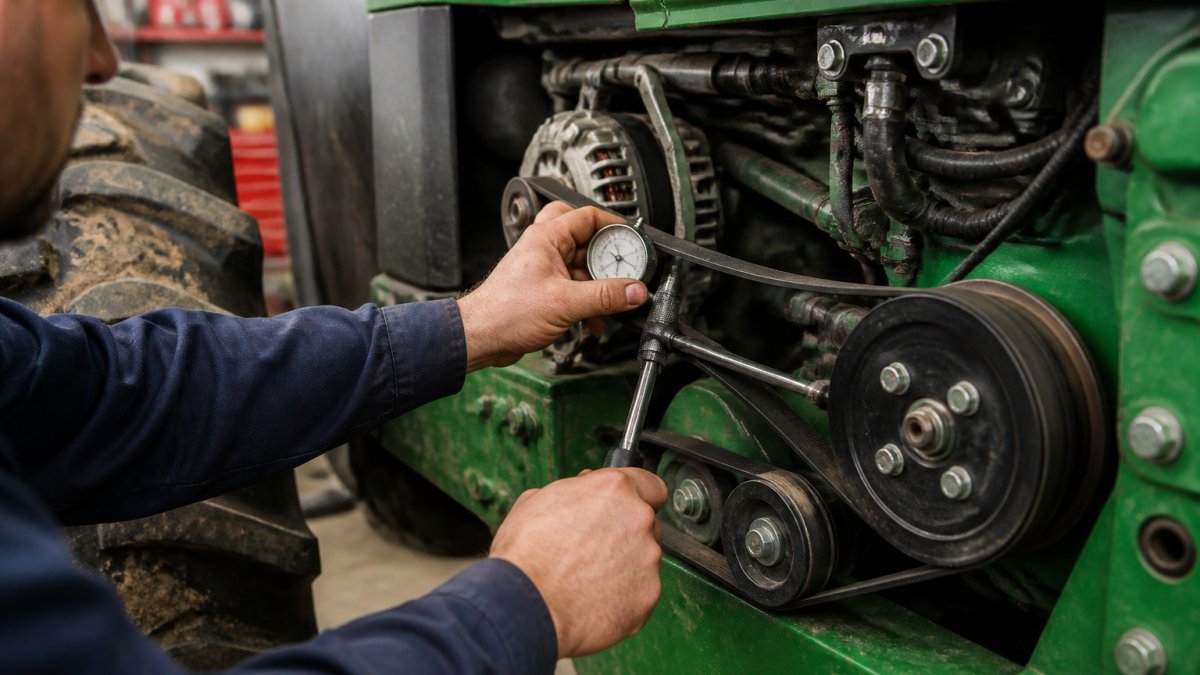
Proper tensioning requires a belt tension gauge ($30-$60) that measures deflection under known force.
Loosen the driven pulley or motor mount, adjust until the belt deflects to specification, then tighten fasteners. Recheck tension after 24 hours, new belts settle.
Misaligned pulleys create uneven belt wear that correct tensioning cannot fix.
Environmental Resistance: Matching Belt Durability to Farm Conditions
Not all affordable v-belt brands handle the same environmental stresses.
Oil and hydraulic fluid resistance varies significantly across brands.
Heat resistance matters for continuous-duty equipment. Combine harvesters and balers reach 180-200°F internally.
Dust and debris accelerate wear through abrasion. ContiTech excels in dusty conditions.
UV degradation occurs on equipment stored outdoors. Store belts indoors or cover equipment between seasons to minimize UV exposure.
1. Gates Corporation: Industry Standard Durability at Mid-Range Pricing
Gates dominates agricultural power transmission because their belts last longer under rough service conditions. Their advanced rubber compounds deliver heat and oil resistance.
Gates offers consistency of tensile strength across belt runs and an extensive catalog for exact cross-sections and lengths.
Gates costs more than generic belts, but longer lifespan often favors their products on a cost-per-hour basis. Availability through major suppliers nationwide means no long waits.
2. Dayco: High-Load Agricultural Performance
Dayco engineered v-belts for high-torque farm machinery. Their precision-molded cog designs improve flexibility for balers and field choppers under variable loads.
Dayco belts maintain performance through temperature swings without degradation seen in lower-grade alternatives. High-temperature resistance is built into their formula.
Dayco's broad distribution network means local availability. Pricing is mid-range, better than generic options, less expensive than premium brands.
3. Bando USA: Precision Manufacturing for Consistent Performance
Bando prioritizes precision manufacturing with consistent tension control, reducing variation between units.
Bando's high-grade compounds deliver wear resistance and maintain friction coefficient to prevent slipping. For equipment requiring precise power transmission, this consistency is a genuine advantage.
Bando positions itself as a precision brand for mid-range farm equipment with strong engineering support. Availability through industrial channels is solid.
4. ContiTech: Premium Quality with Extended Service Life
ContiTech brings global manufacturing standards to agricultural power transmission. Their advanced material science extends service life noticeably, translating to real savings in large-scale operations.
ContiTech excels in environmental resistance, resisting dust, moisture, and chemical exposure. For outdoor storage or harsh conditions, this durability justifies premium pricing.
ContiTech requires specialized industrial distributors, limiting availability for small farms but benefiting large-scale operations.
5. Mitsuboshi Belting: High-Efficiency Power Transmission
Mitsuboshi specializes in high-efficiency belt designs that reduce power loss through slipping and heat generation.
Mitsuboshi belts deliver excellent heat and oil resistance, protecting against common failure modes on farm equipment.
Mitsuboshi excels in high-performance applications, maintaining stability across wide temperature ranges.
Availability varies by region. For specific sizes, order through V-Belt Nation's inventory.
When to Replace Farm Equipment Drive Belts
Knowing when to replace a v-belt prevents catastrophic failure. Preventative replacement saves money. Base decisions on visual condition and total cost of ownership.
Visual inspection catches problems before failure. Look for glazing (shiny, smooth surface), cracks, fraying edges, or sections where the rubber has separated from the cord. Any of these signs mean the belt's remaining life is measured in hours, not weeks.
Squealing during operation signals either insufficient tension or a worn belt losing friction. Adjust tension first using a tension gauge calibrated to your equipment's specifications. If squealing continues after proper tensioning, the belt's friction coefficient has degraded and replacement is overdue.
Cost-Per-Hour Analysis: The Framework Competitors Miss
Comparing belt brands on upfront price alone leads to poor financial decisions.
Expected lifespan varies dramatically by brand and operating conditions:
- Budget generic belts: 150-300 hours under normal load, 50-100 hours under high load
- Mid-range brands (Bando, Dayco): 600-1,000 hours under normal load, 300-600 hours under high load
- Premium brands (Gates, ContiTech): 1,000-1,800 hours under normal load, 600-1,200 hours under high load
- Specialty brands (Mitsuboshi): 1,200-2,000 hours under normal load, 800-1,500 hours under high load
These ranges assume proper tensioning and maintenance. Improper tensioning cuts lifespan in half. Misaligned pulleys reduce lifespan by 30-50%.
A belt failure during harvest season is catastrophic.
Example calculation for a baler operating 400 hours per season:
| Belt Type | Price | Expected Lifespan (hrs) | Cost Per Hour | Downtime Risk | True Annual Cost |
|---|---|---|---|---|---|
| Budget generic | $28 | 250 | $0.112 | High (2 failures/season) | $28 + (8 hrs × $300) = $2,428 |
| Dayco mid-range | $52 | 700 | $0.074 | Medium (0.5 failures/season) | $52 + (2 hrs × $300) = $652 |
| Gates premium | $68 | 1,100 | $0.062 | Low (0.2 failures/season) | $68 + (0.8 hrs × $300) = $308 |
Over a 5-year equipment lifespan, choosing Gates instead of budget belts saves $2,120 × 5 = $10,600 in total cost, despite the higher per-belt price.
Replacement Timing and Preventative Maintenance Strategy
Most agricultural v-belts should be replaced every 2-3 years of regular use, or sooner if equipment operates continuously.
A preventative replacement strategy replaces belts before they fail, typically at 80% of their expected lifespan. For a belt expected to last 1,000 hours, replace it at 800 hours.
Track your belt replacement dates and operating hours. Over time, you'll develop accurate lifespan data for your specific equipment and operating conditions.
Frequently Asked Questions
What makes an affordable V-belt brand reliable for farm equipment?
Reliable affordable V-belt brands combine tensile strength, heat resistance, and oil resistance in their rubber compounds without premium pricing. Look for brands that meet OEM specifications for your specific machinery, combine harvesters, balers, and tractors require different cross-sections and profiles. Gates, Dayco, and Bando USA deliver consistent performance across rough service applications at competitive cost-per-hour rates.
How do I measure V-belts for farm equipment correctly?
Measure three dimensions: length (measured along the belt's centerline), width (the cross-section), and the belt profile (classic A, B, or C; or cogged variants). For tractors and combines, check your OEM manual for the exact specification, belt sizes vary significantly by model year. Use a flexible measuring tape for length, not a ruler. If your equipment is older, physically remove the old belt and compare it to manufacturer charts.
When should I replace farm equipment drive belts?
Replace belts when you notice visible fraying, cracking, glazing, or oil saturation on the surface. Slipping and squealing indicate imminent failure even if cracks aren't visible. Most farm belts last 3-5 years in moderate use, but rough service applications (high heat, dust, moisture) shorten lifespan to 1-2 years. Preventative maintenance, checking tension quarterly and keeping pulleys aligned, extends replacement cycles. Don't wait for complete failure; a broken belt on a combine harvester during peak season costs far more than a planned replacement.
What's the difference between standard and cogged V-belts for farming?
Cogged V-belts feature notches on the inner surface that increase flexibility, reduce heat buildup, and improve power transmission efficiency in high-load applications. Standard V-belts work well for moderate-duty farm equipment like lawn mowers and light-duty tractors. Cogged belts are essential for continuous-duty machinery like combines, balers, and field choppers that operate under sustained high torque. ContiTech and Gates both offer specialized cogged designs for agricultural power transmission. Cogged belts cost slightly more but deliver better performance in demanding conditions.
Are generic V-belts suitable for heavy-duty agricultural machinery?
Generic belts may fail prematurely on heavy-duty farm equipment. Quality matters because agricultural machinery operates under extreme stress, combines and balers generate high torque, heat, and vibration that demand belts with strong tensile cords and advanced rubber compounds. Premium brands like Dayco and Bando USA engineer belts specifically for these conditions, offering better wear resistance and load capacity. Cheap alternatives often have inconsistent belt length and poor friction coefficients, leading to slipping and early failure. Invest in OEM-equivalent or manufacturer-certified belts for equipment where downtime is costly.