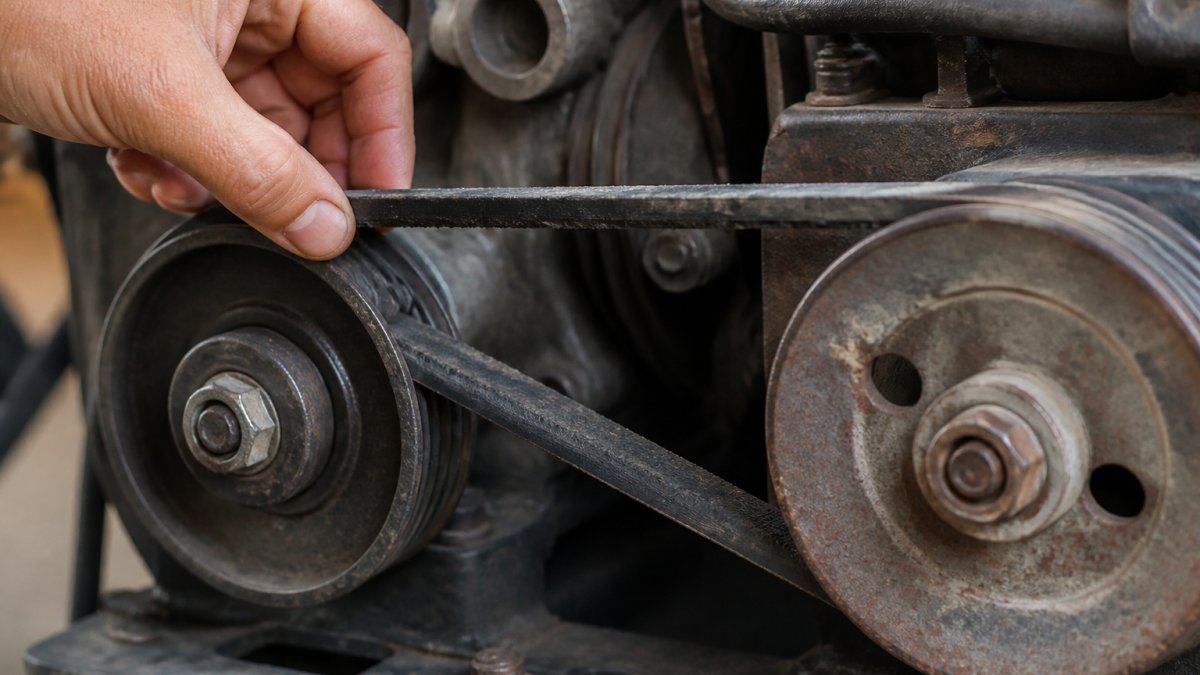
 how-to
How to Tell If a V-Belt Is Stretched
Table of Contents
- Signs of a Worn or Stretched V-Belt
- How to Check Belt Tension and Deflection
- The Difference Between Belt Wear and Belt Stretch
- Causes of Premature Belt Stretching
- Consequences of Running a Loose Belt
- How to Fix V-Belt Slippage and Tension Issues
- V-Belt Replacement Intervals and When to Replace
- Frequently Asked Questions
Last Updated: September 29, 2026
Signs of a Worn or Stretched V-Belt
When a v-belt stretched loses its grip on the pulleys, it stops transmitting power efficiently. The belt doesn't snap instantly, it gradually loses tension over weeks or months. You'll notice symptoms before total failure, but catching them early saves you downtime.
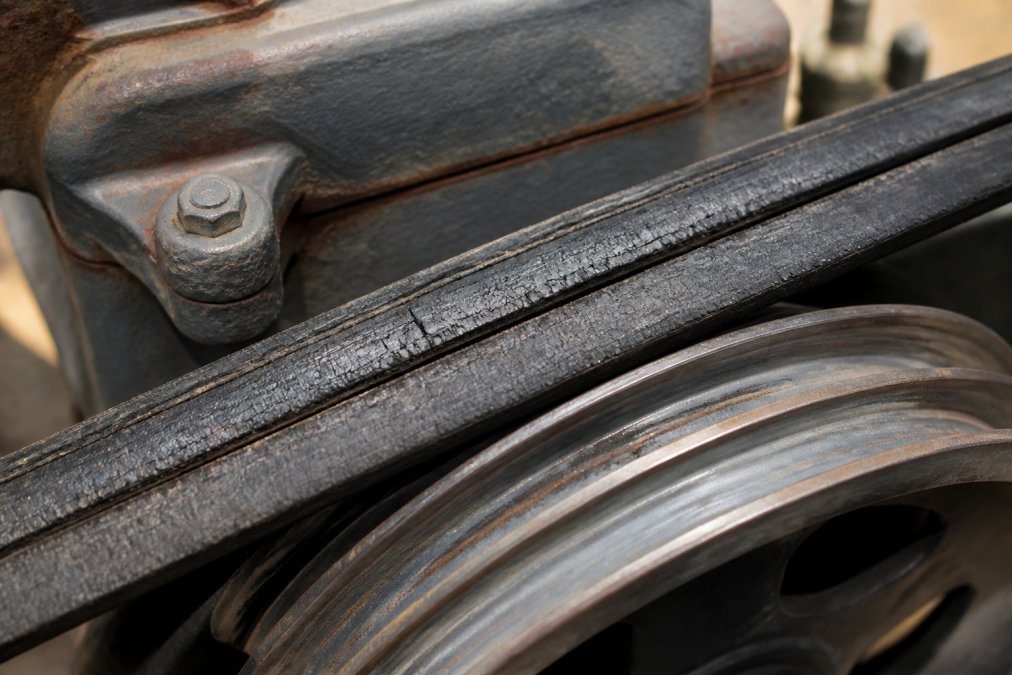
Visual Inspection Techniques
Start by looking at the belt itself. A stretched V-belt sits lower in the pulley groove than it should. The belt's sides no longer grip the angled walls of the groove, it makes contact only at the bottom. This is the clearest visual sign of stretch.
Check for these visual markers:
- Glazing: The belt surface looks shiny or polished instead of textured
- Cracking: Small cracks run perpendicular to the belt's length
- Fraying edges: The belt's sides show wear or separation
- Discoloration: Dark or burned spots indicate heat damage
- Uneven wear: One side wears faster than the other (signals misalignment)
Shine a flashlight into the pulley groove. A healthy belt fills the groove snugly. A stretched belt leaves visible gaps along the sides.
Tactile Testing Methods
Feel the belt with your hand (on a stopped machine only). A worn belt feels hard and brittle instead of flexible. Press your thumb against the belt, it should flex slightly and spring back. A stretched belt resists bending or feels permanently compressed.
Grab the belt between two pulleys and try to twist it. A healthy belt resists twisting. A stretched belt twists easily, showing loss of structural integrity.
Run your finger along the belt's surface. A glazed belt feels smooth like plastic. A good belt has slight texture. This tactile difference tells you whether heat has degraded the rubber.
How to Check Belt Tension and Deflection
Belt tension directly affects power transmission. Too loose, the belt slips. Too tight, it wears faster and stresses bearings. Proper tension sits in the middle, firm enough to grip, loose enough to flex slightly.
Using a V-Belt Tension Gauge
A V-belt tension gauge measures deflection in pounds of force. Most industrial equipment specifies a target tension range in the manual. This is the most accurate method.
Here's how to use one:
- Stop the machine completely
- Locate the belt's longest span (the straight section between two pulleys)
- Press the gauge perpendicular to the belt at the midpoint
- Apply steady pressure until the belt deflects 0.5 inches
- Read the force required on the gauge scale
- Compare to your equipment's specification
If the gauge shows less force than specified, the belt is stretched and needs adjustment or replacement.
Manual Deflection Testing
Without a gauge, you can estimate tension manually. Press the belt midway between pulleys with moderate thumb pressure. The belt should deflect about half an inch. If it sags more than an inch, tension is too low. If it barely moves, tension is too high.
This method is less precise but works for quick checks. Use it to identify obviously loose belts, then verify with a gauge for final adjustment.
The Difference Between Belt Wear and Belt Stretch
Belt wear and belt stretch are related but distinct problems. Understanding the difference helps you diagnose the real issue.
Belt wear happens when the belt's outer surface degrades. Rubber loses its grip due to friction, heat, or contamination. A worn belt still maintains its original length but loses traction. Glazing and cracking are wear symptoms.
Belt stretch occurs when the belt's internal fibers elongate. The belt physically becomes longer. A stretched belt can't maintain proper tension even with adjustments. Stretch is permanent, adjusting tension temporarily masks the problem but doesn't fix it.
You can have wear without stretch, but a severely stretched belt always shows wear too. The key difference: a worn belt can sometimes be cleaned and re-tensioned. A stretched belt must be replaced.
Press the belt against the pulley groove. If it sits too low and won't rise even with maximum tension adjustment, stretch is the culprit. If the belt sits properly but the surface is degraded, you're dealing with wear.
Causes of Premature Belt Stretching
Belts don't stretch randomly. Specific conditions accelerate elongation. Identifying the cause prevents the same problem after replacement.
Pulley Alignment and Maintenance
Misaligned pulleys are the leading cause of premature belt stretch. When pulleys don't sit in the same plane, the belt tracks sideways across the groove. This creates uneven tension and accelerates wear and stretch.
Check alignment using a straight edge or laser alignment tool. Place the tool against both pulleys. The grooves should align perfectly. Even small misalignment (0.25 inches) causes problems over time.
Poor pulley maintenance compounds the issue. A worn or damaged pulley groove forces the belt to work harder. The groove walls may be dented or uneven. The belt can't seat properly, leading to slippage and stretch.
Inspect pulleys for:
- Grooves: Smooth, even walls with no dents or scoring
- Diameter: Verify against equipment specs (wrong pulley size causes stretch)
- Cleanliness: Remove dirt, oil, and debris that reduce friction
- Bearings: Spin each pulley freely, stiff rotation strains the belt
Belt Material Differences: Rubber vs. EPDM vs. Aramid
Different belt materials have different stretch characteristics. Understanding your belt type helps you prevent premature elongation.
Rubber belts are traditional and affordable. They stretch gradually and show clear warning signs. Rubber tolerates minor misalignment but degrades faster in heat or oil exposure.
EPDM belts resist heat and oil better than rubber. They stretch less over time. EPDM costs more but lasts longer in harsh environments. They're ideal for equipment exposed to temperature swings or chemical exposure.
Aramid-reinforced belts contain synthetic fibers that resist stretch. These premium belts maintain tension longer and tolerate heavier loads. They cost significantly more but deliver superior performance in critical applications.
Your equipment manual specifies the correct material. Using the wrong type, even if it fits, leads to premature stretch. We stock a wide range of materials, allowing you to match your equipment's exact requirements rather than settling for a generic substitute.
Consequences of Running a Loose Belt
A loose belt doesn't just slip, it cascades into multiple failures. Understanding these consequences motivates prompt correction.
Slippage generates heat. The belt and pulley rub instead of gripping. Friction raises surface temperature dramatically. Heat accelerates rubber degradation, making the belt stretch faster. A loose belt becomes looser, creating a downward spiral.
Power transmission fails. Your equipment runs slower or stops entirely. Production lines halt. HVAC systems lose cooling capacity. Lawn mowers won't start. The functional impact is immediate and costly.
Bearing stress increases.
How to Fix V-Belt Slippage and Tension Issues
Fixing slippage requires identifying whether the problem is tension, wear, stretch, or alignment. Each requires a different solution.
Adjusting Tension on Your Equipment
Most equipment has an adjustment mechanism. The motor or driven component mounts on a sliding base. Loosening the mounting bolts lets you slide the component to change belt tension.
Here's the process:
- Loosen the motor or component mounting bolts (don't remove them)
- Locate the adjustment bolt or screw (usually on the sliding base)
- Turn the adjustment bolt clockwise to increase tension
- Check deflection at the belt midpoint, aim for 0.5 inches with moderate thumb pressure
- Tighten the mounting bolts securely
- Recheck tension after the equipment runs for a few minutes
Addressing Pulley Misalignment
Misalignment requires physical correction. The pulleys must sit in the same plane.
Check alignment first:
- Place a straight edge across both pulley faces
- The edge should touch both faces evenly
- Gaps indicate misalignment
Correction depends on which pulley is misaligned:
- Adjust the motor pulley: Loosen motor mounting bolts and shift the motor sideways until alignment is correct
- Adjust the driven pulley: Loosen the driven component's mounting and shift it until aligned
- Check pulley runout: Spin each pulley and watch the groove, it should remain centered. Wobbling indicates bearing wear or bent shaft
V-Belt Replacement Intervals and When to Replace
A V-belt stretched beyond recovery must be replaced. Attempting to adjust a stretched belt is temporary, it will stretch again quickly.
Replace the belt when:
- Visual inspection shows significant cracking or glazing
- The belt sits too low in the groove even at maximum tension
- A tension gauge shows force below the manufacturer's specification
- The belt squeals or slips despite tension adjustment
- You observe burn marks or discoloration indicating heat damage
- The belt has been in service for the equipment's recommended interval (typically 3-5 years for industrial use)
Debunking the Break-In Period Myth
Many technicians claim new belts need a "break-in" period where you run them loose initially. This is incorrect and actually harmful.
Frequently Asked Questions
Do V-belts stretch over time?
Yes, V-belts naturally stretch over time due to repeated flexing, heat exposure, and load cycles. This is different from permanent deformation. A properly maintained belt may last 3-5 years in typical operating conditions, but stretching accelerates if the belt is exposed to excessive heat, misalignment, or overloading. Regular inspection helps catch stretch before it causes slippage or power loss.
How do I use a V-belt tension gauge to check if my belt is stretched?
A V-belt tension gauge measures deflection by applying a known force and reading the belt's movement. Place the gauge perpendicular to the belt midway between pulleys, apply the specified force (typically 10 pounds), and note the deflection reading. Compare your reading to the manufacturer's specifications for your belt type and length. Readings exceeding specifications indicate the belt has stretched and needs adjustment or replacement.
What should I do if my belt is slipping and squealing?
First, check pulley alignment using a straightedge, misaligned pulleys cause premature stretching and slippage. Next, adjust belt tension according to your equipment's maintenance manual. If tension adjustment doesn't stop squealing, the belt may be glazed or permanently stretched and needs replacement. Ensure pulleys are clean and free of oil or debris, as these reduce friction and contribute to slippage.
How often should I replace my V-belt?
Replacement intervals vary by operating conditions and belt material. Most industrial V-belts need replacement every 3-5 years with proper maintenance. Agricultural and HVAC systems may require annual or biennial replacement depending on usage. Check your equipment manufacturer's recommendations and inspect belts quarterly for signs of wear, stretch, or damage. Replace immediately if you notice cracking, glazing, or excessive slippage.