 how-to
How to Choose the Right V-Belt Material
Table of Contents
- Start With the Drive, Not the Belt
- V-Belt Material Types and What Each One Handles
- Rubber V-Belt vs Polyurethane: A Material-by-Material Comparison
- V-Belt Operating Temperature and Environmental Compatibility
- V-Belt Size and Profile Identification Before You Order
- Matching Material to Power, Speed, and Load Requirements
- Material Selection by Industry and Equipment
- Reading Belt Failure as a Material Clue
- Frequently Asked Questions
Last Updated: October 17, 2026
Start With the Drive, Not the Belt
The belt is the last thing you should pick. The drive system tells you what the belt has to survive, and that decides the material.
Choosing the right v-belt material starts with three facts about your drive: the pulley groove profile, the heat and contaminants around it, and the load pattern.
This guide from V-Belt Nation walks through each material family, when it wins, and when it quietly fails, so you can match a compound to your drive instead of guessing by price.
V-Belt Material Types and What Each One Handles
V-belt material types fall into two families: rubber compounds and synthetic polymers. Each handles a different mix of heat, oil, abrasion, and load. Neither is universally better.
Rubber Compounds: Natural, SBR, and EPDM
Natural rubber is the traditional choice for general-purpose drives. It grips well, flexes easily, and suits ambient conditions. It does not tolerate oil or high heat.
SBR (styrene-butadiene rubber) is a synthetic general-purpose compound. It costs less than EPDM and performs well in dry, moderate-temperature drives. Like natural rubber, it dislikes oil.
EPDM is the heat and weather specialist. It resists ozone, sunlight, and steam far better than natural rubber or SBR. Many HVAC and outdoor drives run EPDM for exactly this reason.
Polyurethane and Other Synthetic Options
Polyurethane belts resist oil, grease, and abrasion better than rubber, suiting compact drives and clean environments with chemical exposure. The trade-off: polyurethane runs hotter and is less forgiving on misaligned pulleys.
Other synthetics exist for niche drives. The practical rule is simple: if the drive sees oil or chemicals, look at polyurethane. If it sees heat or weather, look at EPDM.
Rubber V-Belt vs Polyurethane: A Material-by-Material Comparison
Rubber wins on heat and flex fatigue. Polyurethane wins on oil and abrasion. That trade-off explains most of the rubber V-belt vs polyurethane decision, but the details separate a belt that lasts years from one that fails in months.
The table below compares the four compounds you are most likely to encounter on a drive. Treat the ratings as relative, not absolute: a 'fair' oil rating still means the compound will swell and soften if oil reaches it consistently.
| Property | Natural Rubber | SBR | EPDM | Polyurethane |
|---|---|---|---|---|
| Oil and grease resistance | Poor | Poor | Poor | Good |
| Heat resistance | Fair (roughly 140-158°F continuous) | Fair to good | Good (roughly 212°F continuous) | Fair (roughly 176°F continuous) |
| Abrasion resistance | Good | Fair | Fair | Excellent |
| Ozone and weather | Poor | Poor | Excellent | Good |
| Flex fatigue resistance | Good | Good | Good | Fair |
| Grip on pulley | Good | Good | Good | Good to excellent |
| Noise | Low | Low | Low | Can be higher on dry metal |
| Best for | General-purpose drives | Cost-sensitive dry drives | HVAC, outdoor, steam, washdown | Oily, compact, abrasive drives |
What the Ratings Actually Mean in Service
Heat. Natural rubber and SBR harden and take a permanent set past roughly 158°F continuous. EPDM tolerates continuous service near 212°F and short excursions higher.
Abrasion. Polyurethane's abrasion resistance is its strongest advantage, noticeably outlasting rubber on drives exposed to abrasive dust, grit, or metal chips.
Weather and ozone. Natural rubber and SBR crack quickly under sunlight and ozone.
Noise and grip. All four compounds grip adequately on a properly tensioned, aligned drive.
When Each Compound Is the Wrong Choice
- Natural rubber or SBR on an oily or outdoor drive, swelling or ozone cracking within the first season.
- EPDM on an oily drive, buyers assume 'premium rubber' covers oil; it does not.
- Polyurethane on a small pulley at high speed, flex fatigue cracking at the back of the belt.
- Polyurethane in sustained heat above roughly 176°F, permanent stretch and loss of tension.
The practical rule: if the drive sees oil or chemicals, look at polyurethane. If it sees heat, weather, steam, or washdown, look at EPDM. If it sees none of those and cost matters, natural rubber or SBR is fine.
V-Belt Operating Temperature and Environmental Compatibility
V-belt operating temperature decides more failures than most buyers expect, and it is the environmental factor most often measured in the wrong place. The temperature that matters is at the belt's contact surface, not the thermostat on the wall.
Temperature: The Numbers That Matter
Every compound has a continuous service range and a short-excursion limit. Exceed the continuous range and it hardens, cracks, or takes a permanent set; exceed the excursion limit and it degrades quickly.
- Natural rubber and SBR: roughly 140-158°F continuous. Above that, hardening and cracking accelerate.
- EPDM: roughly 212°F continuous, with short excursions higher. The best choice for hot enclosures, steam, and washdown.
- Polyurethane: roughly 176°F continuous. Above that, it softens, stretches permanently, and loses tension.
A motor pulley inside a hot enclosure or near a process line can run 30-50°F above surrounding air. Measure at the pulley with an infrared thermometer after the drive has run under load, and add margin for summer. If the reading is within 20°F of the compound's continuous limit, step up to a more heat-tolerant material.
Contaminants: How Each One Degrades the Belt
- Oil and grease: hydrocarbon rubbers (natural, SBR, EPDM) swell and soften; grip drops and the belt runs slack. Polyurethane resists oil and is the default for oily drives.
- Sunlight and ozone: natural rubber and SBR crack at the surface; EPDM resists both and is the outdoor choice.
- Steam and washdown: moisture and heat together attack natural rubber; EPDM handles both.
- Abrasive dust and grit: scuffs and erodes the belt surface; polyurethane resists abrasion best.
- Chemical splash: compatibility depends on the specific chemical, check the compound's chemical resistance before ordering, and do not assume 'oil-resistant' means 'chemical-resistant.'
A Practical Selection Sequence
- Measure the belt's running temperature at the pulley under load.
- Identify every contaminant the belt will see, oil, water, steam, dust, chemicals, sunlight.
- Rule out any compound that fails either the temperature or the contaminant test.
- Among the survivors, choose on abrasion resistance, flex fatigue, and cost.
Where Environmental Compatibility Overrides Everything Else
If a drive sees both oil and heat, common on machine tools and enclosed drives, no single standard compound wins outright. Prioritize the contaminant that causes the faster failure (usually oil) and manage heat with ventilation, alignment, and correct tension. Material selection cannot compensate for a drive running hot from misalignment or over-tensioning; fix the drive first, then choose the compound.
V-Belt Size and Profile Identification Before You Order
V-belt size and profile identification comes before material selection, because a perfect compound in the wrong cross-section is scrap. Read the old belt's markings, then confirm with a caliper.
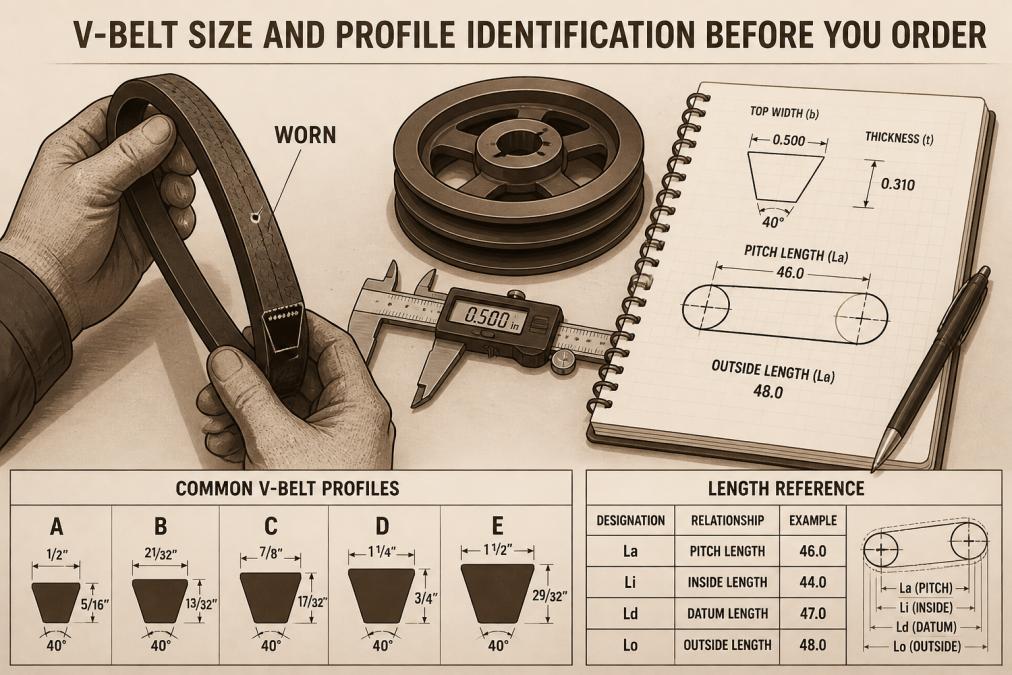
Follow these steps:
- Read the old belt's stamp. It usually shows the section and length.
- Measure the top width with a caliper.
- Measure the thickness at the widest point.
- Measure the inside length around the belt.
- Check the pulley groove to confirm the profile matches.
Classical profiles, fractional-horsepower profiles, and narrow-wedge profiles each need the right sheave groove. A narrow-wedge belt in a classical groove will not seat correctly, no matter what it's made of.
Matching Material to Power, Speed, and Load Requirements
Power transmission needs set the material's strength and heat load. Horsepower and operating speed together decide how hard the belt works. High speed means more flex cycles per minute, so flex fatigue matters more.
Transmission ratio and load pattern matter too:
- Shock loads: pick a compound that resists cracking under sudden torque
- Continuous high speed: prioritize flex fatigue resistance
- High horsepower, small pulleys: expect more heat, so heat resistance counts
- Pulsing loads: check that the compound handles repeated stress
Belt drive efficiency also shifts with tension and alignment. A material that grips well can still slip if tension is wrong. Match the compound to the load, then set tension correctly.
Material Selection by Industry and Equipment
Industry needs narrow the choice quickly. Here is how we'd sort common equipment:
| Equipment | Typical Demand | Material Direction |
|---|---|---|
| HVAC cooling towers | Weather, moisture, ozone | EPDM |
| Agricultural drives | Dust, outdoor exposure | EPDM or wrapped rubber |
| Machine shop drives | Oil mist, coolant | Polyurethane |
| Lawn and garden | Outdoor, light load | EPDM or rubber |
| OEM production lines | Consistency, load | Specified compound |
For OEMs, consistency matters as much as the compound. A batch that varies in hardness or dimension causes vibration and early wear, so ask for documentation on compound and dimensions before committing to a production run.
At V-Belt Nation, we stock classic, wedge, cogged, banded, and lawn and garden belts, so the material and the profile come from one supplier.
Reading Belt Failure as a Material Clue
Failure patterns are a diagnostic tool. The way a belt died tells you whether the material was wrong or the drive setup was.
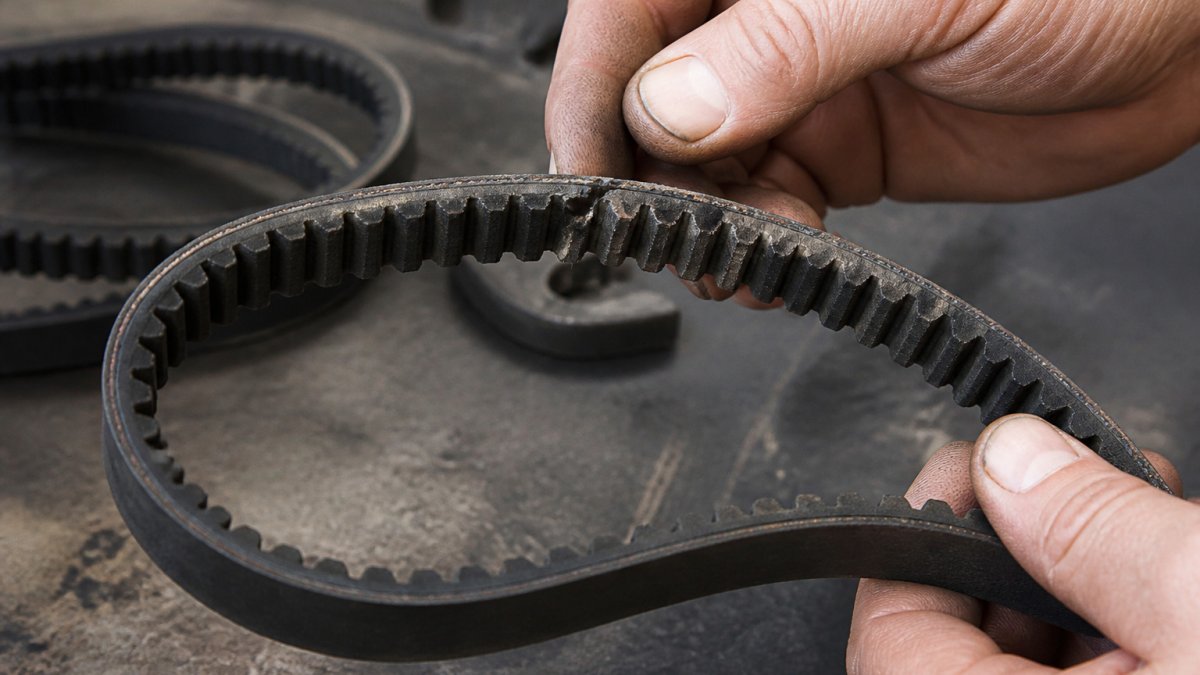
- Cracked, hard, glazed belt: heat or age, likely wrong compound for the temperature
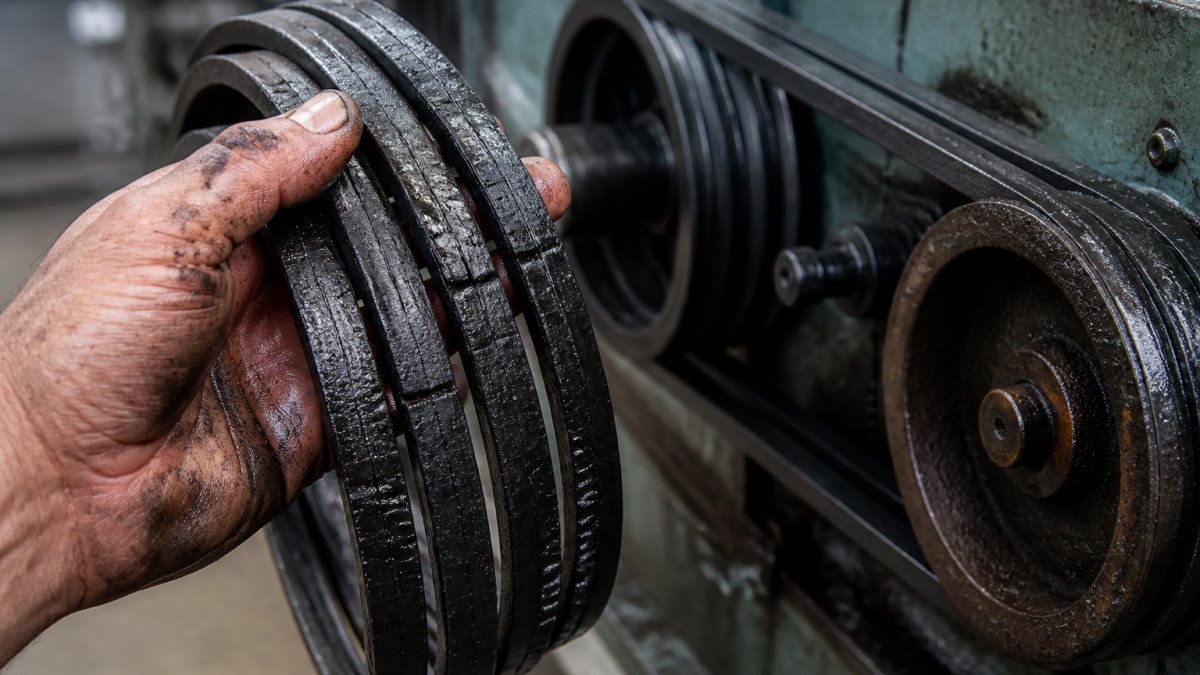
- Swollen, soft belt: oil exposure on a rubber compound
- Slipping and squealing: wrong tension, worn pulley, or a compound with poor grip
- Uneven wear on one side: misalignment, not material
- Cuts and chunking: abrasion or debris, so check the compound's abrasion resistance
- Edge wear and fraying: pulley groove wear or a profile mismatch
Slippage and overheating often pair up. A slipping belt generates heat, and heat degrades the compound, which causes more slip. Fix tension and alignment first, then confirm the material suits the environment.
Picking the right compound takes a few minutes of checking heat, oil, and load before you order. V-Belt Nation carries classic and wedge belts, cogged and banded options, and lawn and garden belts, with free ground shipping on U.S. orders over $175 and a price match guarantee.
Frequently Asked Questions
What materials are V-belts made from?
Most V-belts use a rubber compound as the base: natural rubber, SBR, or EPDM, reinforced with polyester or aramid tensile cords and wrapped in a fabric cover. Polyurethane belts are molded rather than wrapped and are common on light-duty and specialty drives. Each material changes how the belt handles heat, oil, moisture, and shock loads, so the v-belt material choice should follow the operating conditions of the drive, not the other way around.
Are rubber or polyurethane V-belts better?
Neither wins across the board. Rubber V-belts handle higher horsepower, run cooler on large industrial drives, and tolerate misalignment better. Polyurethane resists oils, greases, and many chemicals, holds dimensional stability on small precision drives, and suits clean environments. For a rubber V-belt vs polyurethane decision, check the load, the contamination risk, and the pulley size first. A 50 hp compressor drive and a garage door opener do not want the same material.
Which V-belt material resists oil and heat?
For oil exposure, polyurethane and oil-resistant rubber compounds (often labeled as oil-resistant or ORS) hold up best. For heat, EPDM rubber outperforms natural rubber and SBR, which harden and crack above roughly 140°F ambient. If a drive sees both oil mist and heat, such as a gearbox-adjacent application, confirm the belt's temperature rating and oil resistance before ordering. Standard wrapped belts are not oil-proof, and a belt that swells from oil will slip and fail early.
How do temperature, moisture, and chemicals affect V-belt selection?
Heat accelerates rubber aging and shortens service life, so drives above 140°F need EPDM or a heat-rated compound. Moisture and humidity favor EPDM and polyurethane, which resist swelling better than natural rubber. Chemicals are the hardest variable: polyurethane handles many solvents and oils, while rubber compounds vary widely. Check the belt's operating temperature range and chemical compatibility against your actual environment, and remember that a belt running in a washdown area needs different material than one in a dry plant room.