 how-to
Choosing the Right V-Belt Tensioner: What to Know
Last Updated: October 27, 2026
Quick Summary
Choosing the right v-belt tensioner starts with measuring the drive: belt cross-section, sheave diameters, center distance, and available adjustment room. The tensioner must fit that geometry and hold the belt at the drive maker's specified tension. Match the tensioner family to the duty, then confirm mounting, fastener, and force rating before ordering.
- Belt cross-section sets the load the tensioner must hold, and center distance sets the take-up travel you need.
- Screw tensioners suit most plant work because the thread lets you dial in and repeat tension.
- Spring-loaded tensioners maintain tension as the belt stretches, suiting fan and blower drives.
- Check clearance at both ends of the adjustment range, not just the middle.
- A tensioner rated below the belt's installation force will creep and lose tension.
Table of Contents
- Start With the Drive, Not the Tensioner
- Tensioner Types: Manual, Screw, and Ratchet Compared
- Compatibility and Sizing Checks Before You Buy
- Using a V-Belt Tension Gauge to Set Tension Correctly
- How Tight Should a V-Belt Be?
- Reading a V-Belt Tensioning Table
- A V-Belt Sizing Guide for Tensioner Selection
- Troubleshooting Tensioner and Belt Problems
- Frequently Asked Questions
Start With the Drive, Not the Tensioner
Choosing the right V-belt tensioner starts with the drive, not the catalog. Measure the drive first: belt cross-section, sheave diameters, center distance, and available adjustment room. The tensioner must fit that geometry and hold the belt at the drive maker's specified tension.
Three numbers decide most of the job:
- Belt cross-section (A, B, C, or a wedge profile) sets the load the tensioner must hold.
- Center distance sets how much take-up travel you need.
- Access decides whether a wrench, a screw, or a ratchet can reach the spot.
Tensioner Types: Manual, Screw, and Ratchet Compared
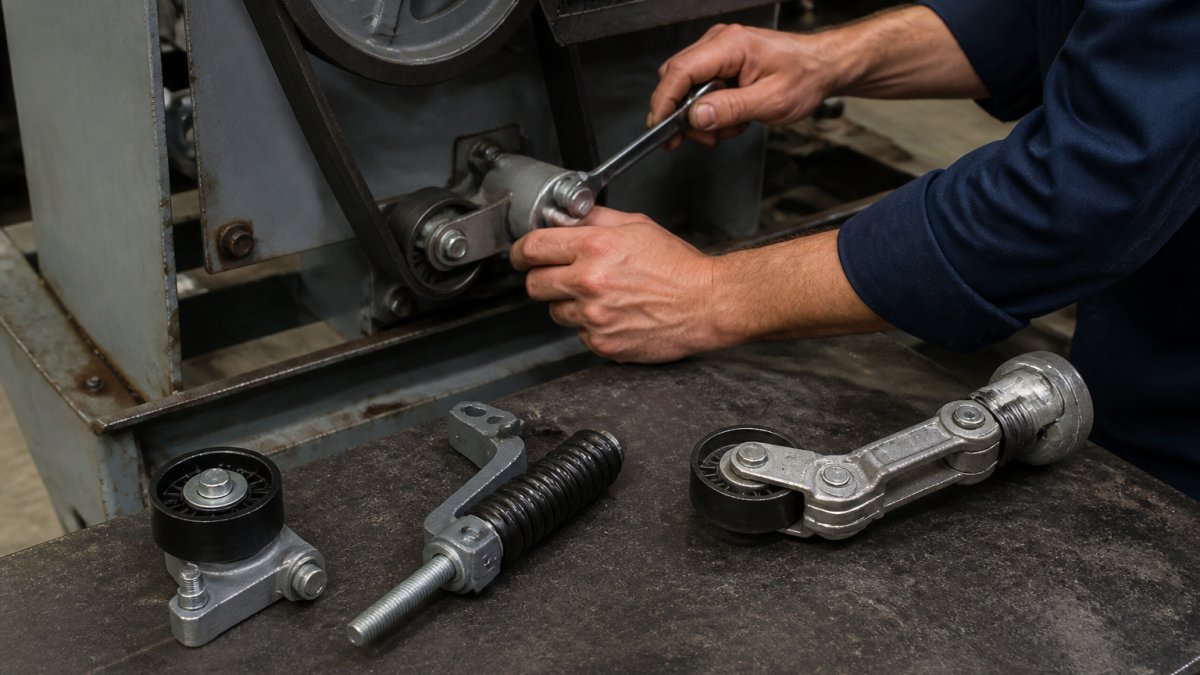
Here is how the common types differ in practice:
| Type | How it holds tension | Best for | Watch out for |
|---|---|---|---|
| Fixed | Belt runs on fixed centers or an idler in a bolted slot; no adjustment after setup | Drives with a fixed center distance and a jockey idler, or where a matched belt length is specified | No take-up for stretch; belt must be replaced when it elongates |
| Manual | Bolted slot, operator sets position | Small drives, infrequent service | Slips if bolts loosen; hard to fine-tune |
| Screw | Threaded rod pushes and holds the mount | Most industrial drives, repeatable settings | Threads wear; needs access for a wrench |
| Ratchet | Toothed take-up with a lock | Tight spaces, quick retensioning | Coarse steps; check the lock holds |
| Spring-loaded | A spring applies a set force to an idler or mount | Drives that stretch or see load variation; fan and blower drives | Spring rate and installed length must match the belt's target force |
| Automatic | A spring, air, or hydraulic actuator maintains tension through the full take-up range | Long runs, high duty cycles, drives where retensioning is costly | Higher cost and more components to inspect; needs a defined travel range |
Fixed tensioners are the simplest: the drive's center distance sets correct tension on a new belt, and an idler may be bolted in a fixed slot. They work when belt length is controlled and no retensioning is needed, but once the belt stretches there is no take-up, so it must be replaced.
Manual tensioners rely on the operator to slot and bolt the motor or idler in place. They are cheap and fine on small, rarely touched drives, but least repeatable: two technicians will set two different tensions, and bolts can loosen under vibration.
Screw tensioners use a threaded rod to push and hold the mount. They suit most plant work because the thread lets you dial in and repeat tension, and the rod holds position under load. Limits are thread wear and the need for wrench access.
Ratchet tensioners use a toothed mechanism to take up slack in fixed steps and lock it. They win where you cannot swing a wrench, but steps are coarse, fine adjustment is harder, and the lock must be checked after each setting.
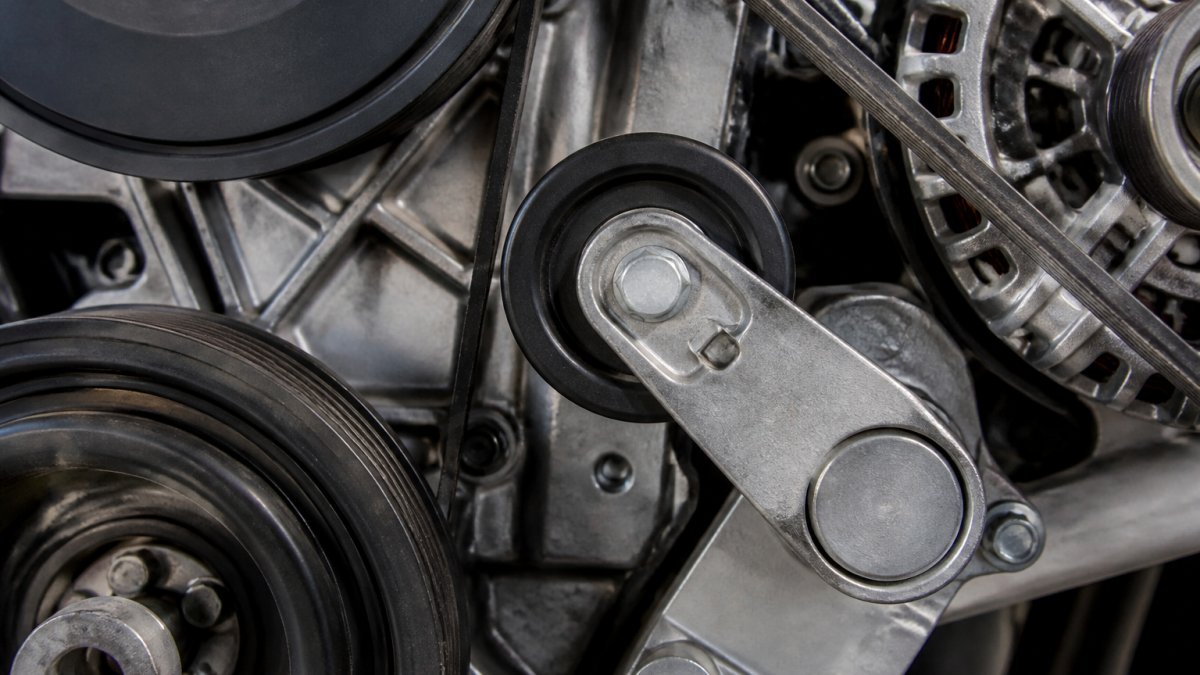
Spring-loaded tensioners apply a set force through a spring, usually to an idler on the belt's slack side. They maintain tension as the belt stretches and load varies, suiting fan, blower, and other drives with changing demand. The spring rate and installed length must match the belt's target force, or the belt is under-tensioned or overloaded.
Automatic tensioners use a spring, air, or hydraulic actuator to maintain tension through the full take-up range. They suit long runs, high duty cycles, and drives where retensioning is costly or dangerous. They cost more, add components to inspect, and need a defined travel range so the actuator does not run out of stroke.
Compatibility and Sizing Checks Before You Buy
Compatibility is where most tensioner purchases go wrong. Check belt profile, sheave match, adjustment range, mounting, and operating conditions before ordering. A tensioner that fits the frame but not the belt is useless, and one that fits the belt but not the duty cycle will not last.
Belt Profile and Sheave Match
Also check the small sheave diameter: a belt bent around a sheave too small for its section cracks and fails early. You can identify your belt's cross section by dimensions to confirm it matches the sheave. The tensioner cannot fix that; it can only hold a belt that already fits the drive.
Center Distance and Adjustment Range
Watch out: a tensioner mounted so the belt rubs the frame at full take-up will wear through the belt edge. Check clearance at both ends of the adjustment range, not just the middle.
Mounting and Fastener Compatibility
Before you buy, confirm the tensioner's mounting pattern matches the frame: bolt hole spacing, thread size, and whether it needs a flat mounting face or machined pad. A motor-base tensioner needs a base that takes the added load; an idler-bracket mount needs a bracket sized for the force. Confirm fastener grade too, soft bolts will creep under vibration no matter how well the tensioner is set.
Dynamic Operating Conditions
- Vibration and shock loads: drives with pulsating loads (compressors, crushers, reciprocating equipment) need a tensioner that resists creep, such as a screw or automatic type. A manual slot can slip under shock.
- Temperature: high-temperature drives degrade spring tension and belt compounds. Confirm the tensioner's spring and materials are rated for the ambient temperature at the drive.
- Contamination: dust, oil, and grit wear threads and clog ratchet teeth. In dirty areas, choose a sealed or protected tensioner and schedule inspection.
- Speed changes: variable-speed drives change the belt's tension demand. A spring-loaded or automatic tensioner handles the variation better than a fixed setting.
- Duty cycle: continuous-duty drives benefit from automatic take-up; intermittent drives can use manual or screw types with scheduled checks.
A Practical Selection Workflow
Use this sequence to move from drive data to a tensioner choice:
- Record the drive data: belt section and length, sheave diameters, center distance, and available adjustment slot.
- Confirm the belt and sheave match using the profile and small-sheave checks above.
- Calculate the required take-up: belt stretch plus installation allowance, compared with the slot travel.
- Match the tensioner family to the duty: fixed for controlled-length drives, manual or screw for scheduled service, spring-loaded or automatic for varying load or long runs.
- Check mounting and fastener compatibility against the frame and base.
- Review operating conditions for vibration, temperature, contamination, speed changes, and duty cycle.
- Verify the tensioner's force rating exceeds the belt's installation force with margin.
- Confirm access for adjustment and inspection before you order.
Safety and Installation Checks
Before installation, lock out and tag out the drive, and confirm guarding will fit over the tensioner and belt after adjustment. Check sheave alignment with a straightedge before setting tension; misalignment wears belts and masks tension problems. After installation, inspect fasteners for grade and torque, run the drive briefly, and recheck tension and clearance at both ends of the travel range.
Using a V-Belt Tension Gauge to Set Tension Correctly
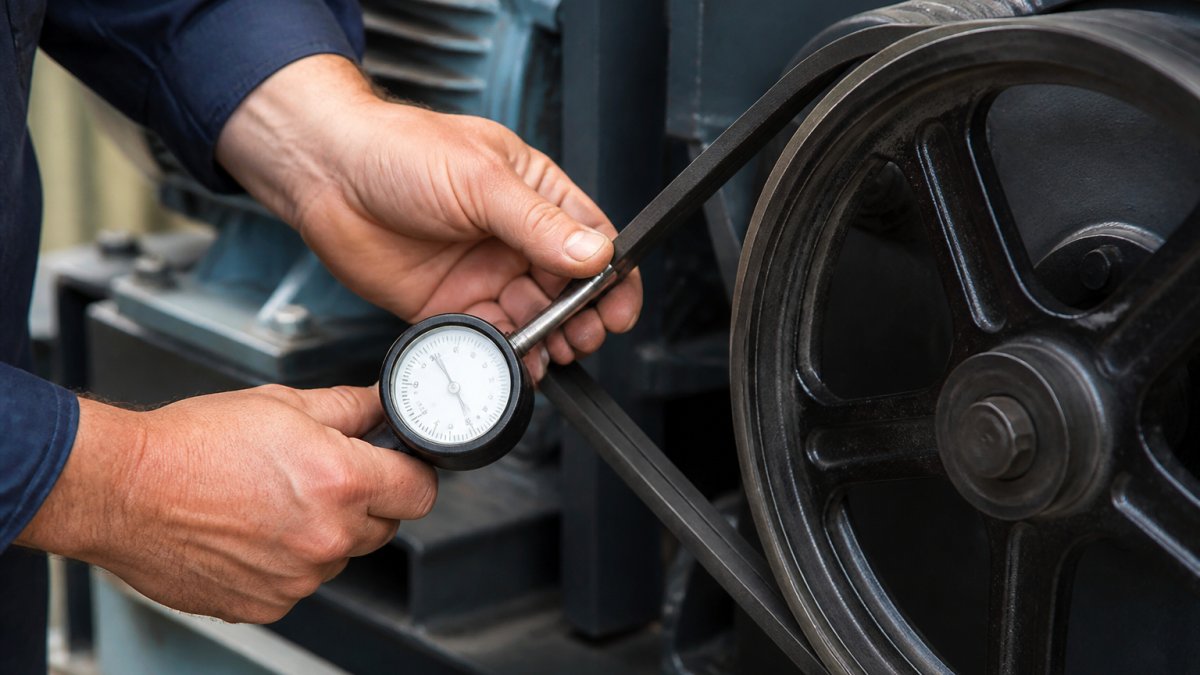
A gauge beats the thumb-press method because it removes opinion, two technicians pressing the same belt by hand will disagree. For a deeper walkthrough, see our article on how to measure belt tension for optimal performance.
How Tight Should a V-Belt Be?
Signs you are too tight:
- Bearings run hot on the driven shaft
- The belt hums or whines at speed
- Belt edges fray or the cords show
- Sheave grooves wear unevenly
Reading a V-Belt Tensioning Table
A V-belt tensioning table converts span length and belt section into a deflection force, replacing guesswork with a number.
Read it in three steps:
- Find the section row for your belt (A, B, C, or wedge).
- Find the span column closest to your measured center distance.
- Read the force and set the gauge to it.
Tables vary by drive maker and belt type, so use the one that matches your belt. A cogged belt and a wrapped belt of the same section can call for different forces. When in doubt, follow the belt maker's table over a generic one.
A V-Belt Sizing Guide for Tensioner Selection
Then match the tensioner to the belt:
- Section A and smaller: light tensioners, short travel, small frames.
- Section B and C: standard screw tensioners with enough travel for stretch.
- Wedge and banded belts: heavier tensioners rated for higher installation force.
A tensioner rated below the belt's installation force will creep and lose tension. Check the rating, not just the fit.
Troubleshooting Tensioner and Belt Problems
A common mistake is cranking the tensioner to stop a squeal. That hides the slip for a week and then takes out a bearing. Find the cause instead. Our V-belt tensioning how-to guide covers the technique that prevents these failures.
Frequently Asked Questions
How do I choose the right V-belt tensioner?
Start with the drive itself: belt profile, sheave diameter, center distance, and how much adjustment range the mounting allows. Then match the tensioner type to your access and maintenance routine. A manual tensioner suits drives set once and rarely touched, a screw tensioner works well where fine adjustment matters, and a ratchet tensioner speeds up retensioning on high-vibration drives. Confirm the tensioner's rated load and belt cross-section fit before ordering.
How tight should a V-belt be?
Tight enough to transmit load without slipping, and loose enough to avoid overloading bearings. The practical answer comes from the manufacturer's tensioning table: it gives a deflection force for your belt cross-section and sheave diameter. As a starting point, the belt should deflect roughly 1/64 inch per inch of span at the recommended force. Always verify with a V-belt tension gauge rather than judging by feel, since hand tension varies from person to person.
Can a V-belt tension gauge help prevent belt failure?
Yes. A V-belt tension gauge measures deflection force directly, so you set tension to the manufacturer's specification instead of guessing. That prevents both under-tensioning, which causes slip, squeal, and belt wear, and over-tensioning, which loads bearings and stretches the belt. Checking tension at installation and again after the first run-in period catches problems early. Pair the gauge with the tensioning table for your belt profile and sheave size.
When should V-belt tension be checked after installation?
Check tension immediately after installation, then again after the first 24 to 48 hours of running. New belts seat into the sheave grooves and lose some initial tension during that run-in period, so retensioning is normal. After that, add tension checks to your scheduled maintenance routine, and inspect sooner if you notice squealing, slipping, or vibration. Keep a record of each check so you can spot a drive that keeps losing tension.
Getting tension right is the difference between a drive that runs for years and one that eats belts and bearings. V-Belt Nation stocks the belt types and sections that fit most drives, with a price match guarantee and free ground shipping on U.S. orders over $175. Our support team can help you match a belt and tensioner to your drive before you order. Get started with V-Belt Nation and keep your machinery running smoothly.