 how-to
How to Clean V-Belt Pulleys Properly
Table of Contents
- Why Dirty V-Belt Pulleys Cause Problems
- Diagnosing Belt Squeal and Identifying Contamination
- V-Belt Pulley Wear Symptoms and When to Replace
- Selecting the Right V-Belt Cleaning Tools
- Step-by-Step: How to Clean V-Belt Pulleys Properly
- Performing a V-Belt Alignment Check After Cleaning
- V-Belt Pulley Maintenance to Prevent Future Buildup
- Frequently Asked Questions
Last Updated: October 16, 2026
Why Dirty V-Belt Pulleys Cause Problems
A contaminated V-belt pulley system loses grip and efficiency. Dust, oil, grime, and rust in the grooves prevent the belt from seating properly, so it slips, causing squealing, reduced power transfer, and premature wear on both belt and pulley.
The real cost isn't just noise. A slipping belt makes equipment work harder, consuming more energy, and friction heat degrades the belt faster. A contaminated pulley can cut belt lifespan in half.
Most belt problems start with dirty pulleys, not worn belts, and a quick cleaning often restores performance without replacement.
Diagnosing Belt Squeal and Identifying Contamination
Belt squeal is the first warning sign that your V-belt pulley needs cleaning, a high-pitched noise caused by the belt slipping and spinning faster than it should.
Squeal occurs for two main reasons: contamination or misalignment. To diagnose which one, inspect the pulley surface visually. Look for these signs of contamination:
- Oil residue or grease coating the grooves
- Dust and dirt buildup in the pulley grooves
- Rust spots or oxidation on metal pulleys
- Debris stuck between the belt and pulley
- A slick or shiny appearance on the pulley surface
If the pulley looks clean but squealing persists, the issue is likely belt tension or alignment. Most squealing problems, however, involve dirty pulleys, road grime, dust, and oil accumulate over time, especially on lawn mowers, agricultural machinery, and HVAC cooling towers.
Run your finger along the pulley groove. If you feel grime or slickness, cleaning will fix the squeal. If the groove feels dry and rough but squealing continues, check belt tension next.
V-Belt Pulley Wear Symptoms and When to Replace
Before cleaning, inspect the pulley for permanent damage.
Signs of normal wear that cleaning won't fix:
- Deep cracks or splits in the pulley material
- Chunks missing from the groove edges
- Severe rust that has eaten into the metal
- The groove is visibly narrower or shallower than it should be
- The pulley wobbles or spins unevenly
- A pronounced ridge or step worn into the groove walls
If your pulley shows these symptoms, cleaning won't restore function, a damaged groove won't grip the belt no matter how clean it is.
Signs of wear that cleaning CAN help:
- Surface rust that hasn't penetrated deep
- Dirt and grime buildup
- Oil coating the groove
- Dust caked in the grooves
- The pulley spins smoothly but the belt slips
How to judge groove wear:
A V-belt pulley is a wear part.
A practical field check: on a healthy pulley, the belt's top sits roughly flush with, or slightly proud of, the outer diameter.
Material matters:
- Cast iron and steel pulleys, Durable and tolerant of wire brushing. Watch for deep pitting from rust, which changes the groove surface.
- Aluminum pulleys, Softer. Use a brass brush rather than steel, and avoid aggressive wire wheeling that can round the groove edges.
- Stamped steel pulleys, Common on light-duty equipment. These are thin and can bend or crack at the hub; check for runout before cleaning.
- Plastic or composite pulleys, Found on some HVAC and appliance drives. Solvent cleaners can attack them; stick to soap and water or alcohol.
Mismatched pulleys: If a drive has more than one groove or more than one pulley, the pulleys must match in profile and diameter.
Selecting the Right V-Belt Cleaning Tools
You don't need expensive equipment to clean a V-belt pulley, but the wrong cleaner can do more damage than the dirt. Most failed jobs come down to two mistakes: a product that attacks the belt or pulley material, or a residue that makes the groove slicker than before.
Essential cleaning tools:
- Spray bottle, Fill with your chosen cleaner. A spray bottle gives you control and keeps you from flooding the groove, which drives contamination deeper.
- Stiff-bristled brush, For scrubbing grooves without altering the profile. A brass brush is gentler than steel and is the safer choice on aluminum and cast-iron pulleys alike.
- Wire wheel or wire brush, Removes rust and stubborn grime. A handheld wire brush works for small pulleys; a Dremel with a wire wheel attachment speeds up large jobs. Use light, controlled pressure.
- Cloth or rag, Wipe away loosened debris and cleaner residue. Cotton rags work better than paper towels, which shed lint into the groove.
- Compressed air, Blows dust out of the groove bottom before and after scrubbing. Keep the nozzle back and wear eye protection; dust and rust particles leave the groove at speed.
Cleaner compatibility and residue risk:
Different contaminants need different cleaners, and not every cleaner is safe on every pulley material.
- Isopropyl alcohol (70% or higher), The default choice for general dirt, dust, and light oil film. It evaporates quickly and leaves no oily film, so it does not promote slip. Safe on steel, cast iron, and aluminum pulleys.
- Water-based degreasers rated safe for rubber, Use for heavier oil and grease. Read the label: some degreasers contain petroleum distillates or citrus solvents that soften rubber and can degrade the belt if any residue remains.
- Soap and water, Fine for dust and road grime, but it must be rinsed and dried completely. Leftover soap film attracts dust and can hold moisture against the pulley.
- Rust-dissolving cleaners, Use only on the pulley, never on the belt, and follow with an alcohol wipe to remove the chemical residue.
Why residue causes belt slip: A V-belt grips by wedging into the groove and generating friction against the walls. Any film that lowers that friction, oil, silicone, wax, or a spray product's carrier fluid, reduces torque transmission, so the belt slips, heats up, and glazes.
Products to avoid on the pulley groove:
- WD-40 and similar penetrating oils, These are lubricants, not cleaners. They leave a slick film that defeats the cleaning. Use them only to loosen a stuck fastener, never as a final wipe on a groove.
- Silicone spray, Excellent for weatherstripping, disastrous on a pulley. Silicone is a release agent and will cause slip.
- Acetone, paint thinner, and brake cleaner, Too aggressive for rubber belts and can damage pulley coatings. Keep them away from the drive.
- Belt dressing, A tacky spray that masks squeal temporarily but attracts dust and gums up the groove. It treats the symptom, not the contamination.
Step-by-Step: How to Clean V-Belt Pulleys Properly
Cleaning a V-belt pulley takes 20 to 45 minutes depending on contamination level and pulley size. Follow these steps to do it right.
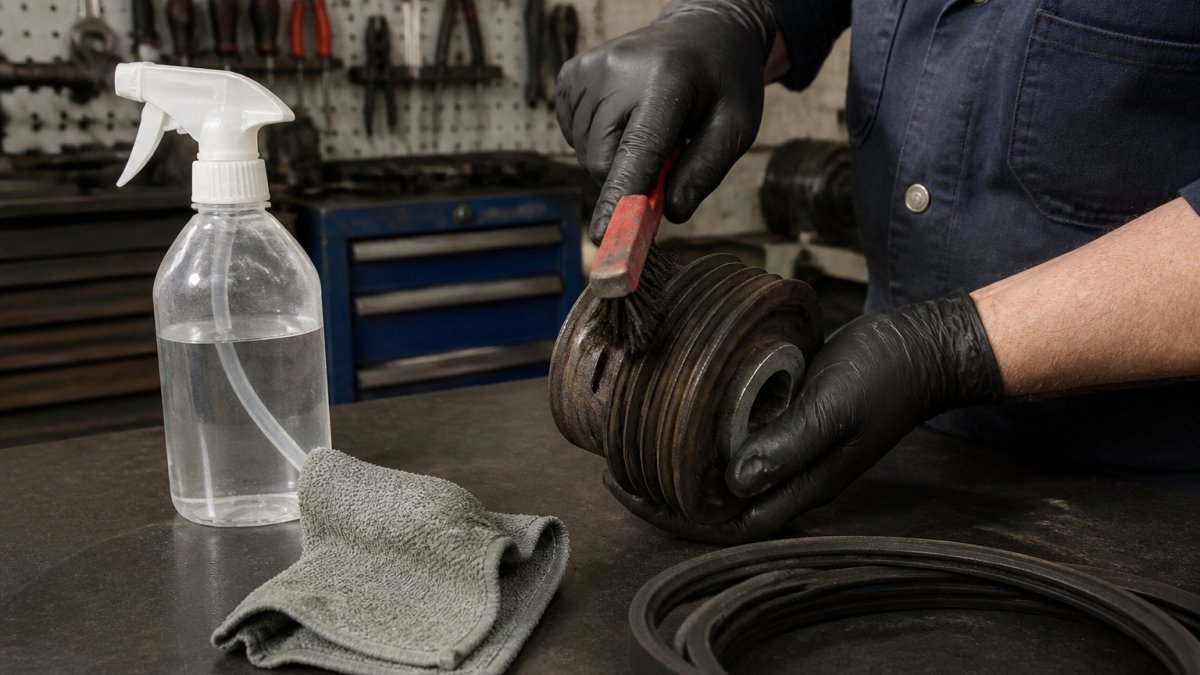
Step 1: Inspect Belts and Pulleys for Damage
Before cleaning, stop the equipment, lock out the power source, and let it cool if it's been running.
Examine the belt for cracks, fraying, or hardness, a cracked or stiff belt won't grip even after cleaning, so replace it first.
Check the pulley for the damage signs listed above. If you see deep cracks, chunks missing, or severe rust penetration, the pulley needs replacement. Cleaning won't restore a damaged groove.
Step 2: Remove Oil and Contamination
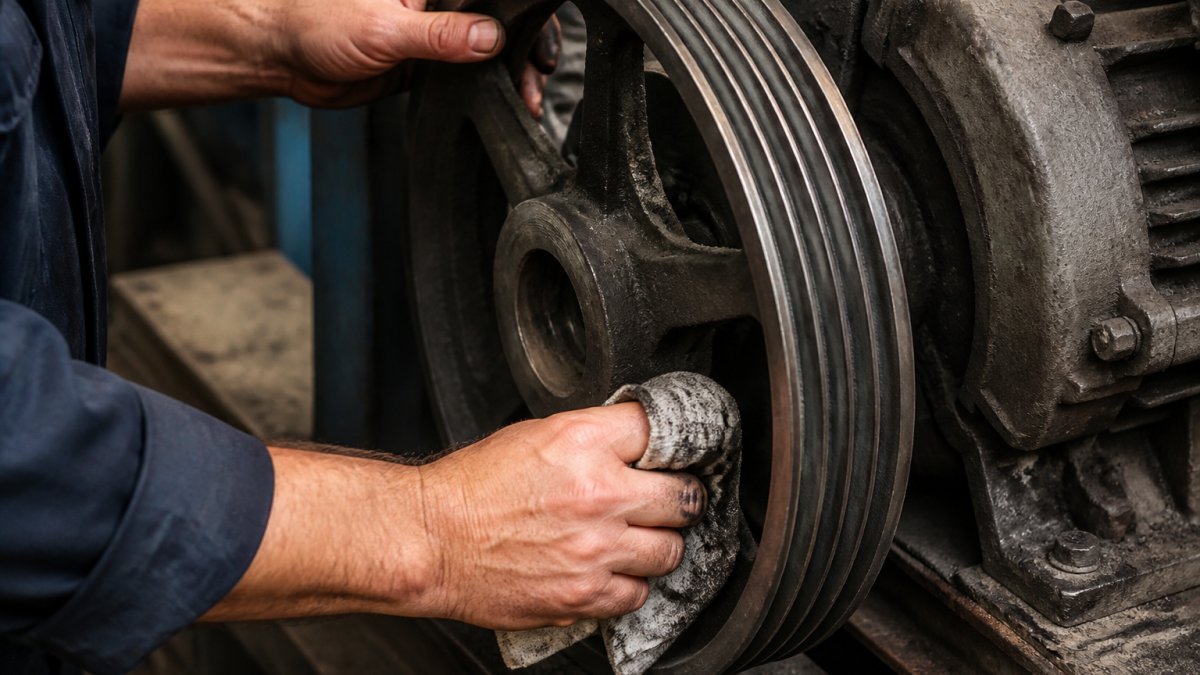
Spray the grooves with your chosen cleaner, a rubber-safe degreaser for oil, isopropyl alcohol or soap and water for general dirt. Let it sit 2 to 3 minutes; keep grooves wet, not dripping. Scrub back and forth along the groove with a stiff-bristled brush, pressing firmly and focusing on the groove bottom where grime collects. Wipe away loosened debris with a clean cloth and repeat the cycle two or three times for heavy contamination.
Step 3: Clean Pulley Grooves with a Brush
For stubborn dirt that won't come off with scrubbing alone, use a wire wheel or wire brush.
Attach a wire wheel to a Dremel or use a handheld wire brush and work along the groove sides and bottom. Move slowly and steadily with light pressure, you're removing contamination, not grinding the pulley. Check progress frequently and stop once the groove is clean; over-aggressive brushing can damage an already worn pulley.
Step 4: Remove Rust from Pulleys
Surface rust is common on metal pulleys, especially outdoor equipment. For light rust, spray the area, let it sit 2 to 3 minutes, then brush with a wire wheel. For heavier rust, use a rust-dissolving cleaner, wait the recommended time, then brush and repeat if needed.
Never use sandpaper or grinding wheels on a pulley groove. These tools remove too much material and alter the groove profile. A damaged groove won't grip the belt properly.
After rust removal, spray the pulley one more time with your cleaner to wash away rust particles. Wipe dry with a clean cloth.
Performing a V-Belt Alignment Check After Cleaning
After cleaning, verify alignment, misalignment causes squealing and premature wear even on a clean pulley. The belt should sit centered in the groove without tilting. Measure from the pulley center to a fixed reference point on both sides; equal distances mean alignment is correct. If one side is closer, loosen the mounting bolts, shift the pulley until the belt runs centered, and retighten.
Check belt tension next. The belt should deflect about 1/2 inch when you press it midway between pulleys with moderate hand pressure. Too loose and it slips. Too tight and it overloads the bearings.
V-Belt Pulley Maintenance to Prevent Future Buildup
Cleaning your V-belt pulleys matters, but prevention is easier, regular maintenance keeps contamination from building up.
Maintenance schedule:
- Every 3 months, Visually inspect pulleys for dirt, oil, or rust. Wipe away any visible debris with a dry cloth.
- Every 6 months, Spray the pulleys with compressed air to remove dust and grime. This takes 5 minutes and prevents heavy buildup.
- Every 12 months, Perform a thorough cleaning following the steps above. This keeps your system in top condition.
- After heavy use, If equipment runs in dusty conditions, clean pulleys more frequently. Agricultural and outdoor equipment may need quarterly cleaning.
Keep the area around pulleys clean, sweeping the work area and covering idle machinery reduces airborne contamination. Check belt tension monthly; a loose belt slips, generates heat, and accelerates wear. Replace belts before they fail, since worn belts shed particles that contaminate the pulley.
Dirty pulleys rob your machinery of performance and cut belt life short, but cleaning is simple and quick. Follow the steps above to restore grip and eliminate squealing. From classic and wedge belts to specialized cogged, banded, and lawn and garden options, we offer durable products to meet diverse operational needs.
Frequently Asked Questions
Can dirty pulleys cause V-belt slippage or squeaking?
Yes. Oil, dust, and grime on pulley grooves reduce friction between the belt and pulley surface, causing the belt to slip and squeal. Contamination also accelerates wear on both the belt and pulley. Regular cleaning restores grip and prevents premature failure of your drive system.
What should you use to clean a V-belt pulley?
Use isopropyl alcohol or a mild degreaser spray for oil removal, followed by a soft-bristled brush or wire wheel to scrub grooves. Avoid harsh solvents that leave residue. For rust, a Dremel with a wire wheel attachment works well. Always allow the pulley to dry completely before reinstalling the belt.
When should a worn V-belt pulley be replaced instead of cleaned?
Replace the pulley if grooves are cracked, deeply scored, or glazed (shiny, hardened surface). If the pulley is severely rusted, dented, or visibly misaligned, cleaning alone won't restore performance. Check pulley diameter and alignment before deciding; replacement is often more cost-effective than repeated cleaning of a damaged pulley.
How do you check V-belt and pulley alignment?
After cleaning, use a straightedge or alignment tool across both pulleys. The belt should track centered in both grooves with no visible gap between the belt edge and groove wall. Misalignment causes uneven wear and squealing even on clean pulleys. Adjust pulley position or check for bent shafts if alignment is off.