 blog
Is Professional Mower Belt Repair Worth It?
Table of Contents
- When Professional Mower Belt Repair Makes Sense
- Understanding Lawn Mower Belt Replacement Cost
- DIY Lawn Mower Belt Replacement: Cost and Complexity
- How to Measure a Lawn Mower Belt Correctly
- Why Your Mower Deck Belt Keeps Breaking
- The Decision Framework: Professional vs. DIY
- Preventing Belt Failure: Maintenance and Quality Parts
- Frequently Asked Questions
Last Updated: October 14, 2026
When Professional Mower Belt Repair Makes Sense
Is professional mower belt repair worth it? It depends on your mower's age, condition, and comfort with small engines, professional cost versus DIY expenses plus your time.
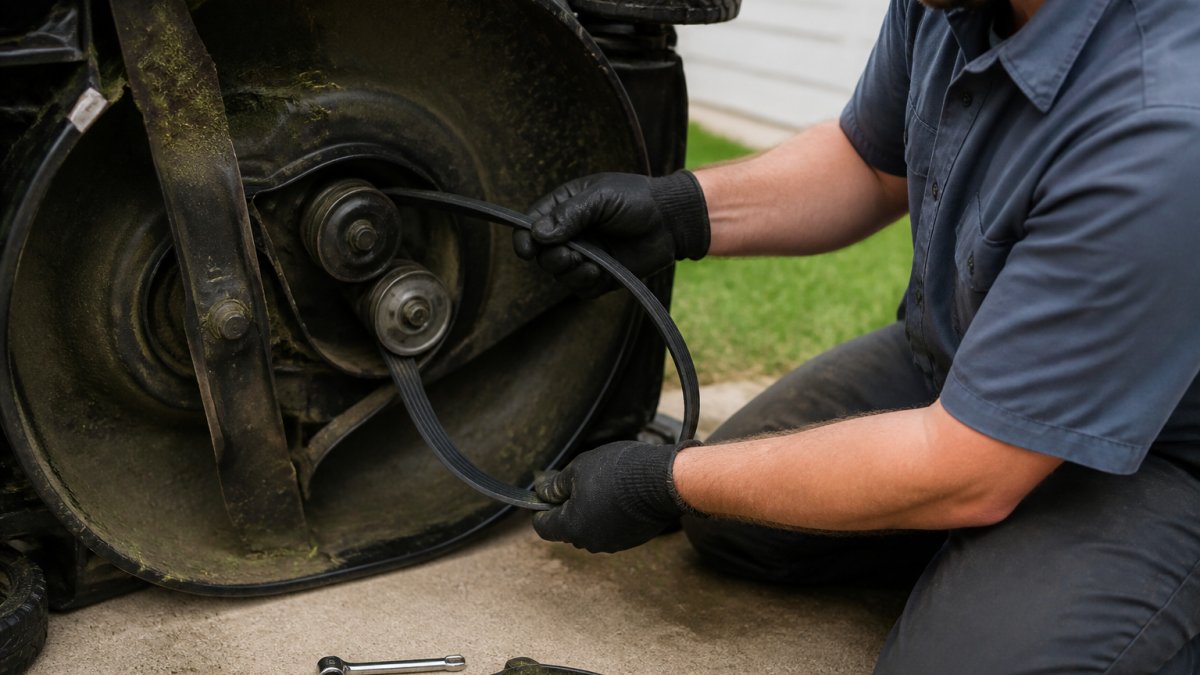
A professional lawn mower belt replacement includes diagnosis of the underlying failure cause, a new belt on a mower with pulley problems or misalignment fails again quickly, plus proper belt tension and routing.
Understanding Lawn Mower Belt Replacement Cost
Lawn mower belt replacement cost breaks into two parts: the belt itself and labor. Riding mower belts cost more than push mower belts because they handle greater power transmission demands.
Parts Cost vs. Labor Cost
The belt is the smaller expense, for most residential mowers it costs less than a single service visit. Labor is where costs add up, since shops charge by the hour.
Professional service includes more than swapping the belt: technicians inspect the deck, check pulley alignment, clean debris, verify tension, and test the mower.
DIY eliminates labor costs, but you need the right tools and knowledge to avoid costly or dangerous mistakes.
Professional Service Visit Scope
A complete professional service visit includes diagnosis: the technician identifies why the belt failed, commonly worn pulleys, misalignment, over-tight tension, or wrapped debris.
They'll also check blade condition and deck alignment, since a bent deck or dull blade stresses the belt.
Quality shops back their work with a guarantee: if the belt fails within a set timeframe due to installation error, they replace it free.
DIY Lawn Mower Belt Replacement: Cost and Complexity
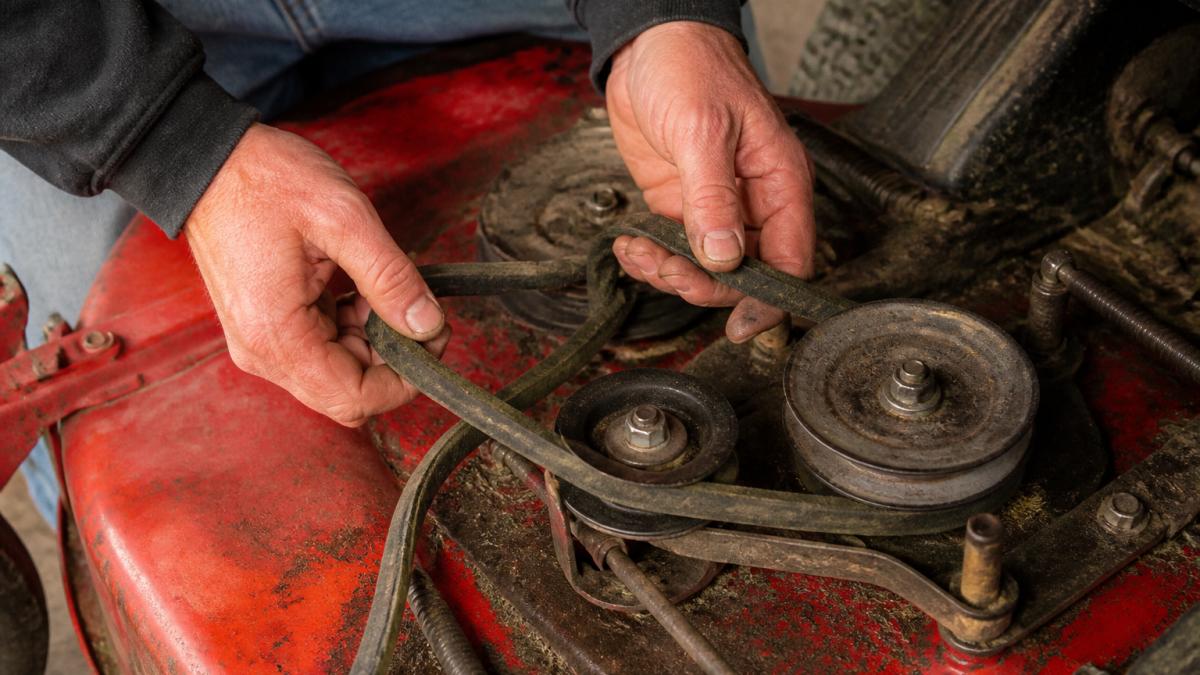
DIY lawn mower belt replacement saves money on paper, but the real comparison is total DIY cost, belt, tools, consumables, and your time, against a shop invoice bundling diagnosis, parts, labor, and a guarantee.
The Real DIY Cost Stack
A DIY belt replacement is not just the belt:
- Replacement belt. A push mower deck belt and a riding mower deck belt vary in cost depending on the specific type and size required. A drive belt on a hydrostatic riding mower also has a variable cost.
- Tools you may not own. A socket and wrench set are assumed. Add a belt tension gauge ($10-$25), jack stands or ramps if the deck must come off ($30-$80), and a torque wrench ($40-$120).
- Consumables. Penetrating oil, shop towels, and a can of belt dressing or dry lubricant run $10-$20.
- Your time. Deck-belt replacement on a riding mower commonly takes 1-3 hours for a first-timer, including deck removal, cleaning, routing, and re-tensioning. Push mower belts are faster, often 20-45 minutes.
A realistic DIY total for a riding mower, first attempt, with one tool purchase: $90-$200 plus 1-3 hours. A repeat DIY job with tools already on hand: $30-$90 plus 1-2 hours.
What a Shop Invoice Actually Contains
A professional service visit is not just labor on top of the same belt. A typical invoice bundles:
- Diagnosis of why the belt failed (pulley wear, misalignment, debris, tension)
- Belt removal and replacement with correct routing
- Pulley inspection and cleaning
- Deck and blade inspection
- Tension adjustment and test run
- A workmanship guarantee, commonly 30-90 days
That bundle is why the shop number looks higher: you're buying diagnosis and a guarantee, not just the swap.
Side-by-Side: Same Job, Two Paths
| Line item | DIY | Professional shop |
|---|---|---|
| Belt | $25-$70 | $25-$70 (often marked up 10-30%) |
| Labor | Your time, 1-3 hrs | 1-2 billed hours at shop rate |
| Diagnosis | You do it, or skip it | Included |
| Pulley/deck inspection | You do it, or skip it | Included |
| Guarantee | None | 30-90 days typical |
| Tools required | $50-$200 if not owned | None |
| Repeat-failure risk | Higher if root cause missed | Lower |
Tools and Skills Required
Most homeowners can handle belt replacement with a wrench set, socket set, and possibly a belt tension gauge.
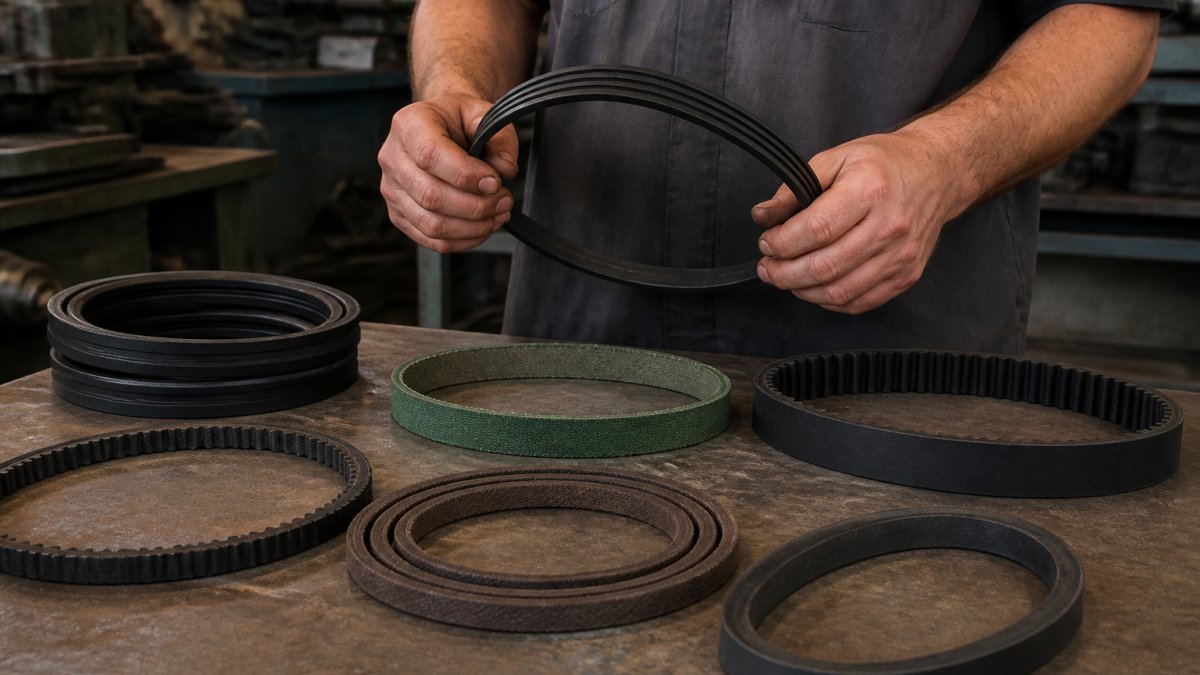
You'll also need the correct belt size, belts are sized by length and width, and the wrong size causes slipping, squealing, or premature failure. Check your manual or measure the old belt first.
The hardest part is routing the new belt correctly, one wrong path and it slips or breaks within hours.
Common DIY Mistakes
The most frequent mistake is incorrect tension: too tight and the belt overheats and breaks, too loose and it slips, causing poor cut quality and eventual failure. A tension gauge prevents this.
Another common error is skipping diagnosis of why the original belt failed, so it breaks again two weeks later. The real issue is usually a worn pulley, misalignment, or deck debris.
Not cleaning the deck before installation is another trap: clippings and debris wrapped around pulleys cause friction and premature wear.
How to Measure a Lawn Mower Belt Correctly
Measuring a lawn mower belt correctly prevents ordering the wrong size. Belt sizing uses two measurements: overall length and width.
The easiest method is to remove the old belt, lay it flat, and measure length with a tape measure and width across its face. Write down both numbers.
Ordering the correct size matters: a belt slightly too long won't tension properly, and too short won't fit around the pulleys.
Why Your Mower Deck Belt Keeps Breaking
A mower deck belt that keeps breaking signals an underlying problem. Replacing it repeatedly without addressing the root cause wastes money; common culprits are tension issues, worn pulleys, and misalignment.
Tension and Pulley Issues
Belt tension that's too high causes the belt to overheat and crack. Too low causes slipping and glazing, where the belt surface becomes shiny and hard. Both lead to premature failure.
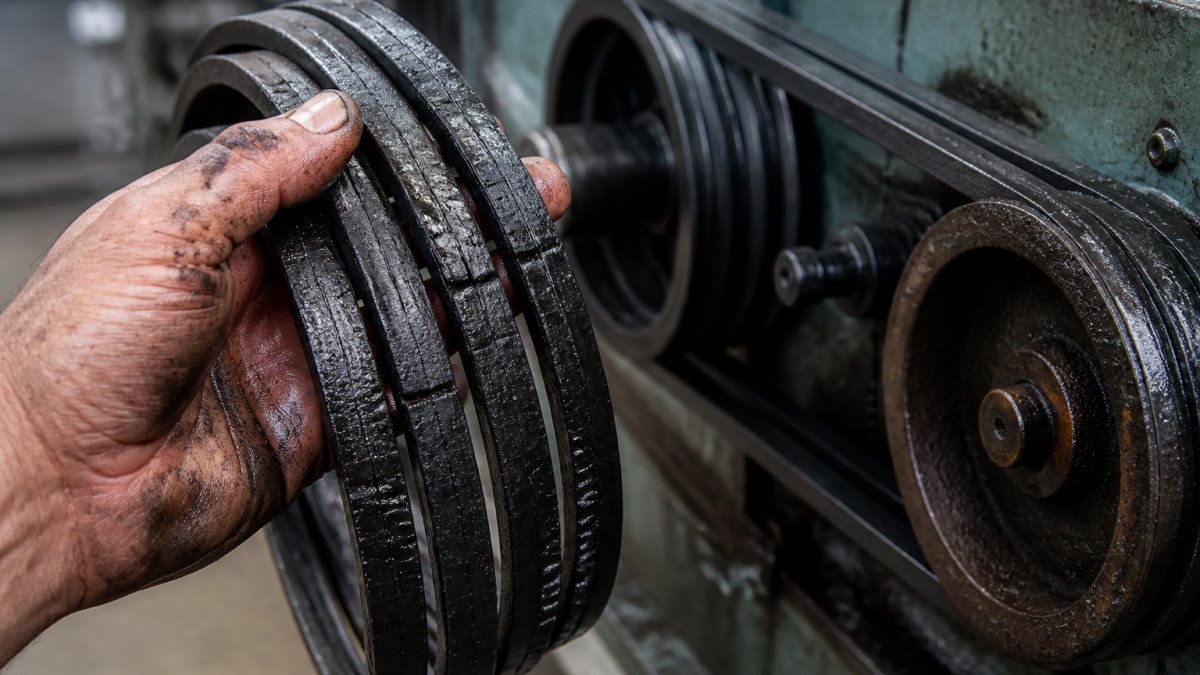
Worn or damaged pulleys also shorten belt life.
Idler pulleys keep tension on the belt. When an idler wears out, tension drops and the belt slips, creating heat and visible wear patterns.
Underlying Mechanical Problems
Deck misalignment forces the belt to run at an angle, creating uneven wear and causing the belt to slip off the pulleys.
Debris wrapped around the shaft or pulley creates drag. Grass clippings, sticks, and dirt accumulate under the deck, tangle around moving parts, and increase friction on the belt. Regular cleaning prevents this.
Engine problems also stress the belt. A weak or misfiring engine forces the belt to work harder, a dirty carburetor or worn spark plugs cause excessive strain.
The Decision Framework: Professional vs. DIY
Choosing between professional service and DIY is not a gut call. It is a math problem with four inputs: what the mower is worth, how much life it has left, what else is wrong with it, and whether the belt has failed before.
Step 1: Establish the Mower's Replacement Value
Look up what a comparable used mower in your area sells for, same brand, same deck width, similar hours. That number, not what you originally paid, is the ceiling on any single repair.
A common rule of thumb among small-engine shops suggests a single repair should not exceed roughly one-third of the mower's current replacement value.
Step 2: Score the Mower's Remaining Life
Answer these honestly:
- Age. Under 3 years: strong case for professional repair. 3-7 years: depends on condition. Over 10 years: DIY or replace.
- Hours. Residential mowers under 300 hours are usually worth repairing. Over 600 hours, other major components (spindles, transmission, engine) are approaching end of life.
- Condition. Rust-through on the deck, oil consumption, transmission slipping, or a bent frame all reduce the value of fixing a belt.
- Other pending repairs. If the belt is one of three things wrong, the belt repair alone does not rescue the mower.
Step 3: Weigh the Failure History
- First failure, normal wear. DIY is reasonable if you are mechanically comfortable.
- Second failure in the same season. Professional diagnosis is strongly indicated. Something is eating belts.
- Third or later failure. Do not replace the belt again without a full drivetrain inspection. The belt is a symptom.
Step 4: Match the Repair Scope to the Path
| Situation | Recommended path |
|---|---|
| New mower, first belt failure, simple wear | DIY or shop, either works |
| Mid-life mower, first failure, you own tools | DIY |
| Any mower, repeat failure | Professional diagnosis |
| Mower near end of life, belt plus other issues | Replace the mower |
| Mower under warranty | Authorized service center |
| You lack tools, lift, or confidence | Professional |
The Warranty and Parts-Quality Variable
Professional shops typically guarantee their work. If the belt fails due to their installation error, they replace it free, real dollar value when the failure mode is uncertain.
Parts quality cuts the other way. A shop may install an OEM belt or an aftermarket equivalent. Ask which, and whether the belt carries a manufacturer warranty. Aftermarket belts vary widely in cord construction and heat resistance; a budget belt can fail in a fraction of the service life of a quality one, erasing the labor savings.
When Replacing the Mower Beats Repairing It
If the belt job plus related repairs exceeds roughly half the cost of a comparable new mower, and the current mower is over 10 years old or has multiple failing systems, replacement usually wins. A belt repair on a mower that will need a transmission next season is money spent on a machine you are about to retire.
The Bottom Line
Professional repair is worth it when the mower has meaningful remaining value, the failure is not the first, or the diagnosis is uncertain. DIY is worth it when the mower is older, the failure is simple wear, and you already own the tools. The belt itself is the cheapest part of either decision, buy a quality one so the repair lasts.
Preventing Belt Failure: Maintenance and Quality Parts
Regular maintenance extends belt life and prevents unexpected failures.
Check belt tension monthly during mowing season. A belt should have slight give when you press midway between pulleys.
Inspect pulleys for wear, flat spots, cracks, or rough surfaces.
Use quality replacement belts. A cheap belt fails sooner and costs more over time.
Store your mower indoors during off-season, weather degrades belts faster.
The key is using a quality replacement belt regardless of your choice.
Frequently Asked Questions
How much does it cost to replace a belt on a lawn mower?
Professional mower belt replacement costs vary depending on the mower type and shop rates. Parts alone vary for a quality replacement belt, while labor adds to the total. Riding mowers often cost more than push mowers due to complexity. DIY replacement costs only the belt itself if you already own basic tools. Request an estimate before committing; costs vary by location and mower model.
Can I replace a lawn mower belt myself?
Yes, most homeowners can replace a push mower belt in 30-60 minutes with basic tools: a socket set, screwdrivers, and a belt routing diagram. Riding mower belts are more complex and may require deck removal. The real risk is incorrect routing or tension, which causes premature failure or poor cutting. If you're unsure about routing or tension, professional installation prevents costly mistakes and ensures the job is done right the first time.
Why do mower deck belts break?
Belts break from wear, incorrect tension, misaligned pulleys, or debris damage. Glazing (shiny, slippery surface) and dry rot (visible cracks) indicate age. Repeated failures often signal underlying issues: a bent pulley, worn idler, or a seized blade that forces the belt to slip. Professional diagnosis catches these root causes; DIY replacement of just the belt without fixing the pulley or tension will result in another failure within weeks.
How long should a lawn mower belt last?
A quality mower belt typically lasts 3-5 years with regular use and proper maintenance. Belts degrade faster under heavy workload, poor storage, or improper tension. Preventive maintenance, checking tension annually, keeping the deck clean, and storing the mower indoors, extends belt life significantly. Inspect belts for cracks, fraying, or glazing each season. Catching wear early and replacing before failure prevents mid-mow breakdowns and potential damage to pulleys or the transmission.