 ultimate-guide
Symptoms of Failing Drive Belts: 7 Warning Signs to Know
Table of Contents
- 7 Symptoms of Failing Drive Belts You Should Never Ignore
- 1. Squealing, Chirping, or Whining Noises
- 2. Visible Cracks, Fraying, or Glazing
- 3. Dashboard Warning Lights and Electrical Flickering
- 4. Power Steering Failure and Loss of Air Conditioning
- 5. Engine Overheating and Water Pump Trouble
- 6. Vibration, Rough Idling, and Belt Debris
- 7. Coolant or Fluid Leaks Near the Accessory Drive
- What Causes Drive Belt Failure in the First Place?
- What Causes Drive Belt Failure in the First Place?
- How to Fix V-Belt Slippage Before It Becomes a Breakdown
- DIY vs. Professional Inspection: Which Should You Choose?
- Belt Tensioner and Pulley Correlation: The Hidden Cause of Wear
- Your Drive Belt Maintenance Schedule: A Preventative Checklist
- Industrial Belt Tensioning Tools and Cost of Repair Estimates
- Conclusion
- Frequently Asked Questions
Last Updated: September 15, 2026
7 Symptoms of Failing Drive Belts You Should Never Ignore
A failing drive belt rarely announces itself with a single dramatic event. It degrades gradually, and the symptoms of failing drive belts tend to show up as small annoyances first: a chirp at startup, a faint flicker in your lights, a steering wheel that feels heavier than last month. At V-Belt Nation, we've spent years helping maintenance teams and facility managers read those early signals before they become unplanned downtime. This guide covers the seven warning signs worth acting on, what causes belt failure, and how to fix it before a $40 belt takes a $4,000 motor down with it.
The stakes are real. U.S. Department of Energy guidance on motor system maintenance notes that unplanned equipment failures drive a significant share of industrial energy waste and production loss, and a snapped accessory belt is one of the most preventable causes. Belt replacement itself is cheap. The cascade it triggers is not.
Here are the seven symptoms, in rough order of how early they typically appear.
1. Squealing, Chirping, or Whining Noises
Squealing is the sound of a belt slipping against a pulley, and it's usually the first symptom you'll notice. A chirp at cold startup that fades after a minute points to a loose or glazed belt. A constant whine that rises with speed suggests a misaligned pulley or failing tensioner bearing. Continuous squealing under load is the loudest signal: the belt is losing grip, and the accessory it drives is losing power.
2. Visible Cracks, Fraying, or Glazing
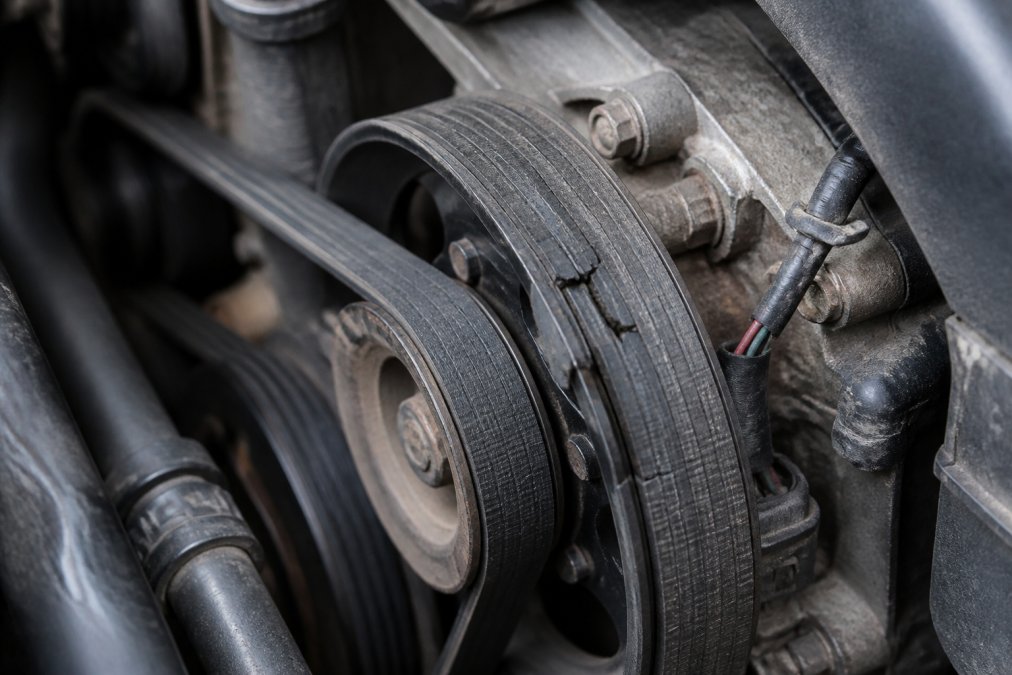
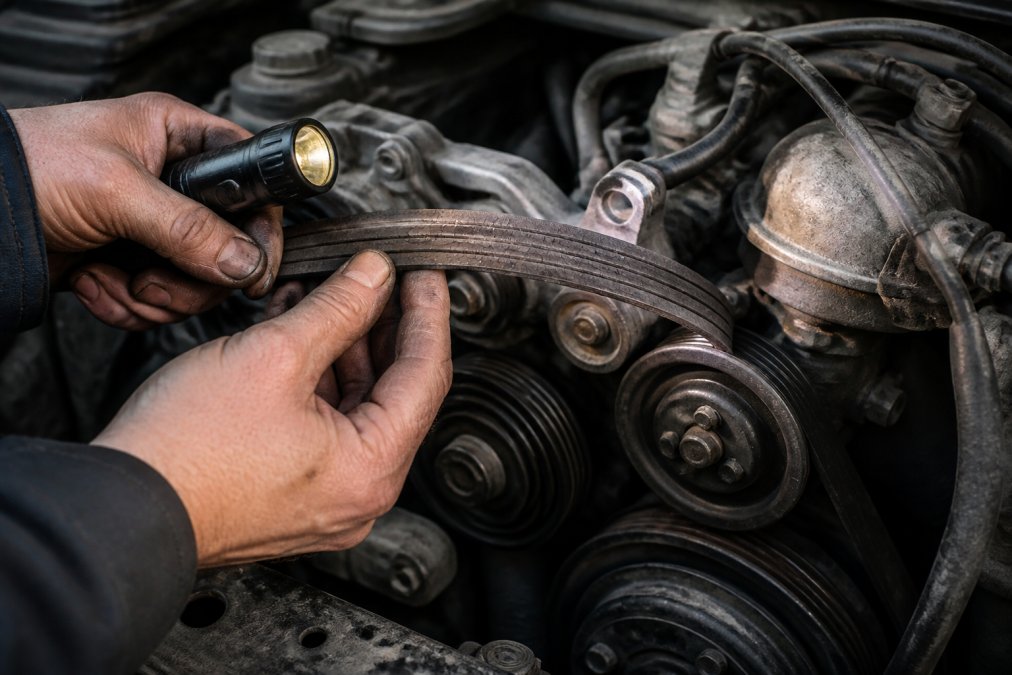
Belt glazing is the shiny, hardened surface that forms when a belt overheats and its rubber compound vitrifies. Cracks along the ribs, frayed edges, and missing rib material mean the belt is near the end of its service life. Run your fingers along the ribbed side under good light: three or more cracks per inch means replace it (gates.com).
3. Dashboard Warning Lights and Electrical Flickering
A battery light that flickers or stays on while the engine runs often points to an alternator that isn't charging, and a slipping belt is a common reason. Dimming headlights, flickering interior lights, and accessories that cut in and out mean the drive belt isn't maintaining consistent tension. Don't dismiss these as a battery problem until you've inspected the belt.
4. Power Steering Failure and Loss of Air Conditioning
Heavy steering and an AC system that blows warm air share a cause: the belt driving those accessories has slipped or broken. Power steering loss is a safety issue, not an inconvenience. If the wheel suddenly becomes hard to turn, pull over and inspect the accessory drive system before driving further.
5. Engine Overheating and Water Pump Trouble
The water pump is often driven by the same serpentine belt that runs your alternator and power steering. When that belt slips, coolant stops circulating and the temperature gauge climbs. Overheating is the most expensive symptom here because it can warp cylinder heads and destroy gaskets. Treat a rising gauge as a belt problem until you've ruled it out.
6. Vibration, Rough Idling, and Belt Debris
A belt that has lost a rib or developed a flat spot will set up a rhythmic vibration you can feel through the frame, steering wheel, or floor pan. On equipment with a vibration monitor, you may see a spike that tracks with belt speed rather than engine speed. Look for black rubber dust or shredded cord fragments under the hood or around the accessory drive: that debris is belt material leaving the system one rib at a time. Rough idling on vehicles where the serpentine belt drives the alternator can also trace back to voltage sag as the slipping belt starves the charging system.
7. Coolant or Fluid Leaks Near the Accessory Drive
A failing belt can take out the components around it. When a belt whips or walks off its pulleys, it can slice a coolant hose, nick a power steering line, or crack a water pump seal. If you find fresh coolant, power steering fluid, or oil weeping near the accessory drive, inspect the belt and every pulley it touches before topping off the fluid. A leak that reappears after a belt replacement is a strong sign the belt caused the damage on its way out.
What Causes Drive Belt Failure in the First Place?
Most belt failures trace back to one of five causes: age and heat cycling, misalignment, incorrect tension, contamination from oil or coolant, or a worn tensioner that no longer holds proper belt tension. Rubber degrades with heat and time regardless of mileage, which is why a low-hour machine can still need a new belt. Misalignment, even by a fraction of a degree, scrubs the belt against the pulley edge and wears it out prematurely. And a tensioner that's lost its spring force will let the belt slip no matter how new it is. Understanding which cause applies to your equipment is the difference between a one-time replacement and a recurring problem.
What Causes Drive Belt Failure in the First Place?
Most belt failures trace back to one of five causes: age and heat cycling, misalignment, incorrect tension, contamination from oil or coolant, or a worn tensioner that no longer holds proper belt tension. Rubber degrades with heat and time regardless of mileage, which is why a low-hour machine can still need a new belt. Misalignment, even by a fraction of a degree, scrubs the belt against the pulley edge and wears it out prematurely. And a tensioner that's lost its spring force will let the belt slip no matter how new it is. Understanding which cause applies to your equipment is the difference between a one-time replacement and a recurring problem.
How to Fix V-Belt Slippage Before It Becomes a Breakdown
Learning how to fix v-belt slippage starts with confirming the belt is actually the problem. Follow this sequence:
- Shut down and lock out the equipment before touching anything.
- Inspect the belt for glazing, cracks, and fraying under good light.
- Check tension using a belt tension gauge, not thumb pressure.
- Inspect the pulleys for wear, grooves, or debris in the ribs.
- Verify alignment with a straightedge across both pulleys.
- Replace the belt if it shows any of the symptoms above.
- Re-tension and re-check after a short run-in period.
A common mistake is tightening a slipping belt instead of replacing it. Over-tensioning accelerates bearing wear in the alternator, water pump, and tensioner, which turns a cheap fix into an expensive one.
DIY vs. Professional Inspection: Which Should You Choose?
For lawn mowers, garage door openers, and small HVAC units, a DIY inspection is straightforward: you can see the belt, reach the tensioner, and check for wear in a few minutes. For industrial equipment, fleet vehicles, and anything with a serpentine routing diagram you can't identify at a glance, a professional inspection pays for itself.
Belt Tensioner and Pulley Correlation: The Hidden Cause of Wear
Your Drive Belt Maintenance Schedule: A Preventative Checklist
| Interval | Task | Why It Matters |
|---|---|---|
| 3 months / 250 hrs | Visual belt inspection | Catches glazing and cracks early |
| 6 months | Tension gauge check | Prevents slip and premature wear |
| 12 months | Tensioner and pulley inspection | Addresses the hidden cause of failure |
| On failure | Belt replacement | Restores full accessory drive power |
| Ongoing | Spare belt inventory | Eliminates downtime waiting on parts |
Industrial Belt Tensioning Tools and Cost of Repair Estimates
What Drives the Cost of a Belt Repair
Costs break into four buckets:
How to Get an Accurate Estimate
Conclusion
Frequently Asked Questions
How do I tell if my drive belt is bad?
Look for a combination of physical and performance clues. A bad drive belt often shows cracking, fraying, or a shiny glazed surface along the ribs. You may hear squealing or chirping on startup, notice dashboard warning lights, or feel power steering get heavy. If the belt looks worn under the hood and the accessory drive system is acting up, replace it before it snaps.
What is the typical lifespan of an industrial drive belt?
Most industrial drive belts last between 1,500 and 3,000 operating hours, though heat, misalignment, and pulley wear can shorten that significantly. A consistent drive belt maintenance schedule with regular tension checks and visual inspections helps you catch wear early. Replacing a belt on schedule costs far less than an unplanned shutdown on a production line.
Can you continue to operate machinery with a failing drive belt?
You can sometimes run equipment briefly with early-stage wear, but doing so risks sudden mechanical failure. A belt that is cracking, fraying, or slipping can fail without warning, taking the alternator, water pump, or other driven components offline. If you spot symptoms of failing drive belts, schedule replacement as soon as possible to avoid costly downtime.
What are the primary causes of premature drive belt wear?
Misalignment between pulleys, incorrect belt tension, a worn tensioner, and contaminated or damaged pulleys are the biggest culprits. Heat and oil exposure accelerate cracking and glazing. Using the wrong belt section for the application also causes rapid wear. Checking tensioner and pulley condition during every belt replacement prevents repeat failures.