 comparison
Snowblower vs Lawn Mower Belt Differences
Table of Contents
- Snowblower vs Lawn Mower Belt Differences at a Glance
- How to Measure Lawn Mower Belt Size
- Snowblower Drive Belt Replacement: What to Know
- Why Lawn Mower Belt Keeps Breaking and How to Stop It
- Belt Materials and Durability Comparison
- Mower Drive Belt vs Deck Belt vs Snowblower Belt
- Selecting the Right Replacement Belt for Your Equipment
- Conclusion
- Frequently Asked Questions
Last Updated: October 15, 2026
Snowblower vs Lawn Mower Belt Differences at a Glance
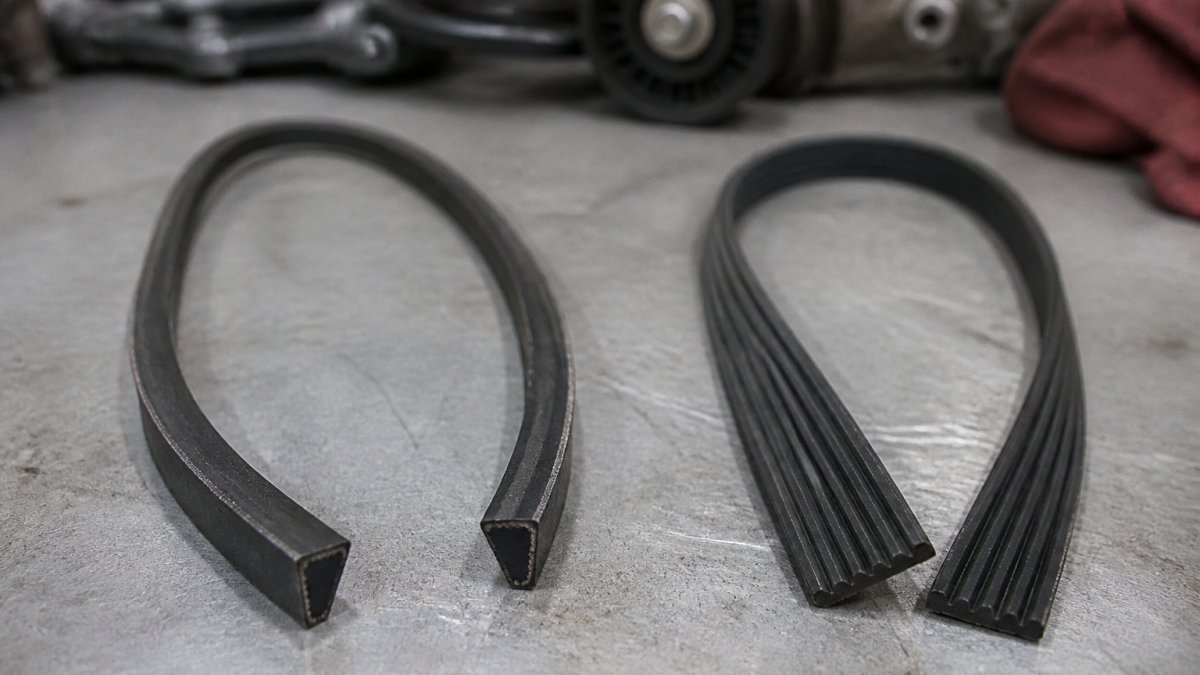
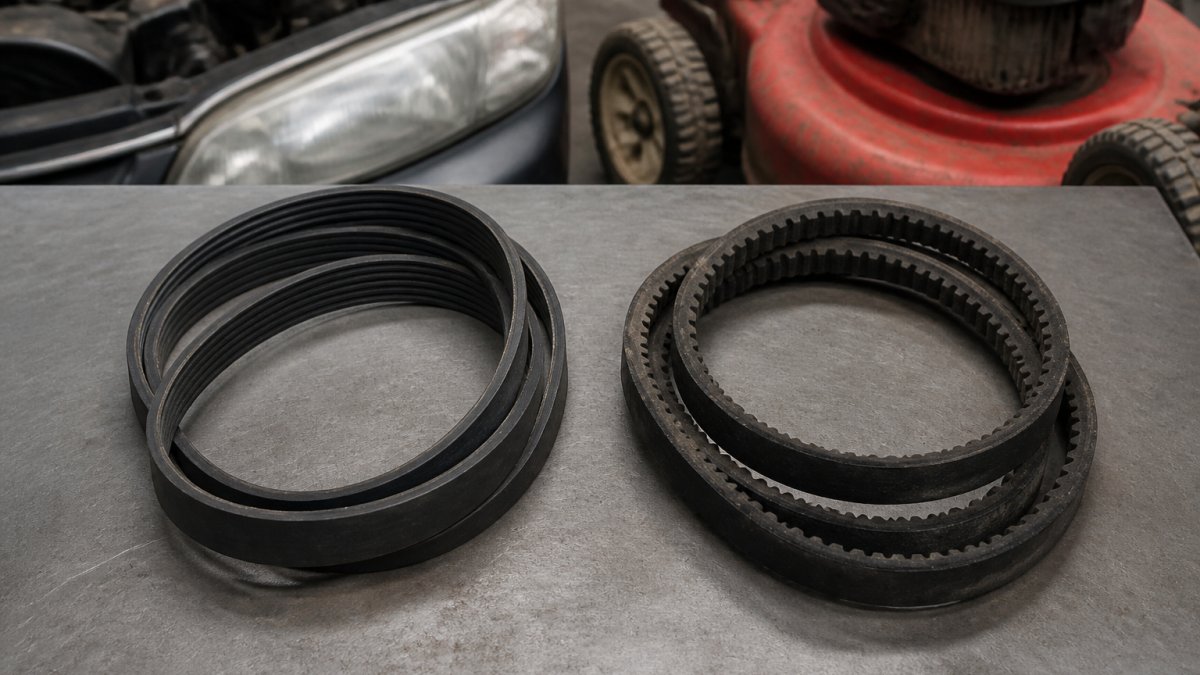
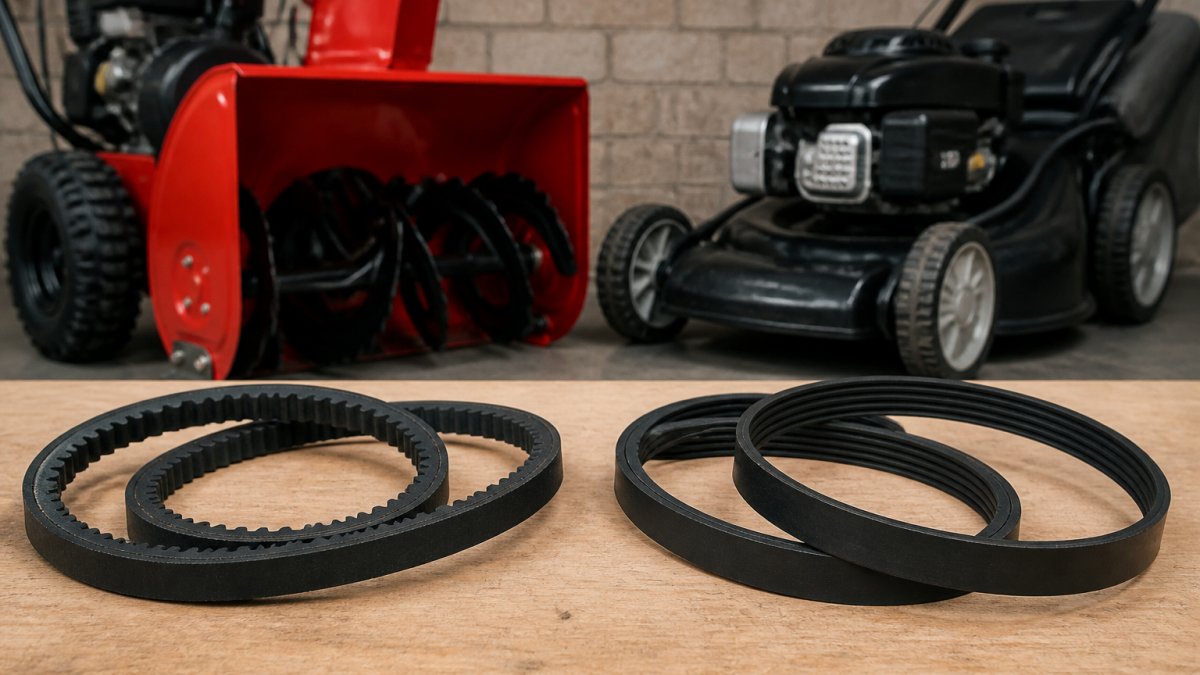
Snowblower and lawn mower belts look similar at first glance, but they're engineered for fundamentally different jobs. A snowblower belt handles the intense rotational demands of throwing heavy, wet snow at high speed. A lawn mower belt manages the steady, continuous motion needed to spin cutting blades or drive the deck.
Understanding these differences helps homeowners and maintenance professionals avoid costly mistakes. The core distinction comes down to load type: snowblowers generate explosive, intermittent torque spikes, while lawn mowers require consistent, sustained power. That engineering difference shapes everything from belt thickness to cord material to how long the belt lasts before replacement.
Understanding snowblower vs lawn mower belt differences matters because a belt rated for one application won't perform reliably in the other. This guide walks you through the specific characteristics that separate them, how to measure your equipment's belt correctly, and how to select the right replacement before failure strands you during peak season.
How to Measure Lawn Mower Belt Size
The first step in finding a replacement belt is measuring your current belt accurately. Most people grab a measuring tape and guess, which leads to ordering the wrong size. Precision matters here because belt dimensions directly affect how the belt seats on pulleys and transfers power.
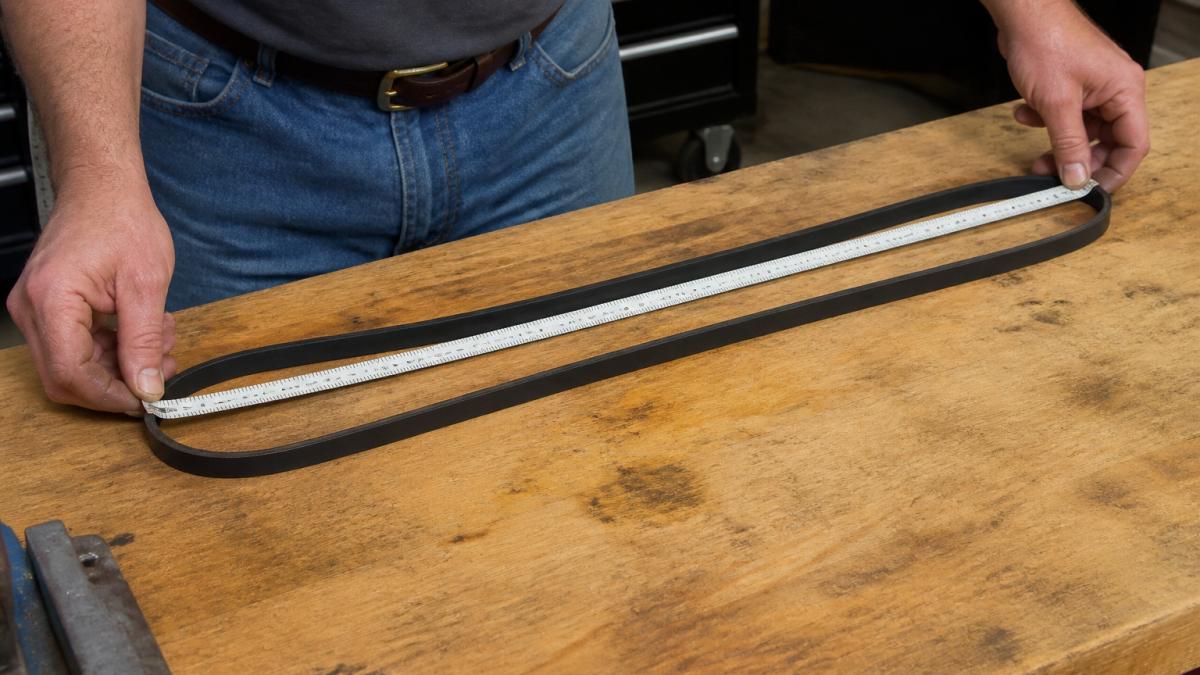
Measuring Belt Length and Width
Remove the belt from your mower and lay it flat on a clean, level surface. Stretch it gently with your hands, not forcefully, just enough to remove slack. Use a cloth measuring tape (not a rigid ruler) and measure the full length from end to end. Write down the measurement in inches.
Next, measure the belt width. Place your tape measure across the belt's widest point. Standard widths are typically 1/2 inch, 5/8 inch, or 3/4 inch. Write this down as well. The width determines which pulley grooves the belt will fit into, a belt that's too narrow will slip; one that's too wide won't seat properly.
Check the belt's thickness or depth. Some belts are thicker than others, and this affects how they engage with pulleys. If the belt has a model number printed on it, photograph that too, it's the most reliable identifier.
Using a Lawn Mower Belt Size Chart
Once you have your measurements, consult a lawn mower belt size chart specific to your mower's brand and model. Most manufacturers publish these charts in the owner's manual or on their websites. The chart cross-references your mower model with the correct belt dimensions and part number.
If you've lost the manual, search online using your mower's brand and model number plus "belt size chart." You'll find PDFs or product pages that list exact specifications. Don't rely on generic charts, they're a starting point, but your specific mower may use a unique belt configuration.
Many retailers offer belt lookup tools where you enter your mower's model number and the system returns compatible belts with exact dimensions. This eliminates guesswork and ensures you order the right part the first time.
Photograph the belt's existing model number if it's still legible. A clear photo speeds up the lookup process and eliminates measurement errors entirely.
Snowblower Drive Belt Replacement: What to Know
Snowblower drive belts operate under harsher conditions than lawn mower belts. When a snowblower auger engages, it encounters sudden resistance from compacted snow and ice. This creates brief but intense torque spikes that stress the belt far more than steady mowing does.
Snowblower belts are typically thicker and made from more resilient materials than lawn mower belts. They're also shorter, since snowblowers are more compact machines. The drive belt connects the engine to the auger transmission, so if it fails, the entire snow-throwing function stops.
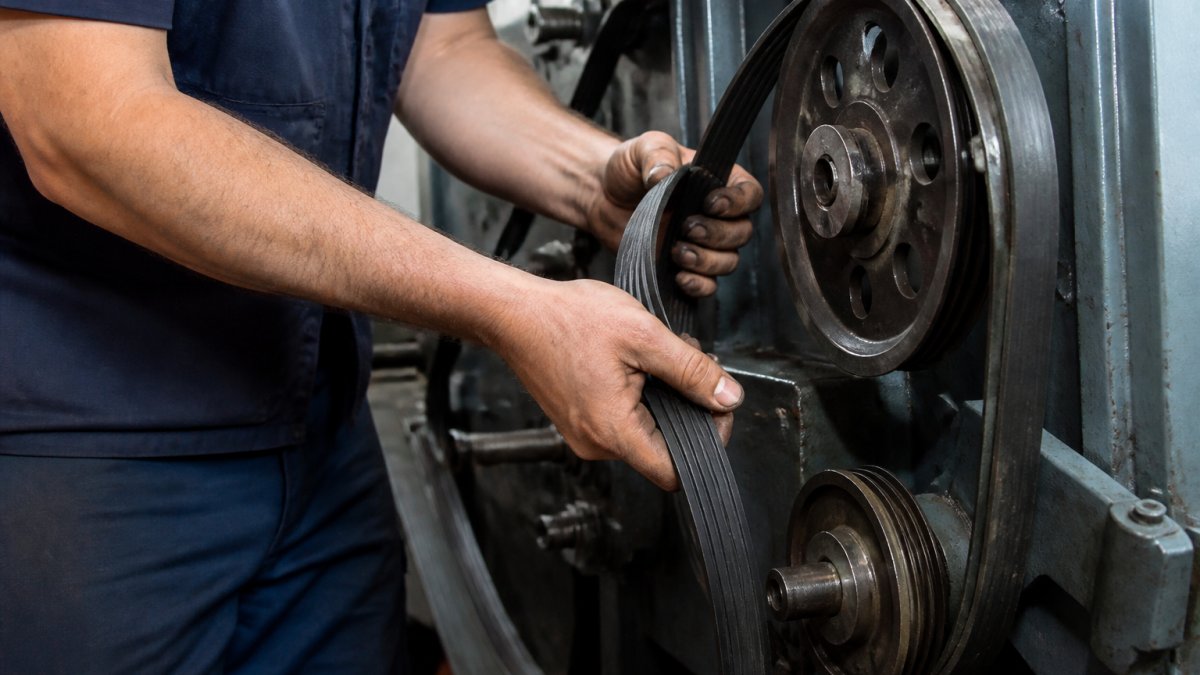
Replacing a snowblower belt requires removing the belt cover or shield, loosening the engine or idler pulley to create slack, and sliding the old belt off.
Many snowblower owners replace their belts annually or every other season, especially if they run the machine hard. Unlike lawn mower belts, which get replaced every few years with moderate use, snowblower belts wear faster because of the repeated shock loads.
Why Lawn Mower Belt Keeps Breaking and How to Stop It
A lawn mower belt that breaks repeatedly signals an underlying problem, not just a defective belt. The most common cause is improper belt tension.
The second major cause is pulley misalignment. If the belt doesn't track straight across the pulleys, it wears unevenly and eventually tears. Bent pulleys, worn pulley bearings, or a shifted engine can all cause misalignment.
A third cause is debris or contamination. Grass clippings, dirt, and moisture that accumulate under the belt cover create friction and accelerate wear. Cleaning the belt area during seasonal maintenance prevents this.
The fourth cause is excessive load. If you're mowing wet grass, tall weeds, or thick brush, you're asking the belt to work harder than its design rating allows.
Check the idler pulley as well. If the idler bearing is worn, it won't maintain consistent tension, and the belt will slip and wear. A worn idler pulley often makes a squeaking sound.
Belt Materials and Durability Comparison
Lawn mower and snowblower belts use different cord materials to handle their respective demands. Understanding these differences helps you choose a belt that will last.
Poly Cord Belts are the most common and affordable option for lawn mowers. They're made from polyester or nylon reinforced with rubber. Poly cord belts offer good durability for moderate use and cost less upfront.
Aramid Cord Belts use aramid fiber (similar to Kevlar) for reinforcement. These belts resist heat and stress better than poly cord, making them ideal for high-demand applications.
For snowblowers, aramid or reinforced belts are strongly recommended. The repeated shock loads and seasonal intensity of snow removal demand a belt that won't slip or break mid-storm.
| Belt Type | Material | Best For | Durability | Cost |
|---|---|---|---|---|
| Poly Cord | Polyester/Nylon | Casual lawn mowing | 2-3 seasons | Lower |
| Aramid Cord | Aramid fiber | Heavy use, snowblowers | 4-5 seasons | Higher |
| Reinforced | Multi-ply construction | Professional equipment | 5+ seasons | Highest |
The choice between poly and aramid ultimately depends on your equipment's workload and your tolerance for downtime. If you mow once a week during summer, a poly cord belt is adequate.
Mower Drive Belt vs Deck Belt vs Snowblower Belt
Lawn mowers can have multiple belt types, each serving a different function. Understanding which belt does what prevents ordering the wrong replacement.
Drive Belt (or Transmission Belt) transfers power from the engine to the transmission, which drives the mower wheels. This belt handles moderate, continuous torque. It's typically wider and longer than a deck belt.
Deck Belt (or Blade Belt) spins the cutting blades. It's usually shorter and narrower than the drive belt.
Snowblower Belt connects the engine to the auger transmission. It's shorter and thicker than lawn mower belts because it handles shock loads. A snowblower belt failure stops the auger completely, making the machine useless for snow removal.
These belts are not interchangeable. Using a deck belt as a drive belt, or vice versa, will result in slipping and poor performance. Always identify which belt you need before ordering.
Most mower manuals include a diagram showing belt routing and labeling each belt type. Consult this diagram before removing any belt to ensure you order the correct replacement.
Selecting the Right Replacement Belt for Your Equipment
Choosing the right belt starts with accurate identification. You need four pieces of information: equipment type (lawn mower or snowblower), brand and model number, belt function (drive or deck), and belt dimensions.
Start by locating your equipment's model number. For lawn mowers, it's usually on a sticker near the engine or on the frame. For snowblowers, check the housing or the manual.
Next, determine which belt you need. If you're replacing a blade belt, measure its length and width. If it's a drive belt, do the same.
When ordering, specify the belt material if you have a choice. For casual use, poly cord is fine. For heavy use or snowblowers, choose aramid or reinforced options.
Verify compatibility before purchasing. Enter your model number into a belt lookup tool or contact a supplier's support team. A few minutes of verification prevents ordering the wrong belt and waiting for a replacement shipment.
Conclusion
The differences between snowblower and lawn mower belts reflect their distinct operating environments. Snowblower belts endure sudden, intense torque spikes from heavy snow; lawn mower belts deliver steady, moderate power over extended periods. Understanding these distinctions helps you choose the right belt, measure correctly, and avoid premature failures.
When a belt fails, the root cause usually isn't the belt itself, it's tension issues, pulley misalignment, or worn idlers. Diagnosing and fixing these problems prevents your replacement belt from failing the same way.
At V-Belt Nation, we stock both poly cord and aramid belts for lawn mowers and snowblowers in a range of sizes and specifications. With our extensive inventory of V-belt types and sections and personalized support to help find specific belts, we make belt selection straightforward. Browse our lawn and garden belt selection today and get the durability and reliability your equipment deserves.
Frequently Asked Questions
Are snowblower belts different from lawn mower belts?
Yes, snowblower and lawn mower belts differ significantly in design and function. Snowblower belts must handle cold temperatures, higher torque demands, and more frequent engagement cycles. Lawn mower belts are typically designed for warmer conditions and continuous operation. The two are not interchangeable, using the wrong belt can reduce equipment performance and increase wear. Always verify your equipment type and model before purchasing a replacement belt.
How do I measure a lawn mower belt correctly?
To measure a lawn mower belt, first disconnect the spark plug wires for safety. Remove the old belt and lay it flat on a work surface. Measure the length from the inside of one edge to the inside of the other edge using a flexible measuring tape. Record the width in inches. Check your mower's manual or a lawn mower belt size chart for the exact specification. If the belt is damaged, note the model number on the mower deck or engine for reference when ordering a replacement.
Why does my lawn mower belt keep breaking?
Repeated lawn mower belt failure typically stems from misalignment, worn pulleys, excessive tension, or debris caught in the belt path. Check that all pulleys are properly aligned and not damaged or cracked. Inspect the belt routing to ensure it follows the correct path without rubbing. Clean out grass clippings and debris regularly from around the belt area. If you're replacing the belt frequently, have a professional inspect the deck and drive system, the problem may not be the belt itself but the underlying components causing premature wear.
What's the difference between a mower drive belt and a deck belt?
A drive belt transfers power from the engine to the wheels or transmission, controlling forward and reverse motion. A deck belt powers the mower blades for cutting. These belts have different dimensions, routing patterns, and load requirements. They are not interchangeable. If your mower isn't moving but the blades turn, the drive belt may be slipping or broken. If the blades won't turn, the deck belt is the issue. Always identify which belt needs replacement before ordering a new one.
Can I use a lawn mower belt on a snowblower?
No, you should not use a lawn mower belt on a snowblower. Snowblower belts are engineered to handle colder temperatures, higher torque loads, and the demands of auger and impeller operation. Lawn mower belts lack the reinforcement and cold-weather durability needed for snowblower service. Using the wrong belt will result in slipping, reduced auger engagement, and faster failure. Always match the belt to your specific equipment model and type.