 how-to
How to Measure a V-Belt Without Tools
Table of Contents
- Safety First: Preparing Your Machinery for Measurement
- How to Measure a V-Belt Without Tools: The String Method
- Measuring a Belt with String and Converting to Circumference
- How to Measure V-Belt Width and Cross-Section
- V-Belt Inside Length vs Outside Length: Which One Matters
- Using V-Belt Cross Reference to Match Your Replacement
- Common Mistakes to Avoid When Measuring V-Belts
- Frequently Asked Questions
Last Updated: October 8, 2026
Safety First: Preparing Your Machinery for Measurement
Before you measure V-belt without tools, stop the machine completely, never measure a running belt. Serious injury can happen in seconds.
Turn off the power and lock out the equipment if your facility has lockout procedures. Wait a few minutes, then check that pulleys aren't spinning before you touch anything. Wear work gloves, V-belts can have sharp edges, and clear away dirt and debris so you can see what you're measuring.
Now you're ready to measure a V-belt without tools, and do it safely.
How to Measure a V-Belt Without Tools: The String Method
The string method is the simplest way to measure V-belt without tools. You need only a flexible string, rope, or tape measure that bends around the belt path.
What You'll Need
- A piece of string, rope, or flexible measuring tape (at least 3 feet long)
- A marker or pen
- A ruler or tape measure (to measure the string after you mark it)
- A flat surface to lay out the marked string

Step-by-Step String Measurement Process
Step 1: Wrap the string around the belt path
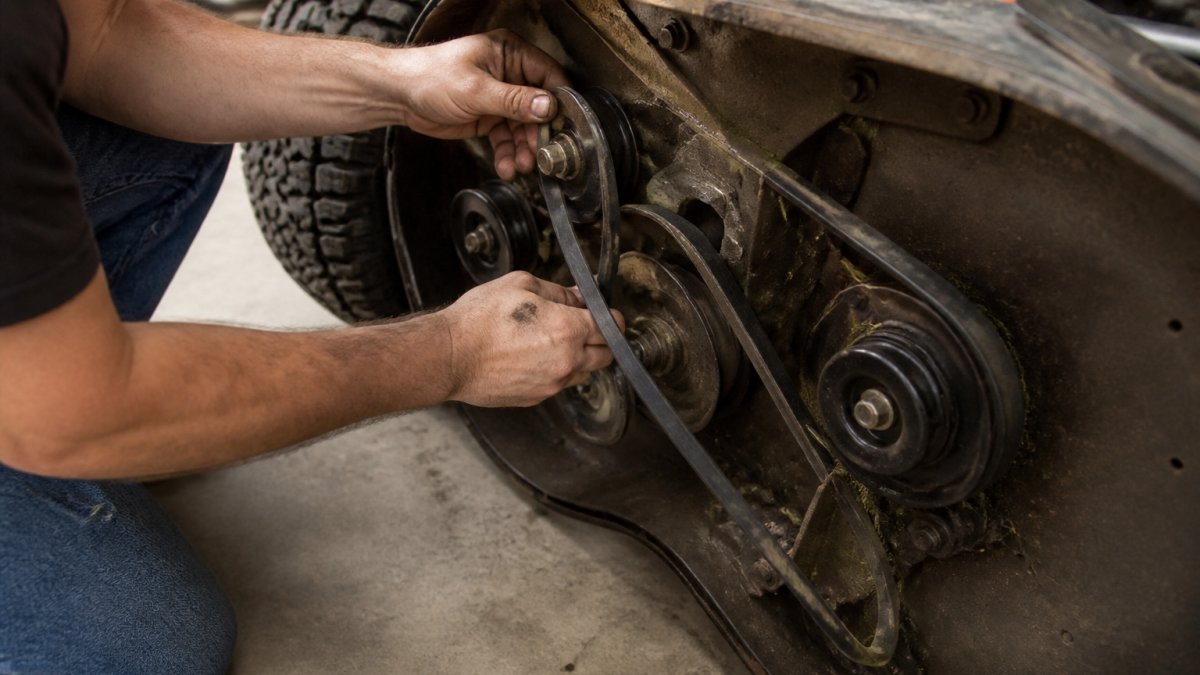
Lay your string along the inside of the V-belt groove, following the path the belt travels around both pulleys. Keep it snug but not tight.
Step 2: Mark where the string overlaps
When the string comes all the way around and meets itself, mark both spots clearly. This marked length is your belt circumference.
Step 3: Measure the marked string
Lay the string flat and measure from one mark to the other. Write this number down, it's critical for finding your replacement belt.
Step 4: Convert to the correct belt length
The number you measured is the inside circumference. Most V-belt sizing charts use inside length or pitch length, not outside circumference, so note which one yours is.
Measuring a Belt with String and Converting to Circumference
When you measure a V-belt with string, you're getting the inside circumference, the distance around the inside of the belt as it sits in the pulley grooves.
Most replacement belts are sized by pitch length or inside length, not outside circumference. A 42-inch inside measurement likely maps to a 40- or 41-inch belt, depending on the manufacturer's system.
Check the belt you're replacing for printed numbers, these give the official size. Your string measurement should be within half an inch; if it's very different, the belt may be stretched or worn.
How to Measure V-Belt Width and Cross-Section
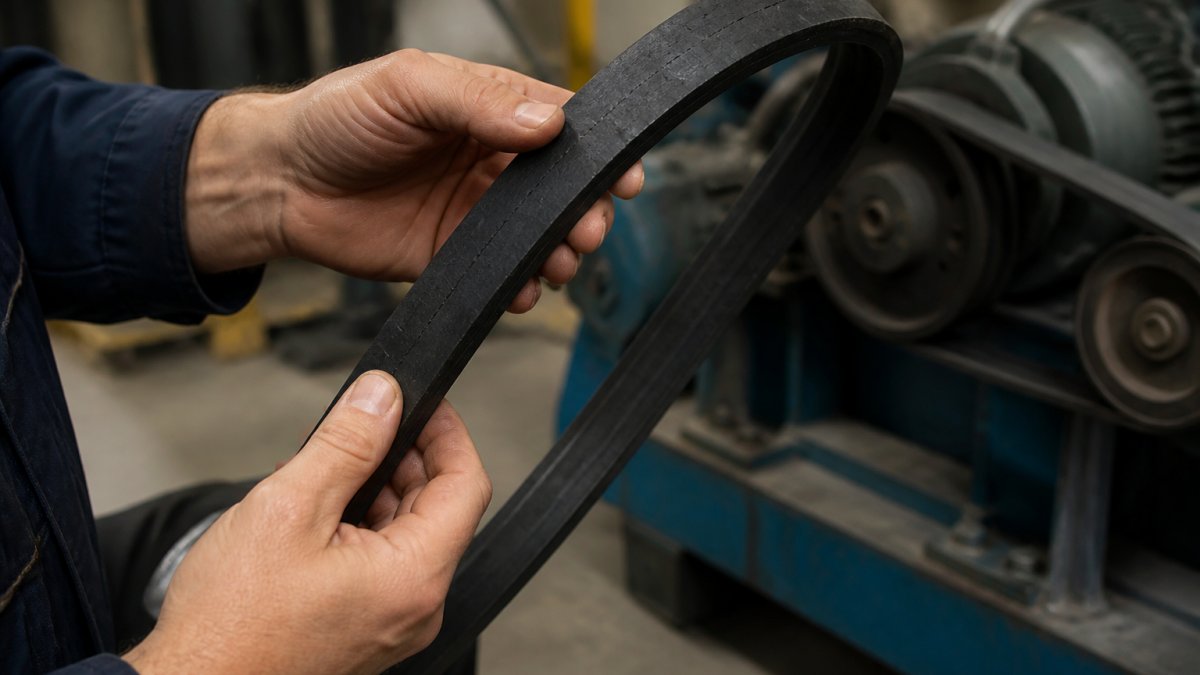
Length alone won't get you the right belt. A belt of the correct length but wrong width or profile will sit too high or too deep in the groove, slip under load, or wear out the pulley. Width and cross-section are the second half of the measurement, and you can capture both without a caliper.
Measuring width without a caliper
Lay the belt flat with the wide top face up and measure straight across the widest part, edge to edge. Don't measure the bottom face, which is narrower by design.
No ruler? Compare against a coin: a quarter is about 0.955 inch across, a nickel 0.835 inch, a penny 0.75 inch.
For thickness, measure from the top face straight down to the bottom face at the thickest point. A belt that's too thick bottoms out before the sides grip.
Common V-belt sections and their nominal dimensions
These standard classical and narrow profiles appear on lawn equipment, HVAC blowers, shop tools, and light industrial drives. Nominal top width and thickness are listed so you can match what you measured.
| Section | Nominal top width | Nominal thickness | Typical use |
|---|---|---|---|
| 3L / A (fractional) | 3/8 in | 7/32 in | Small shop tools, blowers |
| 4L / A | 1/2 in | 5/16 in | Lawn tractors, compressors |
| 5L / B | 5/8 in | 13/32 in | Pumps, larger mowers |
| C | 7/8 in | 17/32 in | Industrial drives |
| D | 1-1/4 in | 3/4 in | Heavy industrial |
Narrow wedge sections (3V, 5V, 8V) carry more power in a smaller profile: 3V is about 3/8 inch top width, 5V about 5/8 inch, 8V about 1 inch. Deep, narrow pulley grooves usually mean a wedge section.
Reading the profile shape
Look at the belt from the side, not the top.
- Classical (A, B, C, D): a simple V with a flat top and a flat bottom. The sides are straight.
- Wedge (3V, 5V, 8V): a deeper, narrower V with a flatter top. It sits lower in the groove.
- Cogged: raw-edge belt with molded teeth on the inside face. The teeth let the belt bend around small pulleys without cracking.
- Banded: two or more V-belts joined by a top tie band. Used where a single belt would whip or flip.
Small crosswise teeth mean cogged; smooth means classical or wedge; a continuous top band joining two or more V profiles means banded.
Confirming the profile against the pulley
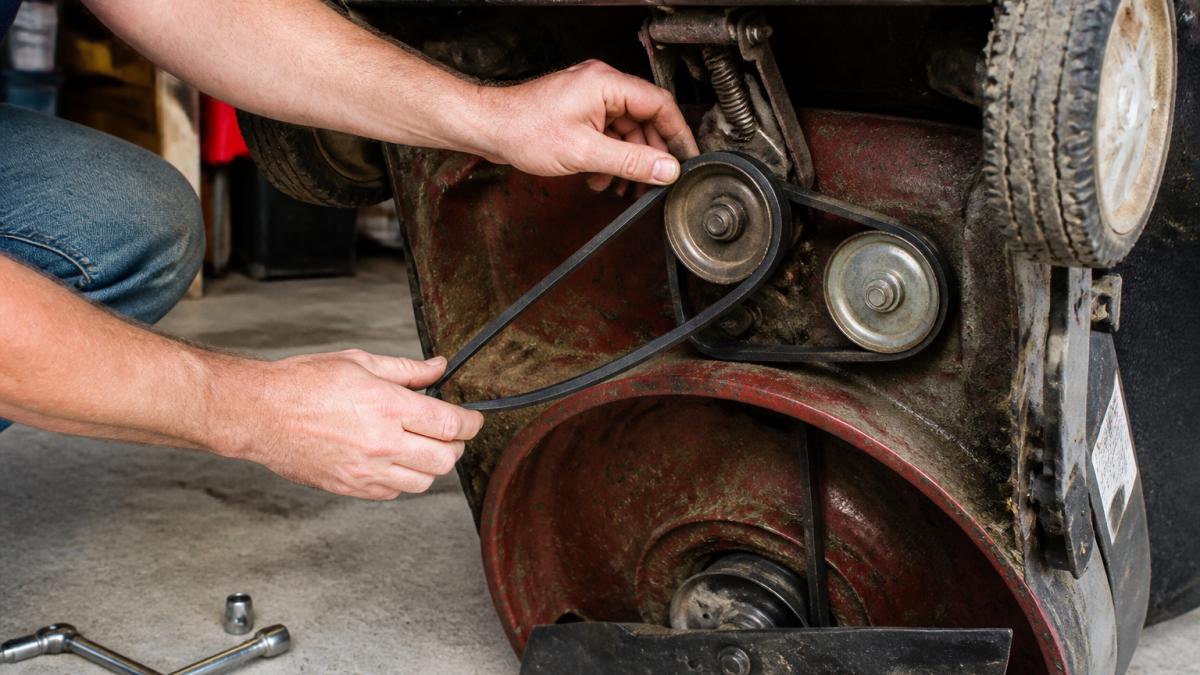
A no-tool check: press the belt into the pulley groove by hand. A correctly sized belt sits flush with, or slightly above, the pulley's outer edge. If the top face sinks below the rim, the belt is too narrow or the groove is worn; if it rides high with only the bottom touching, it's too wide.
V-Belt Inside Length vs Outside Length: Which One Matters
This is the most common reason a replacement belt comes back wrong. Three different circumferences describe the same belt, each a different number, order by the wrong one and the belt will be too long or too short even though your measurement was accurate.
The three lengths, defined
- Inside length (Li): the distance around the inside face, where it contacts the bottom of the pulley groove, the smallest of the three. The string method here measures inside length.
- Outside length (La): the distance around the outer face, the largest number, rarely used for sizing because it doesn't describe how the belt sits in the groove.
- Pitch length (Lp): the distance around the belt at the pitch line, through the middle of the cross-section where the tensile cords sit. Most manufacturers and distributors catalog belts by this number.
Picture it this way: inside length is the bottom of the V, outside length the top, and pitch length a line through the middle.
How the three relate
The gap between inside and outside length depends on belt thickness and the V angle, thicker belts spread more. For classical sections, pitch length sits roughly 1 to 2 inches above inside length, and outside length roughly 1 to 2 inches above pitch length. Narrow wedge sections spread less.
So a 42-inch inside measurement on a classical drive likely corresponds to a belt cataloged around 43 to 44 inches pitch length. That's a starting point, not a guarantee, always confirm against the old belt's printed size or the manufacturer's chart.
Verifying which length you measured
To confirm what your string measurement represents, wrap the string around the belt's outer face and mark it, then along the inside face and mark that. The marks won't line up: the shorter is inside length, the longer is outside length, and the difference shows how much thickness adds to the circumference.
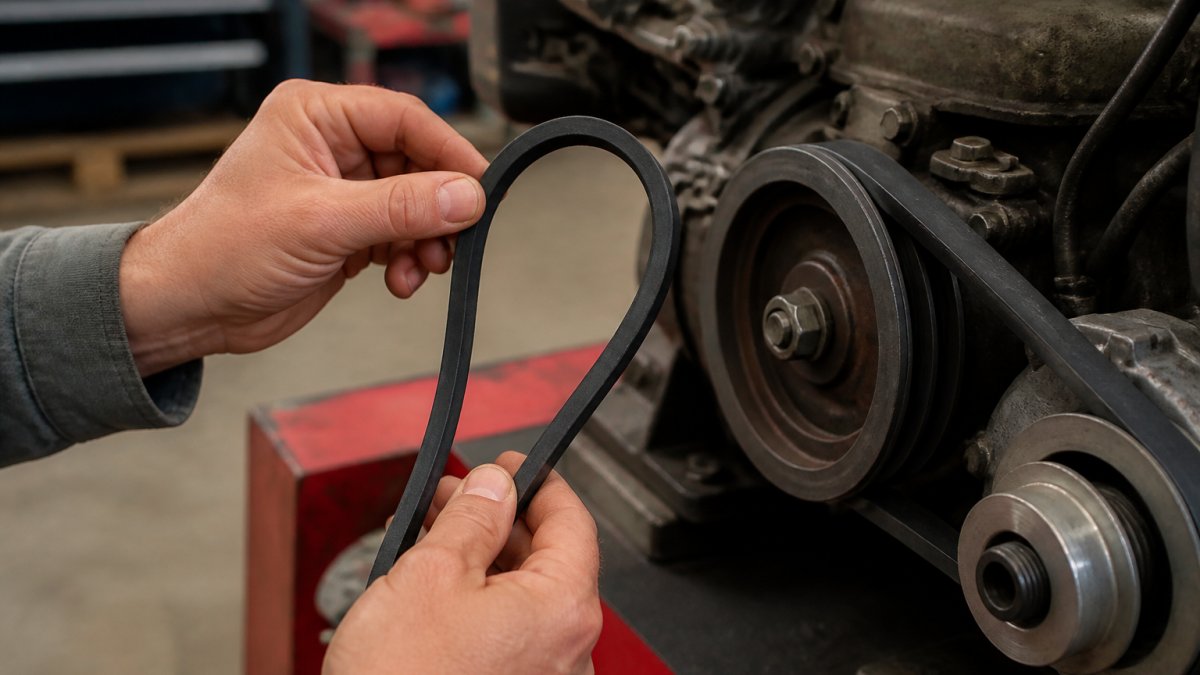
With the belt off the machine, lay it flat in a loop and measure across the widest point. Diameter times pi (about 3.14) approximates outside circumference, not precise enough to order from, but it tells you which of your other measurements is in range.
Estimating length from pulley dimensions when the old belt is gone
If the belt is missing or too damaged to measure, estimate from the drive itself.
For a two-pulley drive, a standard approximation is:
Belt length ≈ 1.57 × (D + d) + 2 × C
D is the large pulley diameter, d the small pulley diameter, and C the center distance, all in the same unit.
- 1.57 × (6 + 3) = 1.57 × 9 = 14.13
- 2 × 18 = 36
- Estimated belt length ≈ 14.13 + 36 = 50.13 inches
That puts you near a 50-inch pitch length belt.
Worked example in millimeters: a large pulley of 150 mm, a small pulley of 75 mm, and a center distance of 450 mm.
- 1.57 × (150 + 75) = 1.57 × 225 = 353.25
- 2 × 450 = 900
- Estimated belt length ≈ 353.25 + 900 = 1253.25 mm
That's roughly 49.3 inches, lining up with the inch example and confirming the math.
Converting between inches and millimeters
Inches to millimeters: multiply by 25.4. Millimeters to inches: divide by 25.4. A 50-inch belt is about 1270 mm; a 1250 mm belt is about 49.2 inches. Keep both numbers so you can match whichever format the supplier uses.
standard V-belt length conversion and section dimension charts
Using V-Belt Cross Reference to Match Your Replacement
A V-belt cross reference is a chart or tool that matches belt sizes across manufacturers. Different brands may use different labels for the same fit.
V-Belt Nation carries many belt types and sections to fit most equipment.
When you can't read the old label, your string measurement helps. Provide the inside circumference plus belt width and cross-section, enough to identify the right replacement belt.
Common Mistakes to Avoid When Measuring V-Belts
Mistake 1: Measuring too tight or too loose
The string should sit naturally in the groove, snug, but not stretched.
Mistake 2: Forgetting to account for belt stretch
Old belts stretch over time, a worn belt may be 2 to 3 inches longer than new.
Mistake 3: Confusing inside, outside, and pitch length
Write down which measurement you took, "inside circumference" or "pitch length", so you don't mix them up.
Mistake 4: Not measuring belt width and cross-section
Length alone isn't enough, the right length with the wrong width won't fit.
Mistake 5: Ordering before verifying the old belt size
If you can read the printed size on your old belt, use it.
Mistake 6: Measuring a damaged or misaligned belt
A cracked, frayed, or crooked belt won't measure accurately.
Getting the right replacement V-belt starts with an accurate measurement.
At V-Belt Nation, we know downtime costs money, so we stock a comprehensive selection of V-belts across all standard sizes and cross-sections. We offer personalized support, free ground shipping on all U.S. orders over $175, and a Price Match Guarantee. Shop Now and get your machinery running again.
Frequently Asked Questions
Can you measure a V-belt with a string?
Yes, string is one of the most effective no-tool methods. Wrap the string tightly around the belt's circumference, mark where it overlaps, then measure the marked length against a ruler or tape measure. This works for both installed and removed belts and gives you the belt circumference directly.
Should you measure a V-belt inside, outside, or pitch length?
Pitch length is the standard measurement for V-belt replacement. It represents the theoretical centerline length and is what manufacturers list in specifications. Inside length is shorter and outside length is longer. When ordering a replacement, always use pitch length or the circumference measurement that corresponds to your original belt's specifications.
How do you identify a V-belt size from its markings?
V-belt markings typically show the cross-section followed by the length in inches or millimeters. If markings are worn or missing, measure the width and height with calipers or a ruler, then match those dimensions to standard cross-section charts.
What's the difference between classical and wedge V-belt sections?
Classical V-belts have a flat top and angled sides, while wedge belts have a more tapered profile for better grip and power transmission. Classical belts fit classical pulleys; wedge belts fit wedge grooves. Mixing sections will cause slipping and poor performance. Check your pulley groove shape to determine which section you need.