 how-to
How Do You Replace a Mower Deck Idler Pulley?
Last Updated: October 29, 2026
Quick Summary
To replace a mower deck idler pulley, first confirm the pulley is failing by checking for noise, wobble, heat, or rough rotation. Then safely disconnect the spark plug wire, remove the deck belt and the worn pulley, and install the new pulley in its original position. Restore belt tension and confirm the belt sits in every groove before testing.
- Noise, wobble, heat, and rough rotation are the main signs the pulley needs replacing.
- Disconnect the spark plug wire and support the deck on jack stands before working underneath.
- Photograph the old belt routing before removal so you can reinstall it correctly.
- Replace the whole pulley when the bearing is sealed or welded, since rebuilding is unsafe for those.
- Recheck the pulley bolt torque after about five hours of use.
Table of Contents
- Lawn Mower Idler Pulley Symptoms That Mean It Needs Replacing
- Tools, Safety Prep, and Finding the Right Replacement Part
- Removing the Mower Deck and Releasing Belt Tension
- Mower Deck Belt Routing Diagram and Reinstallation Order
- Lawn Mower Idler Pulley Bearing Replacement: Replace or Rebuild?
- Mower Deck Belt Replacement and Post-Repair Checks
- Booking a Professional Deck Repair or Ordering Your Replacement Belt
- Frequently Asked Questions
Lawn Mower Idler Pulley Symptoms That Mean It Needs Replacing
A worn idler pulley is one of the most common reasons a mower deck stops working right. This mower deck idler pulley guide walks through how to recognize the problem, prepare safely, and replace the part yourself.
The idler pulley keeps tension on the deck belt and guides it around the blades. When the bearing inside starts to fail, the belt stops running smoothly and the deck starts to complain.
Watch for these signs:
- A grinding, squealing, or rumbling noise from under the deck
- A pulley that wobbles or sits crooked when you look at it
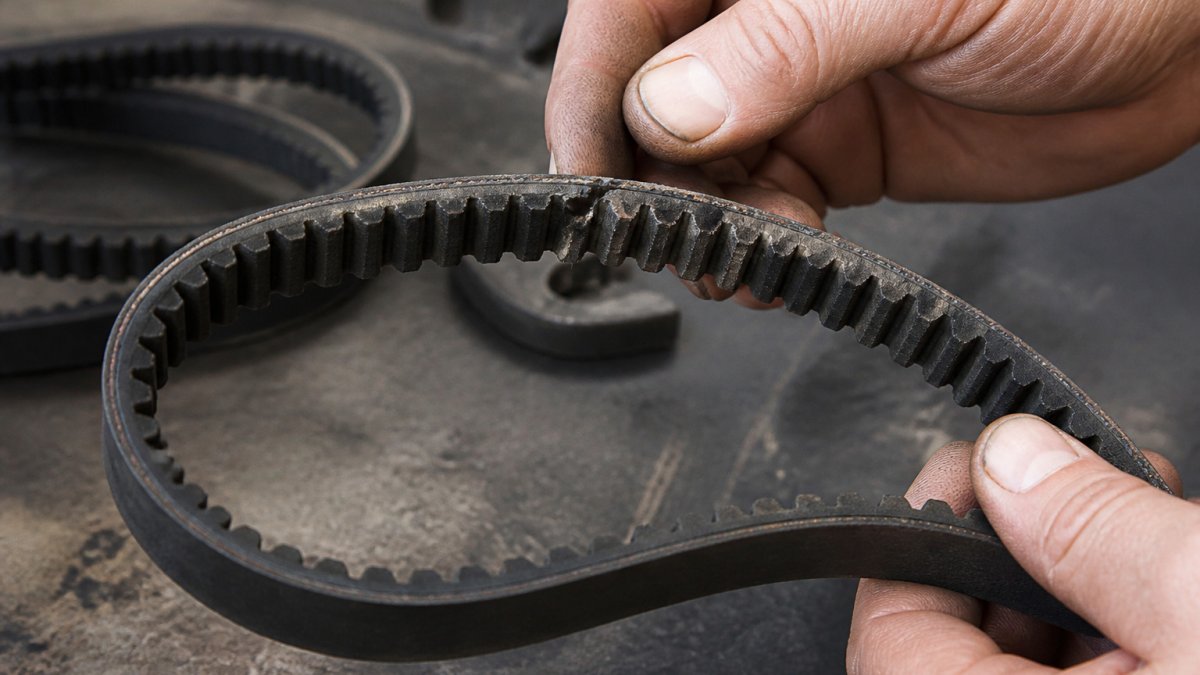
- Belt wear, such as glazing, cracking, or one edge fraying faster than the other
Noise, wobble, and belt wear
Noise is usually the first symptom. A failing bearing makes a high-pitched whine at low speeds and a rough grind when the deck is engaged. Wobble is the next sign.
Belt wear often follows. A pulley that no longer spins freely drags on the belt, which can wear it unevenly. If you replace the belt without fixing the pulley, the new belt will wear out just as fast.
Checking whether the bearing still rotates freely
With the engine off and the spark plug wire disconnected, spin the pulley by hand. It should turn smoothly and quietly, with no catching or rough spots. Rough feel, a gritty sound, or a stop before a full turn all point to a failing bearing. Replace the pulley if it fails this test.
Tools, Safety Prep, and Finding the Right Replacement Part
Good preparation makes the job faster and safer, and it is the step most short videos skip. Gather every tool before you start, isolate the ignition, and confirm the replacement pulley matches your deck before you loosen a single bolt.
Safety steps before you touch the deck
Safety comes first. Work through this checklist every time, in order:
- Park the mower on a flat, level surface and set the parking brake.
- Turn off the engine, remove the key, and let the engine cool completely.
- Disconnect the spark plug wire and tuck the boot away from the plug so the engine cannot fire.
- Wait for all moving parts to stop completely.
- Wear gloves and eye protection, and tie back loose clothing or hair.
- Chock the wheels if the mower could roll.
- Use jack stands or blocks if you need to lift or tilt the mower. Never rely on a jack alone.
If your mower has a fuel shut-off valve, close it before tilting the deck or engine to avoid fuel spilling into the carburetor or onto a hot surface.
Tool checklist
Have these on hand before you start. Missing a single holding tool is the most common reason a pulley bolt turns into an afternoon project.
- Socket wrench set, including the sizes that fit your deck's pulley bolt and mounting hardware
- A breaker bar for stuck fasteners
- Combination wrenches
Many deck pulley bolts fall in the common 1/2-inch, 9/16-inch, and 5/8-inch socket range, but sizes vary by model. Test-fit your sockets on the bolt head before you apply force so you do not round it.
Identifying the correct pulley by model number
Pulleys differ by mower model, and the wrong part will not fit or run correctly. Find the model number and serial number on the mower's data plate, usually near the seat or engine.
Measure the pulley diameter, bore size, and bearing type if the old part is still on the mower. Note whether the bearing is sealed or spot-welded, and check the bolt direction and any spacers or washers that sit between the pulley and the deck.
Diagnosing the pulley before you buy parts
Before ordering, confirm the idler pulley is actually the failed part. Noise, wobble, heat, and rough rotation point to a bad bearing, but a worn belt, a failing spindle bearing, or a loose blade can mimic the same symptoms.
- Noise: A high-pitched whine at low speed or a rough grind when the deck engages usually means a dry or worn bearing.
- Wobble: Side-to-side play when you grab the pulley means the bearing is worn.
- Heat: A pulley that is noticeably hotter than its neighbors after a short run is dragging.
If the pulley spins freely and quietly but the deck still complains, check the spindle bearings and belt condition before buying an idler pulley.
The table below summarises the diagnostic checks covered in this section, so you can match each symptom to its likely cause before buying parts.
| Symptom | Likely cause | Check |
|---|---|---|
| Noise | Dry or worn bearing | High-pitched whine at low speed |
| Wobble | Worn bearing | Side-to-side play when grabbed |
| Heat | Pulley dragging | Hotter than neighbouring pulleys after a short run |
| Rough rotation | Failing bearing | Spin by hand; should turn smoothly and quietly |
| Belt wear | Pulley dragging on belt | Glazing, cracking, or uneven edge fraying |
Removing the Mower Deck and Releasing Belt Tension
Removing the deck gives you full access to the pulley.
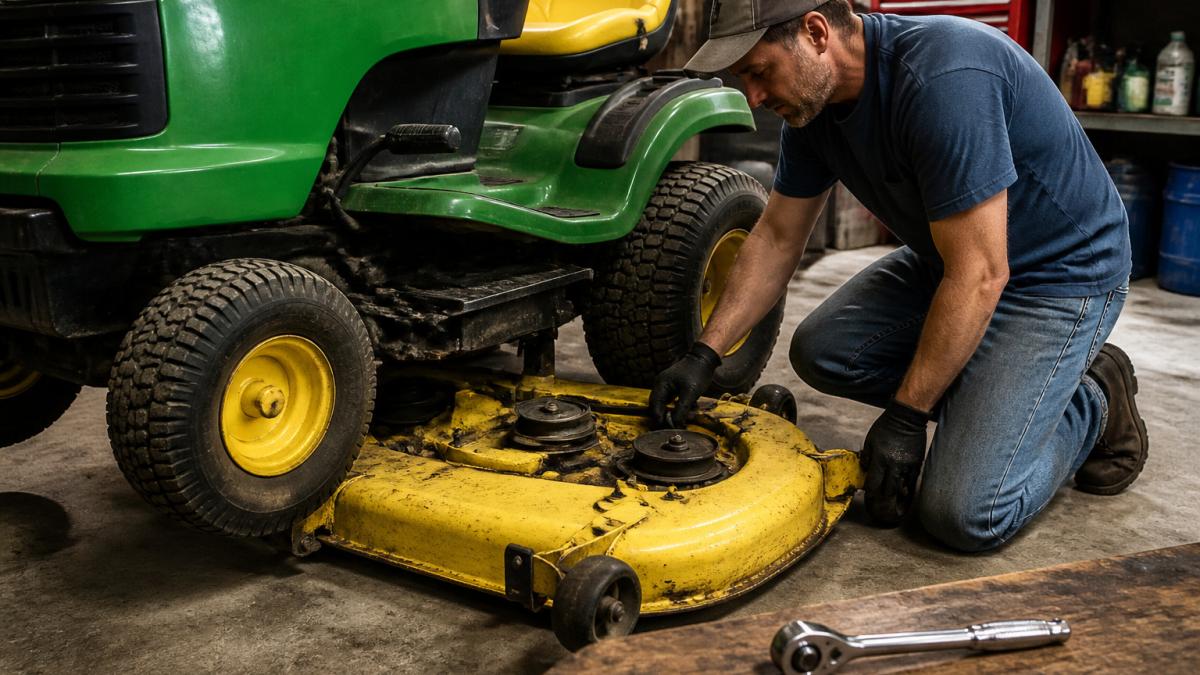
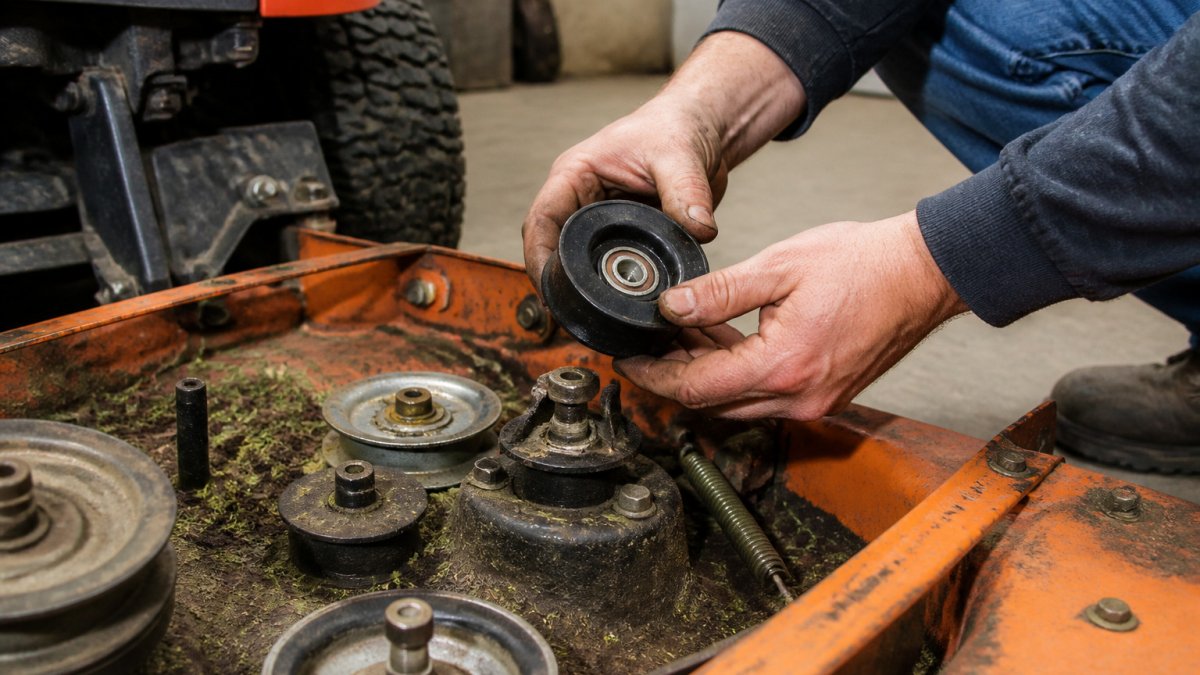
Release the belt tension first. Locate the tensioner spring or idler arm, and carefully relieve the spring tension so the belt slips off the pulley. Tools that save time on belt replacement can make this step quicker.
Next, support the deck and remove the mounting hardware. Keep all bolts, washers, and spacers in a labeled container so they go back in the right place.
You will need these common tools:
- Socket wrench set and a breaker bar for stuck fasteners
- Combination wrenches
- A vise or a holding tool to keep the pulley still
A common problem is a stuck pulley bolt. Spray penetrating oil on the threads, wait a few minutes, and use a steady pull on the wrench.
Mower Deck Belt Routing Diagram and Reinstallation Order
Belt routing is where many repairs go wrong, and it is the gap most short videos leave unresolved. The deck belt must follow the exact path shown in your owner's manual or on the decal stuck to the deck. A belt routed backward will run in the wrong direction and can damage the blades or pulleys.
Build your own routing diagram
Before you remove the old belt, take a clear photo of the routing from directly above the deck. Then sketch a simple diagram on paper: draw each pulley as a circle, label the idler and tensioner, and mark which side of each pulley the belt rides on. This record is free and saves guesswork later.
Routing checklist
Work through this checklist before you restore tension:
- Confirm the belt sits inside every pulley groove, not on the edge or the flange.
- Confirm the belt wraps the correct side of the idler and tensioner pulleys.
- Confirm the belt does not rub on a deck bracket, guard, or bolt head.
- Confirm the belt path matches your photo and sketch.
- Turn the pulley by hand through a full rotation and watch the belt track.
Reinstallation order
Reinstall the parts in this order:
- Install the new idler pulley with its bolt, washer, and spacer in the original position.
- Hand-tighten the bolt so the pulley can still move a little.
- Route the deck belt around each pulley in the same path as the photo.
- Restore belt tension using the tensioner spring or idler arm.
- Tighten the pulley bolt to the torque listed in the service manual.
- Turn the pulley by hand to confirm the belt sits in every groove.
Model-specific routing differences
Routing varies by deck design. On many two-blade decks the belt runs in a simple loop around the spindle pulleys and the idler, while three-blade decks often add a second idler or a fixed guide pulley that changes the path.
Check your model's parts diagram for the number and position of idlers before you assume your deck matches a video you watched.
Lawn Mower Idler Pulley Bearing Replacement: Replace or Rebuild?
Most idler pulleys are sold as a complete assembly with the bearing already pressed in.
Rebuilding is possible only when the bearing is a standard, separate part you can buy and press out cleanly.
Choose replacement if the bearing is sealed or welded, if the pulley housing shows cracks or deep wear, or if you cannot find the bearing part number.
Mower Deck Belt Replacement and Post-Repair Checks
Replace the deck belt during the same repair if it shows any wear.
Once everything is back together, run a short test before mowing. Start the engine, engage the deck, and listen.
Run these post-repair checks:
- Confirm the deck runs smoothly at idle and at full speed
- Look for the belt staying inside every pulley groove
- Recheck the pulley bolt torque after about five hours of use
If the noise returns or the belt keeps coming off, stop and recheck the routing.
For a complete parts review before you reinstall, see alternatives to OEM mower deck belts.
Booking a Professional Deck Repair or Ordering Your Replacement Belt
Some readers prefer to hand the job to a shop. If you are unsure how to remove the deck or the pulley bolt will not budge, a professional repair may save time and avoid damage. See whether professional mower belt repair is worth it.
If you are ready to do the work yourself, order your replacement parts first. Pricing depends on the part, quantity, and delivery option, so check V-Belt Nation's website for current prices and a quote before you buy.
Frequently Asked Questions
How do I know if my mower deck idler pulley needs replacing?
Listen for a grinding, whining, or squealing noise coming from the deck when the blades are engaged, and check whether the pulley wobbles or feels rough when you spin it by hand. A pulley that no longer rotates freely, or one with visible wear on its groove, should be replaced. Worn pulleys also cause the deck belt to wear unevenly or slip, so inspect the belt at the same time. If the bearing is seized or the wheel has play side to side, replacement is the reliable fix.
Can you replace just the bearing in a mower deck idler pulley?
Some pulleys use a replaceable sealed bearing pressed into the wheel, and these can be swapped out with a bearing puller and press. Many mower decks, however, use a spot-welded or integrated bearing that cannot be separated from the pulley, in which case the entire pulley assembly must be replaced. Check the pulley before buying parts. If you can see a removable bearing and a retaining clip, a bearing-only replacement may be possible. Otherwise, a complete pulley is usually the simpler and more dependable repair.
How do you route a mower deck belt after replacing an idler pulley?
Before removing the old belt, photograph the routing from several angles so you have a reference. Most decks route the belt around the engine pulley, spindle pulleys, and idler pulleys in a specific order, with the flat side of the belt running against the idler where indicated. Start at the engine pulley and work around the deck, keeping the belt seated in every groove. Once it is routed, re-tension the belt using the tensioner spring or arm, then rotate the blades by hand to confirm the belt tracks properly.
What tools do I need to replace a mower deck idler pulley?
Most jobs require a socket set and wrench set sized to the pulley bolt, a breaker bar for stubborn fasteners, and a vise or helper to hold the pulley or bearing still while you loosen the bolt. You will also need a bearing puller if the bearing is separate, and penetrating oil for rusted hardware. Keep the battery disconnected and the spark plug wire removed before working under the deck. Have replacement washers and spacers on hand, since reusing damaged hardware often causes the new pulley to misalign.
Keeping your mower running well comes down to catching worn parts early and fitting the right replacements. V-Belt Nation carries a wide selection of lawn and garden belts, with personalized support to help you match the part to your model. Visit V-Belt Nation to find the right belt and get your deck back in action.